


TLDR
A thin endometrium — typically defined as a uterine lining under 7 mm at the time of embryo transfer — is one of the most underdiagnosed reasons IVF cycles fail. Standard estrogen protocols stimulate the hormonal signal for growth but cannot fix the underlying problem: inadequate blood flow and oxygen delivery to the uterine tissue itself. Hyperbaric oxygen therapy (HBOT) works differently. By flooding tissues with dissolved oxygen under pressure, HBOT triggers angiogenesis (new blood vessel growth), activates stem cells, reduces inflammation, and directly oxygenates endometrial tissue that estrogen alone cannot reach. Peer-reviewed research now supports HBOT as a viable intervention for refractory thin endometrium. OxygenWell offers a targeted 15–30 session protocol at our Sherman Oaks and Calabasas locations, guided by Dr. Beth Meneley, DAOM, L.Ac., who has over 20 years of clinical experience in fertility.
Table of Contents
- What Is a Thin Endometrium and Why Does It Cause IVF Failure?
- Why Standard Estrogen Protocols Fall Short
- How HBOT Increases Endometrial Thickness
- What the Research Says: Clinical Evidence for HBOT
- Who Is a Good Candidate for HBOT Before Embryo Transfer?
- The OxygenWell Protocol for Thin Endometrium
- Combining HBOT With Your IVF Cycle
- About Dr. Beth Meneley
- Schedule a Free Discovery Call
What Is a Thin Endometrium and Why Does It Cause IVF Failure?
The endometrium is the inner lining of the uterus — the tissue that thickens each cycle in preparation for embryo implantation. For a successful implantation to occur, this lining needs to reach a minimum thickness of approximately 7 mm and develop a characteristic three-layer "trilaminar" pattern visible on ultrasound. When the lining consistently measures below 7 mm despite hormonal preparation, clinicians classify it as a thin endometrium or, in persistent cases, a refractory thin endometrium.
Thin endometrium is one of the most frustrating diagnoses in reproductive medicine — not because it's rare, but because it so often stops an IVF cycle before it starts. Studies show that embryo transfers performed when the endometrium measures below 7 mm carry significantly lower implantation rates, higher biochemical pregnancy rates (where a pregnancy test turns positive but no clinical pregnancy develops), and elevated miscarriage risk. When the lining is under 6 mm, most reproductive endocrinologists recommend canceling the transfer entirely.
Common Causes of Thin Endometrium
- Asherman's Syndrome: Intrauterine scarring and adhesions — often from prior D&C procedures, uterine surgeries, or infections — physically prevent the endometrium from regenerating. Scar tissue replaces functional glandular tissue and cuts off blood supply.
- Uterine or pelvic surgeries: Myomectomy, cesarean sections, and repeated hysteroscopic procedures can damage the basal layer of the endometrium, impairing its ability to regenerate with each cycle.
- Reduced uterine blood flow: Poor perfusion of the uterine artery and subendometrial blood vessels is now recognized as one of the central drivers of refractory thin endometrium — even when no structural scarring is visible.
- Endometriosis and pelvic inflammation: Chronic inflammation alters the endometrial environment, impairing both thickness and receptivity.
- Hormonal deficiency: Low estrogen production — from diminished ovarian reserve, premature ovarian insufficiency, or prior prolonged oral contraceptive use — can result in an endometrium that never receives adequate growth stimulus.
- Chronic endometritis: Subclinical uterine infection disrupts the endometrial microbiome and inflammatory milieu, creating a hostile implantation environment regardless of lining thickness.
What these causes have in common is that most of them result in the same final pathway: insufficient oxygen and nutrient delivery to the endometrial tissue. This is why hormonal therapy alone so often fails.
Why Standard Estrogen Protocols Fall Short
The default treatment for thin endometrium is high-dose estrogen — oral, transdermal, or vaginal. Estrogen drives the proliferative phase of the endometrial cycle and is essential for thickness. But here is the core problem: estrogen is a hormonal signal, not a vascular intervention.
For estrogen to stimulate endometrial growth, the tissue must be capable of responding. That response requires:
- Functional endometrial glands and stroma
- Adequate blood supply from the spiral arteries
- Sufficient oxygen delivery at the cellular level
- Intact estrogen receptor expression in the endometrial cells
When any of these factors is compromised — particularly blood flow — increasing the estrogen dose produces diminishing returns. A patient can spend weeks on escalating doses of estradiol with daily or vaginal supplementation and still see her lining stall at 4–5 mm. This is the "resistant thin endometrium" profile that appears repeatedly in the clinical literature. The lining is not thick because it is not being adequately perfused — and no hormone dose addresses that directly.
A landmark 2025 review published in Frontiers in Reproductive Health by researchers at Hadassah-Hebrew University Medical Center explicitly identified endometrial hypoperfusion as "the missing link in refractory thin endometrium." The paper, authored by Weizel, Lasri, Hersko Klement, and Bentov (DOI: 10.3389/frph.2025.1732672), argues that persistently thin endometrium is often a vascular problem — not a hormonal one — and that treatments must target tissue oxygenation and perfusion to be effective.
This distinction matters profoundly for patients who have already failed multiple medicated cycles. If the root cause is hypoperfusion, the solution is a therapy that restores perfusion. That is precisely what HBOT does.
How HBOT Increases Endometrial Thickness
Hyperbaric oxygen therapy places a patient inside a sealed, pressurized chamber where they breathe 100% medical-grade oxygen at pressures up to 2.4 ATA (atmospheres absolute). Under these conditions, oxygen dissolves directly into the blood plasma — not just red blood cell hemoglobin — reaching a concentration 10 to 15 times greater than normal atmospheric breathing.
This hyperoxic state triggers several interconnected biological processes that directly address the root causes of thin endometrium:
1. Angiogenesis: Growing New Blood Vessels
HBOT is one of the most potent known stimulators of vascular endothelial growth factor (VEGF), the primary signaling protein responsible for new blood vessel formation. Each HBOT session creates a carefully controlled fluctuation between hyperoxia and relative hypoxia — this contrast is what powerfully upregulates VEGF expression. Over a series of sessions, new capillary networks form in oxygen-deprived tissue, including the subendometrial layer and the spiral arteries that supply the endometrium. A lining that was previously thin because it lacked adequate vascular supply begins to receive the blood flow it needs to proliferate.
2. Direct Tissue Oxygenation
Because oxygen under pressure dissolves into plasma (not just hemoglobin), it reaches tissues even when vascular architecture is partially compromised by scarring or inflammation. HBOT physically delivers dissolved oxygen to cells that standard circulation cannot reach. For a scarred or fibrotic endometrium, this plasma-dissolved oxygen can bypass the damaged microvasculature and reach viable tissue that simply lacked oxygen — reawakening cellular metabolism and enabling tissue repair and regeneration.
3. Stem Cell Mobilization
Research shows that HBOT increases circulating CD34+ stem cells by up to 8 times baseline after 20 sessions. These stem cells home to sites of injury and hypoxia — precisely the damaged or scarred endometrial tissue. Once there, they can differentiate into endometrial stromal and glandular cells, replacing scar tissue with functional regenerative tissue. This stem cell mechanism may explain why HBOT produces endometrial thickening even in women with Asherman's syndrome where structural damage exists.
4. Anti-Inflammatory Action
Chronic pelvic inflammation — from endometriosis, chronic endometritis, or prior infections — creates a hostile biochemical environment in the uterus. HBOT significantly reduces pro-inflammatory cytokines including IL-6 and TNF-α, rebalances the immune environment, and reduces oxidative stress. A less inflamed endometrium is more receptive to embryo implantation beyond just its thickness.
5. Collagen Remodeling and Scar Reduction
HBOT enhances fibroblast activity and collagen synthesis while simultaneously promoting the breakdown of dysfunctional fibrotic tissue. In Asherman's syndrome, HBOT may help soften adhesions and promote a more normal tissue architecture — complementing surgical hysteroscopic lysis of adhesions by improving the vascular bed before and after the procedure.
What the Research Says: Clinical Evidence for HBOT
The evidence base for HBOT in thin endometrium has expanded meaningfully in the last few years, with several peer-reviewed publications now documenting its effects.
PubMed / PMC Study: HBOT for Resistant Thin Endometrium in FET
A clinical study published in PMC (PMID: 37658414, PMC10472734) — titled "Hyperbaric oxygen therapy: a possible choice for patients with resistant thin endometrium during frozen embryo transfer treatments" — reported meaningful improvements in endometrial thickness in patients who had previously failed to respond to standard hormonal preparation. Patients received HBOT sessions prior to frozen embryo transfer (FET) and demonstrated increases in endometrial thickness sufficient to proceed with transfer in cases that would otherwise have been canceled. The study concluded that HBOT represents a promising adjunct for this difficult-to-treat patient population. [PubMed]
Frontiers in Reproductive Health 2025: Hypoperfusion as the Root Cause
The December 2025 mini-review by Weizel et al. in Frontiers in Reproductive Health (DOI: 10.3389/frph.2025.1732672) synthesized current evidence and positioned endometrial hypoperfusion as the central pathological mechanism in refractory thin endometrium. The review supports therapies that directly target blood flow and oxygenation — a mechanistic validation for HBOT's role in this condition. [Frontiers in Reproductive Health]
Frontiers in Cell and Developmental Biology 2025: Regenerative Therapies for Thin Endometrium
A comprehensive October 2025 review from China Medical University Hospital published in Frontiers in Cell and Developmental Biology (DOI: 10.3389/fcell.2025.1668960) surveyed regenerative interventions for refractory thin endometrium in IVF, including approaches targeting angiogenesis and tissue repair — the same mechanisms activated by HBOT. The review underscores that the field is increasingly moving away from simple hormonal escalation toward vascular and regenerative strategies. [Frontiers in Cell and Developmental Biology]
Fertility and Sterility: Endometrial Thickness and IVF Outcomes
The journal Fertility and Sterility has published extensive data showing that endometrial thickness below 7 mm at the time of transfer correlates with significantly lower clinical pregnancy rates and higher miscarriage rates across both fresh and frozen embryo transfer cycles. This establishes the clinical threshold that HBOT aims to help patients reach or exceed. [Fertility and Sterility]
Who Is a Good Candidate for HBOT Before Embryo Transfer?
HBOT for thin endometrium is particularly appropriate for patients who:
- Have experienced one or more canceled IVF or FET cycles due to inadequate endometrial lining
- Have a history of Asherman's syndrome or intrauterine adhesions — with or without prior hysteroscopic treatment
- Have failed to respond to escalating doses of oral, transdermal, or vaginal estrogen
- Carry a diagnosis of endometriosis with suspected subendometrial blood flow compromise
- Have a history of multiple uterine surgeries, D&C procedures, or myomectomy
- Show poor subendometrial blood flow on Doppler ultrasound despite adequate estrogen levels
- Are preparing for a donor egg cycle or gestational surrogacy and want to optimize uterine receptivity
- Have experienced recurrent implantation failure (RIF) with chromosomally normal (euploid) embryos
HBOT is not a substitute for standard fertility treatment or IVF. It works as a targeted complement — preparing the uterine environment so that the transfer your reproductive endocrinologist has planned has the best possible chance of success.
The OxygenWell Protocol for Thin Endometrium
At OxygenWell, our thin endometrium protocol is designed around the mechanisms documented in the clinical literature — angiogenesis, stem cell mobilization, tissue oxygenation, and anti-inflammatory remodeling. The protocol is tailored to each patient's fertility timeline and coordinated with their IVF or FET schedule.
Standard Protocol Parameters
- Sessions: 15–30 total sessions
- Frequency: Daily or near-daily (5 days per week), ideally starting 6–8 weeks before the planned embryo transfer
- Pressure: 1.5–2.0 ATA (atmospheres absolute)
- Duration: 60–90 minutes per session
- Oxygen: 100% medical-grade oxygen delivered via non-rebreather mask
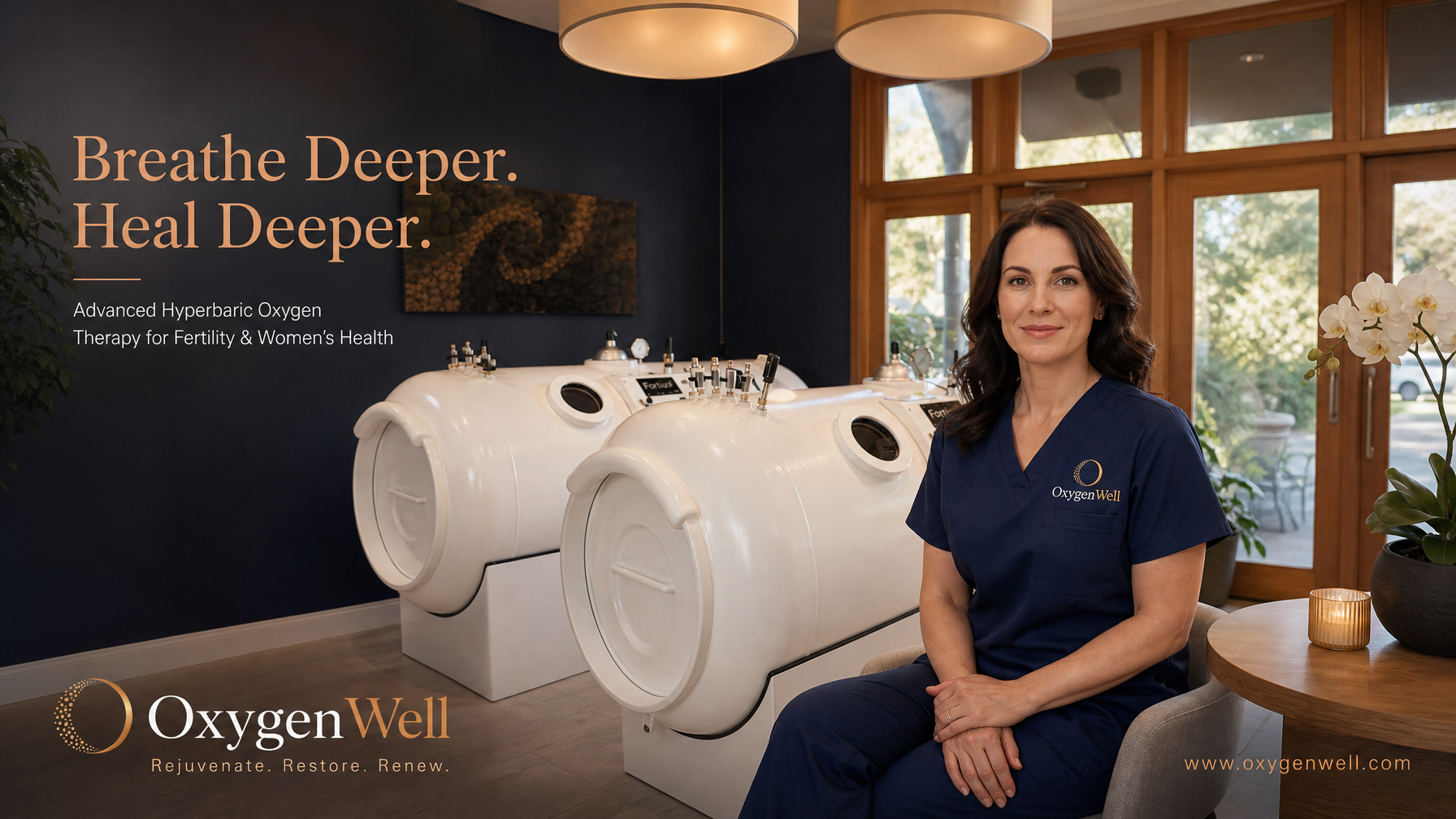
- Chambers: Monoplace, grounded Fortius420 hard-shell chambers
Protocol Timing Around Your Transfer Cycle
- Foundational Reset Phase (Weeks 1–4): 2–3 sessions per week at 1.5–2.0 ATA to begin building the vascular response and reducing baseline inflammation.
- IVF Prep / Optimization Phase (Weeks 4–8): Increase to 3–5 sessions per week. This is when angiogenesis accelerates and endometrial thickness typically improves most measurably. The goal is to complete the final session 3–5 days before embryo transfer — not on transfer day.
- Ongoing Support: After transfer, some patients continue 1–2 sessions per week at 1.3–1.5 ATA during early pregnancy with appropriate clearance to support placental development.
What to Expect During Treatment
Each session takes place in a private, spacious monoplace chamber. You enter the chamber, a Certified Hyperbaric Technician (CHT) — most of whom are EMT-certified — manages your pressurization and oxygen delivery throughout the session. A PA is on-site most weekday hours. Sessions are quiet, comfortable, and non-invasive. Most patients read, rest, or listen to audio during their time in the chamber. There is no sedation and no recovery period — you can drive yourself to and from appointments.
Pressure changes are gradual, similar to what you experience descending in an airplane. Some patients notice mild ear fullness during pressurization, which typically resolves with standard equalization techniques taught at your first session.
Combining HBOT With Your IVF Cycle
HBOT does not interfere with standard IVF medications, hormonal protocols, or luteal phase support. It can be performed concurrently with your estrogen and progesterone protocol during an FET cycle, or alongside stimulation during a fresh IVF cycle (timing adjustments apply).
At OxygenWell, Dr. Beth Meneley works closely with patients' reproductive endocrinologists to ensure the HBOT protocol complements, and does not conflict with, the fertility treatment plan. We recommend sharing your OxygenWell protocol schedule with your IVF clinic so ultrasound monitoring of endometrial response can inform session pacing.
For patients combining HBOT with acupuncture for fertility, research supports a synergistic relationship: acupuncture optimizes uterine blood flow and reduces stress hormones, while HBOT saturates the improved circulation with oxygen. Many patients pursue both simultaneously, with acupuncture ideally scheduled before HBOT sessions to open circulation pathways prior to oxygen delivery.
About Dr. Beth Meneley, DAOM, L.Ac.
Dr. Beth Meneley brings more than 20 years of specialized clinical experience in fertility to her role as Wellness Director and Co-Owner of OxygenWell. She is the founder of the Tao of Venus Acupuncture Center and the Functional Fertility Method — a framework that integrates Chinese medicine with functional medicine principles to address the root causes of infertility in both men and women.
Dr. Meneley first encountered hyperbaric oxygen therapy over two decades ago during her exploration of integrative cancer therapies. As she deepened her practice in fertility medicine, she recognized HBOT's profound potential for reproductive health — particularly for patients with conditions like thin endometrium, poor ovarian reserve, and recurrent implantation failure that conventional protocols consistently fail to resolve.
Her clinical background spans integrative oncology, environmental medicine, immunology, bioidentical hormone therapy (BHRT), women's health, preconception health, and epigenetics. She holds a Doctorate of Acupuncture and Oriental Medicine (DAOM) and is a Licensed Acupuncturist (L.Ac.) in California.
OxygenWell's fertility HBOT program is distinctive in Los Angeles: it is one of very few hyperbaric programs in the region guided by a clinician with deep, specialized training in reproductive medicine. Most HBOT centers have no fertility clinical background. OxygenWell does.
Ready to Explore HBOT for Your Fertility Journey?
If you have been told your lining is too thin for embryo transfer — or if you have experienced repeated IVF failures despite good embryo quality — a thin or poorly perfused endometrium may be the missing piece. HBOT is not a guarantee, but for many patients it is the intervention that finally gives their lining the environment it needs to respond.
OxygenWell offers a free discovery call to discuss your fertility history, your current IVF or FET protocol, and whether our thin endometrium HBOT program is appropriate for your situation.
- Locations: Sherman Oaks and Calabasas, CA
- Phone: (818) 661-0939
- Website: www.oxygenwell.com
Call us or book online to schedule your free discovery call. Our team is here to help you understand your options and build a plan.
Clinical References
- Weizel I, Lasri D, Hersko Klement A, Bentov Y. "Endometrial hypoperfusion: the missing link in refractory thin endometrium." Front. Reprod. Health. 2025;7. doi:10.3389/frph.2025.1732672
- Chen H, Chang P, Lu Y, et al. "Regenerative therapies for refractory thin endometrium in in vitro fertilization." Front. Cell Dev. Biol. 2025;13. doi:10.3389/fcell.2025.1668960
- "Hyperbaric oxygen therapy: a possible choice for patients with resistant thin endometrium during frozen embryo transfer treatments." PMC10472734. PMID: 37658414
- "Endometrial thickness: How thin is too thin?" Fertility and Sterility. 2022. Fertility and Sterility
- Sakthi A. "Impact of Thin Endometrium in Frozen Embryo Transfer." Clin J Obstet Gynecol. 2025;8(2):037–056. doi:10.29328/journal.cjog.1001187
