


TLDR
A mommy makeover combines multiple procedures — typically a tummy tuck, breast surgery, and liposuction — that leave tissues oxygen-depleted and vulnerable to complications. Hyperbaric Oxygen Therapy (HBOT) floods healing tissues with 100% medical-grade oxygen under increased pressure, accelerating angiogenesis, reducing inflammation, and protecting against necrosis. A landmark 2019 study of 356 abdominoplasty patients found preoperative HBOT cut postoperative complication rates from 32.6% to just 8.4%, and eliminated necrosis entirely. At OxygenWell in Sherman Oaks and Calabasas, Dr. Beth Meneley offers individualized pre- and post-operative HBOT protocols designed to help mommy makeover patients heal faster, scar less, and get back to their lives sooner.
Table of Contents
- What Is a Mommy Makeover?
- Why Mommy Makeover Recovery Is So Demanding
- How HBOT Works at the Cellular Level
- HBOT and Tummy Tuck Recovery: The Science
- HBOT After Breast Augmentation and Lift
- HBOT After Liposuction and Body Contouring
- When to Start HBOT: Pre-Op vs. Post-Op Protocols
- How Many Sessions Do You Need?
- What to Expect at OxygenWell
- Who Benefits Most from HBOT After a Mommy Makeover?
- Frequently Asked Questions
What Is a Mommy Makeover?
A mommy makeover is a combination of plastic surgery procedures performed in a single operative session, typically designed to restore the body after pregnancy and childbirth. The most common components include:
- Abdominoplasty (tummy tuck) — tightens the abdominal muscles, removes excess skin, and flattens the abdomen
- Breast augmentation, lift (mastopexy), or both — restores breast volume, corrects ptosis, and reshapes the chest
- Liposuction — removes localized fat deposits from the flanks, thighs, back, or abdomen
- BBL (Brazilian butt lift) — transfers fat to the buttocks for improved contour
- Labiaplasty or vaginal rejuvenation — occasionally included
Because multiple procedures occur simultaneously, the surgical trauma is extensive. The body must heal several distinct tissue planes at once, and oxygen delivery to compromised tissues becomes the rate-limiting step in recovery.
Why Mommy Makeover Recovery Is So Demanding
Most surgeons quote a 6-to-8-week initial recovery and 4-to-6 months for final results. That timeline is not a formality. A mommy makeover produces significant physiological stress:
- Tissue hypoxia: Surgical dissection disrupts the microvascular network. Cells at incision margins and flap edges receive far less oxygen than normal.
- Inflammation and edema: Swelling is the body's natural response to trauma, but excessive or prolonged inflammation delays healing and increases discomfort.
- Abdominal flap tension: Abdominoplasty creates a large abdominal flap that is advanced and sutured under tension. The distal margin, particularly the periumbilical region, is the most vulnerable zone for ischemia and necrosis.
- Risk stacking: Combined procedures amplify individual risks. Patients with a history of smoking, prior abdominal surgeries, diabetes, or elevated BMI face substantially higher complication rates.
According to a large analysis published in Plastic and Reconstructive Surgery, abdominoplasty alone carries one of the highest complication rates among aesthetic procedures — estimated at 32% in higher-risk populations. When breast surgery and liposuction are added, management of recovery becomes even more critical. [Winocour et al., Plast Reconstr Surg. 2015]
How HBOT Works at the Cellular Level
Under normal atmospheric conditions, oxygen binds to hemoglobin in red blood cells. In a hyperbaric chamber pressurized to 1.5-2.4 ATA, you breathe 100% medical-grade oxygen, and the pressure forces oxygen to dissolve directly into blood plasma. This plasma-dissolved oxygen reaches tissues that red blood cells cannot access due to edema, vessel damage, or compromised circulation.
The physiological cascade that follows is well-documented:
- Tissue oxygenation increases 10-15 times above normal — even in hypoxic, poorly perfused zones
- VEGF (vascular endothelial growth factor) surges, triggering new capillary formation (angiogenesis)
- Collagen synthesis accelerates — oxygen is a required cofactor for collagen cross-linking
- Neutrophil function improves — HBOT enhances the killing capacity of white blood cells, reducing infection risk
- Inflammation resolves faster — HBOT down-regulates pro-inflammatory cytokines while up-regulating anti-inflammatory pathways
- Apoptosis of hypoxic tissue decreases — cells that would otherwise die are rescued by restored oxygen supply
For mommy makeover patients, these mechanisms address the core physiological challenges of surgical recovery directly. [Thom SR, Plast Reconstr Surg. 2011]
HBOT and Tummy Tuck Recovery: The Science
Abdominoplasty is the component of a mommy makeover most closely studied in relation to HBOT, and the evidence is striking.
The Landmark Preconditioning Study
A 2019 retrospective cohort study published in Plastic and Reconstructive Surgery Global Open examined 356 patients who underwent abdominoplasty between 2012 and 2017. Among those who received preoperative HBOT preconditioning, postoperative complications dropped from 32.6% to 8.4% (P <0.001). More dramatically, necrosis occurred in 17 patients (6.2%) in the control group, and in zero patients in the HBOT group (P = 0.016). In multivariate analysis, preoperative HBOT was an independent protective factor against postoperative complications, with an odds ratio of 0.188 (95% CI, 0.082-0.432). The protective effect held after propensity score matching. [Wiser et al., Plast Reconstr Surg Glob Open. 2019]
This is one of the strongest clinical signals available for any adjunctive therapy in aesthetic surgery.
Why the Abdominal Flap Is Vulnerable
During a tummy tuck, the surgeon elevates a large skin and fat flap from the pubis to the costal margins. The perforator vessels feeding the distal flap — particularly the area just below the navel — are the most likely to be stretched, compressed, or divided. Without adequate oxygenation, this zone risks ischemia, wound breakdown (dehiscence), or frank necrosis.
A 2022 case series published in Eplasty documented a 46-year-old patient who developed a nonhealing post-abdominoplasty wound with tissue necrosis. After 39 HBOT sessions at 2.5 ATA combined with surgical debridement, she achieved complete healing at three months and returned to work during treatment. The authors concluded: "Plastic surgeons should have a low threshold to refer patients to HBOT to limit tissue necrosis and lessen patient morbidity." [Simman et al., Eplasty. 2022]
For patients with prior abdominal scars, smoking history, elevated BMI, or revised procedures, the risk profile is even higher — and the case for preoperative HBOT is even stronger.
HBOT After Breast Augmentation and Lift
Breast surgery in a mommy makeover typically involves augmentation (implants), mastopexy (lift), or both. Each carries tissue perfusion challenges that HBOT addresses directly.
Implant Placement and Tissue Oxygen Demand
When an implant is placed, it occupies space in the breast pocket, creating mechanical pressure on surrounding tissues. The peri-implant capsule that forms during healing is an active, oxygen-hungry structure. Adequate oxygen delivery supports capsule maturation and reduces the inflammatory drive behind capsular contracture.
Nipple and Skin Flap Perfusion After a Lift
Mastopexy involves repositioning the nipple-areola complex, which requires careful management of the blood supply. The pedicle feeding the nipple can be compromised by excess tension or individual anatomic variation. HBOT's ability to oxygenate tissue through plasma diffusion provides a critical backup perfusion mechanism when vascular supply is challenged.
In patients undergoing breast reconstruction after mastectomy, a procedure with analogous perfusion risks, perioperative HBOT has been shown to reduce postoperative complications significantly. A case-control study of 45 patients reported meaningful complication reduction when HBOT was used perioperatively in secondary breast reconstruction following radiotherapy. [Perioperative HBOT and Breast Reconstruction, PMC. 2021]
The same tissue-protective mechanisms apply to cosmetic breast surgery, particularly in combined procedures where systemic inflammatory load is high.
HBOT After Liposuction and Body Contouring
Liposuction creates thousands of microtraumas in the subcutaneous fat layer. Each cannula pass disrupts small vessels, triggering local inflammation and edema. The resulting swelling can persist for weeks to months and is one of the most common patient complaints during recovery.
HBOT addresses post-liposuction edema through two mechanisms:
- Vasoconstriction without hypoxia: The high oxygen concentration in HBOT causes arteriolar vasoconstriction, which reduces plasma leakage into interstitial spaces (edema). Unlike topical treatments, this effect reaches deep tissue planes.
- Lymphatic support: HBOT improves mitochondrial function in lymphatic endothelial cells, supporting the clearance of accumulated interstitial fluid.
Patients who combine HBOT with their liposuction recovery often report noticeably reduced swelling at the 1-2 week mark compared to standard care, a difference that matters both for comfort and for early assessment of surgical results.
OxygenWell's medical-grade red light therapy (photobiomodulation) can complement post-liposuction HBOT by stimulating lymphatic flow and mitochondrial energy production at the superficial tissue level. Together, these therapies support what we call Cellular Interval Training: rhythmic cycles of oxygenation and recovery that optimize the body's natural repair pathways.
When to Start HBOT: Pre-Op vs. Post-Op Protocols
The Wiser 2019 study used preoperative HBOT as a preconditioning intervention. This approach primes tissues before the surgical insult by building oxygen reserves, upregulating antioxidant defenses, and enhancing endothelial resilience. The result: tissues are better prepared to survive the ischemia of surgery and recover more efficiently afterward.
Recommended Timing
- Pre-operative preconditioning: 5-10 sessions in the 2 weeks before surgery, ideally starting 7-14 days out. This is particularly valuable for higher-risk patients (smokers, prior abdominal surgeries, elevated BMI, revision procedures).
- Immediate post-operative (Phase 1): Sessions beginning within 24-72 hours of surgery, daily for the first 1-2 weeks. This is the most critical window for reducing edema, protecting vulnerable flap tissue, and supporting collagen synthesis.
- Ongoing recovery (Phase 2): 3-5 sessions per week through weeks 3-6, targeting angiogenesis maturation, scar remodeling, and resolution of residual swelling.
Patients who can complete both pre- and post-operative protocols consistently experience the best outcomes. For those who can only choose one, post-operative HBOT in the first two weeks after surgery delivers the most immediate and measurable benefit.
How Many Sessions Do You Need?
Session counts vary based on the procedures performed, individual risk factors, and whether the goal is routine optimization or complication management.
- Routine recovery optimization: 10-20 sessions total (pre and post combined)
- Moderate-to-high risk patients or combined procedures: 20-30 sessions
- Active complications (wound dehiscence, tissue ischemia, early necrosis): 30-40+ sessions, often at higher pressure (2.0-2.5 ATA), continuing until wound trajectory is clearly positive
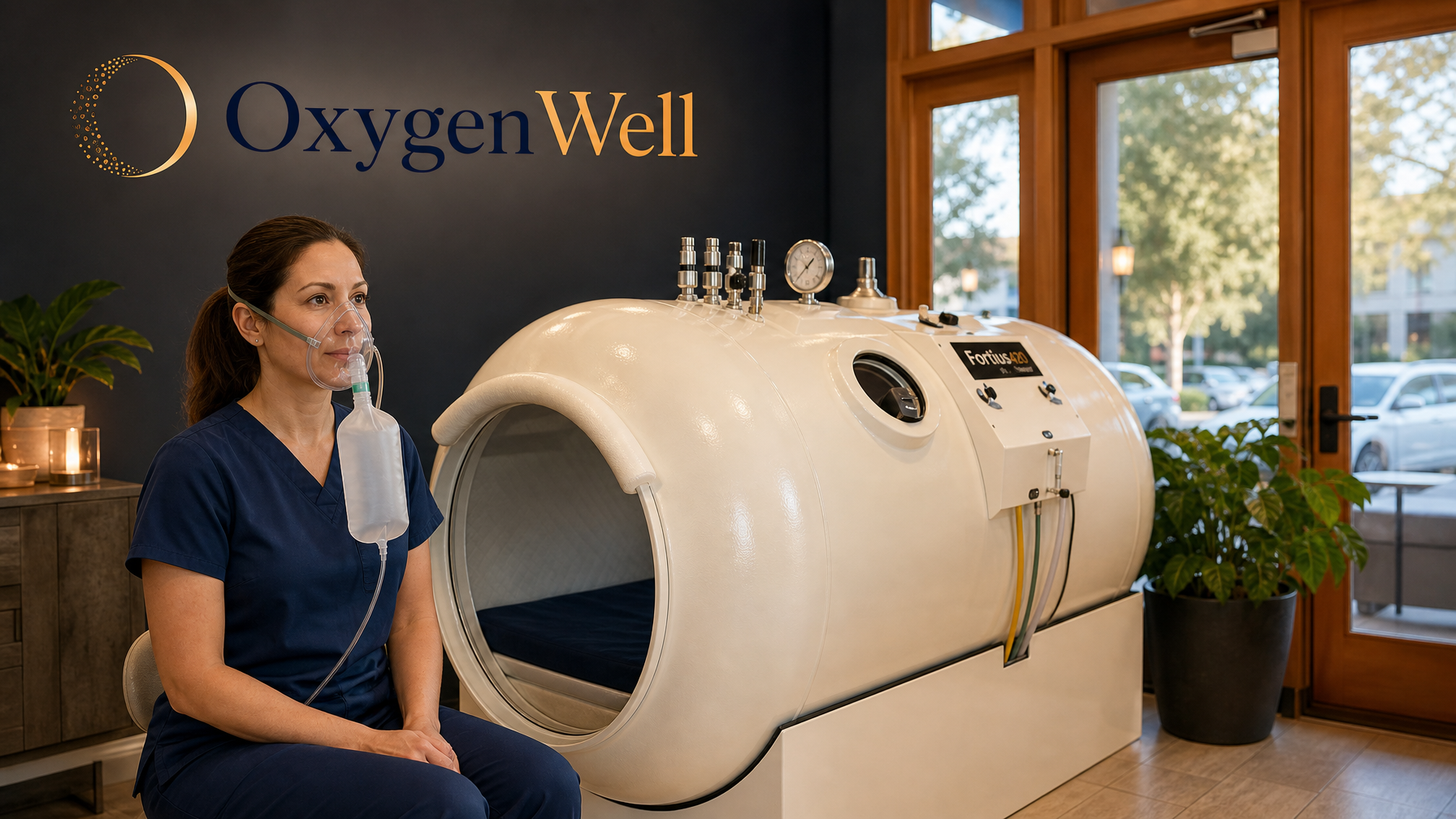
At OxygenWell, every protocol begins with a consultation with Dr. Beth Meneley to assess your surgical history, risk profile, and healing goals. Sessions run 60-90 minutes in our Fortius 420 medical-grade hard-shell chambers at pressures up to 2.4 ATA, with 100% medical-grade oxygen. Protocols are individualized, not templated.
What to Expect at OxygenWell
OxygenWell operates from two Los Angeles locations: Sherman Oaks and Calabasas. Our chambers are Fortius 420 monoplace units, grounded for electrical safety, rated to 2.4 ATA, and delivering high-flow medical-grade oxygen — not a standard oxygen concentrator.
During each session, you rest comfortably inside the pressurized chamber wearing a clear non-rebreather mask. Most patients find sessions deeply relaxing. You can sleep, listen to music, or simply rest. The pressure change on descent and ascent resembles the mild ear sensation of a commercial flight.
Our Certified Hyperbaric Technicians (CHTs), most of whom are EMT-certified, monitor you throughout every session. A physician assistant is on-site during most weekday hours. Safety protocols meet and exceed industry standards — a direct reflection of 12 years of hyperbaric practice and more than 50,000 supervised sessions.
OxygenWell also accepts Medicare and PPO insurance for FDA-approved HBOT conditions. If you develop a complication such as wound dehiscence or compromised skin flap after surgery, your treatment may qualify for insurance coverage. Our team handles pre-authorization support and can work directly with your plastic surgeon's office.
Learn more about HBOT for cosmetic surgery recovery in Los Angeles, or read our detailed guides on facelift recovery and BBL recovery.
Who Benefits Most from HBOT After a Mommy Makeover?
All mommy makeover patients benefit from HBOT to some degree. But certain profiles see the most dramatic impact:
- Current or recent smokers: Smoking impairs microvascular circulation, dramatically increasing ischemia risk. HBOT compensates by dissolving oxygen directly into plasma.
- Patients with prior abdominal surgeries: C-sections, appendectomies, and prior abdominoplasties create scar tissue that disrupts blood supply to the abdominal wall.
- Revision procedures: Scar tissue from prior surgeries reduces tissue pliability and vascularity, raising ischemia risk significantly.
- Patients with elevated BMI or diabetes: Adipose tissue is naturally hypovascular. Higher BMI increases flap distance and tension; diabetes impairs white blood cell function and wound healing at baseline.
- Patients who want optimal scar outcomes: Even without complications, HBOT accelerates collagen synthesis and remodeling, resulting in flatter, lighter scars.
- Patients returning to work or social activities quickly: HBOT noticeably shortens the visible bruising and swelling phase, which matters for patients with professional or social timelines.
Frequently Asked Questions
Does insurance cover HBOT after a mommy makeover?
For routine recovery enhancement, HBOT is not covered by insurance. However, if you develop a post-surgical complication such as a compromised skin flap, wound dehiscence, or tissue ischemia, HBOT becomes an FDA-approved treatment for that complication, and Medicare and PPO plans may cover it. OxygenWell's team handles insurance verification and pre-authorization. Call us at (818) 661-0939 to discuss your specific situation.
How soon after surgery can I start HBOT?
Most patients begin HBOT within 24-72 hours of surgery. Sessions can take place even with surgical drains in place, as HBOT is non-invasive. We coordinate directly with your plastic surgeon to confirm timing and clearance.
Will HBOT interfere with my implants or surgical hardware?
Modern breast implants are fully compatible with HBOT. The pressure changes inside a hyperbaric chamber at therapeutic levels do not affect implant integrity. If you have questions about specific implant types or surgical hardware, your surgeon can confirm compatibility before you begin.
Can I combine HBOT with other recovery treatments?
Yes. OxygenWell's Cellular Interval Training protocol pairs HBOT with photobiomodulation (red light therapy) for enhanced mitochondrial recovery, lymphatic support, and collagen production. Many mommy makeover patients incorporate red light sessions on days when they are not receiving HBOT, creating a comprehensive daily recovery program.
What if I already have a wound or complication from my surgery?
HBOT is most effective when started early in the course of a wound complication. If your plastic surgeon has identified compromised tissue, wound breakdown, or early necrosis, contact OxygenWell immediately. We can often begin treatment within 24 hours and will coordinate documentation for insurance purposes.
The Bottom Line
A mommy makeover is a significant investment — of time, money, and physical recovery. HBOT is one of the most well-supported tools available to protect that investment. The 2019 abdominoplasty preconditioning study is among the strongest signals in aesthetic surgery literature: a near-four-fold reduction in complication rates, and the complete elimination of necrosis in the treated group.
For Los Angeles patients preparing for or recovering from a mommy makeover, OxygenWell offers 12 years of hyperbaric medicine expertise, medical-grade chambers rated to 2.4 ATA, and individualized protocols guided by Dr. Beth Meneley's 25 years of integrative medicine practice. We work closely with your plastic surgeon and your body to support the best possible outcome.
Ready to build your recovery protocol? Call OxygenWell at (818) 661-0939 or visit oxygenwell.com to schedule a complimentary consultation.
Written by Dr. Beth Meneley, DAOM, L.Ac. Dr. Meneley has 25+ years in integrative medicine and 12+ years dedicated to hyperbaric medicine in Los Angeles, with more than 50,000 supervised HBOT sessions. She is the founder and clinical director of OxygenWell Hyperbaric & Regenerative Medicine Center in Sherman Oaks and Calabasas, CA.
