


TL;DR
Acupuncture moves blood and energy to the reproductive system. Hyperbaric oxygen therapy (HBOT) saturates those tissues with oxygen. Used together — ideally acupuncture first, then HBOT the same day — the two therapies create a compounding effect that neither can produce alone. For patients facing thin endometrium, poor egg quality, endometriosis, recurrent implantation failure, or HPO axis dysregulation, this combination targets fertility from multiple physiological angles simultaneously. At OxygenWell in Sherman Oaks and Calabasas, this is one of the most clinically nuanced fertility support protocols we offer.
Table of Contents
- How Does HBOT Support Fertility?
- How Does Acupuncture Improve IVF and Fertility Outcomes?
- Why the Combination Works Better Than Either Alone
- The Same-Day Protocol: Sequencing for Maximum Benefit
- Conditions That Respond Best to the HBOT + Acupuncture Combination
- Thin Endometrium and Recurrent Implantation Failure
- Endometriosis and Pelvic Inflammation
- HPO Axis Dysregulation and Hormonal Imbalance
- Poor Egg Quality and Diminished Ovarian Reserve
- A Note for Fertility Acupuncturists: Let's Collaborate
- OxygenWell's Fertility Optimization Protocol
- About Dr. Beth Meneley
- Ready to Take the Next Step?
How Does HBOT Support Fertility?
Hyperbaric oxygen therapy involves breathing 100% medical-grade oxygen inside a pressurized chamber at 1.5 to 2.4 ATA (atmospheres absolute). Under this pressure, oxygen dissolves directly into plasma, lymph, and cerebrospinal fluid — bypassing the red blood cell transport system entirely. The result: oxygen concentration in tissues rises to 10 to 15 times normal levels, even in poorly vascularized or hypoxic areas of the body, including the endometrium, ovaries, and follicular fluid.
For reproductive health, this oxygen saturation triggers a cascade of physiological events directly relevant to fertility:
- Endometrial thickening: HBOT stimulates VEGF (vascular endothelial growth factor), promoting new capillary formation in the uterine lining. Studies have shown improvements in endometrial thickness and blood flow in women with thin endometrium who received HBOT prior to embryo transfer. [Bay Area Hyperbarics]
- Oocyte quality: A 2022 peer-reviewed study published in PMC demonstrated that HBOT ameliorates the decline in oocyte quality in aged female mice, improving fertilization rates and reducing oxidative stress within follicles. [PMC, 2022]
- Stem cell mobilization: HBOT increases circulating CD34+ stem cells by up to 8x baseline, supporting tissue repair and regenerative capacity in reproductive organs.
- Inflammation reduction: CRP, TNF-α, and IL-6 — all markers of systemic inflammation that impair implantation — decrease measurably with a course of HBOT sessions.
- Male fertility support: HBOT improves sperm motility, morphology, and reduces sperm DNA fragmentation, making it a valuable addition for male factor infertility as well. [HBOT USA]
HBOT for fertility is considered an off-label, investigational application. At OxygenWell, protocols are personalized based on each patient's clinical picture, biomarkers, and fertility goals.
How Does Acupuncture Improve IVF and Fertility Outcomes?
Acupuncture's role in fertility support is one of the most researched areas in integrative medicine. Its mechanisms are neurological, vascular, and hormonal — not merely energetic in the abstract sense.
From a biomedical perspective, acupuncture:
- Increases uterine blood flow: Needle stimulation at points including SP8, SP10, CV4, and ST36 has been shown to measurably increase blood perfusion to the uterus and ovaries via sympathetic nervous system modulation. [City Pulse Acupuncture]
- Regulates the HPO axis: Electroacupuncture has been shown to normalize dysfunction in the hypothalamic-pituitary-ovarian axis, improving FSH/LH ratios and supporting regular ovulation. A landmark paper by Professor Bo-Ying Chen of Shanghai Medical University established acupuncture's capacity to regulate the HPOA in anovulatory patients at a high rate of efficacy. [Fertility Acupuncturist Seattle]
- Improves endometrial receptivity: A 2022 systematic review and meta-analysis in Frontiers in Public Health found dose-related improvements in endometrial receptivity markers in infertile women receiving acupuncture. [Frontiers in Public Health, 2022]
- Reduces cortisol and stress hormones: Elevated cortisol directly suppresses reproductive hormone production. Acupuncture's well-documented effect on the HPA (hypothalamic-pituitary-adrenal) axis lowers cortisol and supports progesterone levels.
- Supports PCOS and hormonal dysregulation: Research published in Frontiers in Endocrinology (2022) found compelling evidence that acupuncture is a "valuable natural approach to managing endocrine dysfunction" in PCOS, improving ovulatory frequency and hormonal balance. [Frontiers in Endocrinology, 2022]
In Chinese medicine terms, acupuncture moves Qi and Blood. When the Chong and Ren vessels — the "Sea of Blood" and "Sea of Yin" in TCM — are nourished and flowing freely, the uterus receives what it needs to build a receptive lining and hold a pregnancy.
Why the Combination Works Better Than Either Alone
Here is the core principle, stated plainly: acupuncture moves energy and blood; hyperbaric oxygen saturates it.
These two therapies operate on complementary physiological tracks. Acupuncture opens and optimizes the vascular pathways to the uterus, ovaries, and follicles. It lowers sympathetic nervous system tone, reduces uterine artery resistance, and primes the tissue to receive. HBOT then floods those same opened pathways with oxygen-rich plasma that penetrates into the endometrial stroma, follicular microenvironment, and ovarian cortex at concentrations impossible to achieve under normal atmospheric conditions.
Together, they address fertility from three simultaneous angles:
- Circulation: Acupuncture dilates and directs blood flow; HBOT increases oxygen payload of that blood.
- Cellular environment: Acupuncture reduces inflammation via neural signaling; HBOT reduces inflammatory cytokines biochemically (CRP, TNF-α, IL-6).
- Hormonal regulation: Acupuncture modulates the HPO axis from a neural-endocrine standpoint; HBOT's mitochondrial support and reduction of oxidative stress improve the cellular energy environment for steroidogenesis.
A 2025 meta-analysis published in Frontiers in Neurology found that acupuncture combined with hyperbaric oxygen outperformed HBOT alone across multiple neurological outcomes — demonstrating a clinically meaningful synergy when these two modalities are combined. [PMC, Frontiers in Neurology, 2025] While this study was in neurological contexts, the underlying mechanism — acupuncture enhancing tissue receptivity while HBOT delivers oxygen — applies directly to reproductive medicine.
When circulation meets oxygenation, and energy meets environment, fertility has the space it needs to thrive.
The Same-Day Protocol: Sequencing for Maximum Benefit
The ideal protocol sequences these therapies deliberately on the same day:
Step 1: Acupuncture First
Receive your acupuncture session first. The needles — placed at fertility-specific points including SP6, SP8, CV4, CV6, ST36, KD3, and others depending on your pattern — activate the nervous system response that dilates uterine arteries, reduces uterine contraction frequency, and shifts the body from sympathetic (stress) to parasympathetic (rest and repair) tone. This process takes 20 to 45 minutes. The vascular and nervous system effects begin within minutes and persist for hours.
Step 2: HBOT Same Day
Within the same day — ideally within a few hours of your acupuncture treatment — enter the hyperbaric chamber. Because the vascular pathways are already opened and blood flow to the reproductive organs is enhanced, the pressurized oxygen now has optimized access to those tissues. Oxygen-rich plasma reaches the endometrium, ovaries, and follicular fluid with greater efficiency than it would without the acupuncture primer.
A session typically runs 60 to 90 minutes at 1.5 to 2.0 ATA for fertility protocols.
Alternate-Day Protocol
For patients who cannot coordinate same-day sessions, alternating days between acupuncture and HBOT still produces cumulative benefit. The anti-inflammatory, pro-vascular effects of each therapy build over time and support one another within the same treatment cycle. Most fertility protocols run 10 to 20 HBOT sessions coordinated alongside a regular acupuncture schedule — typically starting 6 to 8 weeks before an embryo transfer for IVF patients.
Conditions That Respond Best to the HBOT + Acupuncture Combination
Not every fertility challenge is the same. The following conditions show particularly strong clinical rationale for the combined protocol.
Thin Endometrium and Recurrent Implantation Failure
A uterine lining below 7–8 mm significantly reduces implantation rates — even with genetically normal embryos. Thin endometrium is one of the most frustrating fertility diagnoses because conventional options are limited. Standard estrogen protocols don't always work, and repeated failed transfers erode hope.
HBOT directly targets the vascular insufficiency that causes thin endometrium. By stimulating VEGF and angiogenesis, it builds new capillary networks in the uterine lining. A 2023 investigational report summarized HBOT as a viable approach for patients with refractory thin endometrium — particularly those in whom vascular causes are primary. [Wound Reference, 2023]
Acupuncture contributes by reducing uterine artery resistance (measurable via Doppler ultrasound) and improving pulsatility index — two markers directly associated with endometrial receptivity. A 2025 randomized controlled trial protocol published in BMJ Open specifically studied acupuncture's effect on endometrial receptivity in women with thin endometrium, underscoring growing research interest in this combination. [BMJ Open, 2025]
For recurrent implantation failure specifically, the combination addresses multiple simultaneous contributors: poor perfusion, chronic inflammation, immune dysregulation, and mitochondrial insufficiency in the endometrial stroma.
OxygenWell protocol for thin endometrium / recurrent implantation failure: 15 to 30 HBOT sessions, daily or 5x/week, 1.5 to 2.0 ATA, 60 to 90 minutes, coordinated with ongoing acupuncture.
Endometriosis and Pelvic Inflammation
Endometriosis is a condition defined by chronic inflammation, hypoxic lesions, immune dysfunction, and impaired tissue healing — all of which HBOT addresses directly. The disease creates a hostile pelvic environment for implantation, and both systemic and local inflammation need to be reduced for fertility to improve.
HBOT's anti-inflammatory effects are well documented. It suppresses NF-kB (a master inflammatory transcription factor), reduces prostaglandin production, and decreases adhesion molecule expression that promotes ectopic tissue growth. The HEROES Trial — currently enrolling at Sunnybrook Health Sciences Centre — is specifically investigating HBOT for endometriosis-related pain, marking a significant step toward formal clinical recognition. [HEROES Trial, CTV]
Acupuncture's role in endometriosis is supported by its capacity to regulate prostaglandin levels, reduce pelvic inflammatory cytokines, and modulate immune cell activity in the peritoneal cavity. It also addresses the pain-spasm-ischemia cycle that endometriosis creates, improving blood flow to scarred or adherent pelvic tissues.
Together, the two therapies create a sustained anti-inflammatory and pro-vascular environment — exactly what an endometriosis patient's reproductive system needs before attempting conception.
OxygenWell protocol for endometriosis: 20 to 40 HBOT sessions, daily, 1.5 to 2.0 ATA, combined with acupuncture targeting pelvic inflammatory and Liver Qi stagnation patterns.
HPO Axis Dysregulation and Hormonal Imbalance
The hypothalamic-pituitary-ovarian axis is the hormonal conductor of the female reproductive system. When it is dysregulated — as in PCOS, hypothalamic amenorrhea, luteal phase defect, or elevated FSH — ovulation becomes irregular, hormone ratios shift, and the follicular environment degrades.
Acupuncture is one of the most well-studied interventions for HPO axis normalization. Professor Bo-Ying Chen's research demonstrated that electroacupuncture at specific points raises beta-endorphin levels, which in turn modulate GnRH secretion — the upstream signal that drives LH and FSH production. Clinical outcomes in anovulatory patients treated with acupuncture include restored ovulatory cycles, improved FSH/LH ratios, and better follicular development. [Chen BY, Shanghai Medical University]
HBOT supports hormonal health from a cellular level — improving mitochondrial function in granulosa cells and theca cells (which produce estrogen and progesterone), reducing oxidative stress that impairs steroidogenesis, and lowering systemic inflammation that disrupts the HPO axis signaling cascade.
OxygenWell protocol for HPO axis dysregulation: 15 to 30 HBOT sessions, 1.5 to 2.0 ATA, daily or 1x/week maintenance, coordinated with acupuncture emphasizing kidney yang/yin balance and Chong-Ren vessel nourishment.
Poor Egg Quality and Diminished Ovarian Reserve
Egg quality is fundamentally a mitochondrial issue. Oocytes have the highest mitochondrial density of any cell in the human body — and they rely entirely on mitochondrial ATP production for maturation, fertilization, and early embryo development. Oxidative stress, inflammation, and poor tissue oxygenation all degrade mitochondrial function in oocytes.
HBOT directly improves mitochondrial health by increasing oxygen availability for ATP production, reducing reactive oxygen species (ROS), and promoting mitochondrial biogenesis. A 2022 peer-reviewed PMC study found that HBOT "ameliorates the decline in oocyte quality" in aged female subjects, improving maturation rates and reducing spindle abnormalities — a key marker of egg quality. [PMC, 2022]
Acupuncture supports egg quality through improved ovarian blood flow (documented via color Doppler studies), regulation of FSH and anti-Müllerian hormone (AMH) signaling, and reduction of ovarian inflammation. In women with diminished ovarian reserve, improving the microenvironment surrounding remaining follicles is the most actionable intervention available.
For poor egg quality and low AMH, the combination protocol ideally runs for 6 to 8 weeks prior to egg retrieval or embryo transfer — giving both therapies enough cycles to shift the follicular microenvironment measurably.
OxygenWell protocol for poor egg quality / DOR: 20 to 40 HBOT sessions, 1.5 to 2.0 ATA, cycle-based or pre-IVF retrieval timing.
A Note for Fertility Acupuncturists: Let's Collaborate
If you are a fertility-focused acupuncturist in the Los Angeles area, this section is written directly for you.
We love collaborating with fertility-focused acupuncturists to support your patients with a deeper level of care.
What makes OxygenWell a natural partner for acupuncture practices is our clinical depth. OxygenWell was co-founded by Dr. Beth Meneley, DAOM, L.Ac. — a Doctor of Acupuncture and Oriental Medicine with over 20 years specializing in fertility and the founder of Tao of Venus Acupuncture Center and The Functional Fertility Method. She is not simply an HBOT provider who has learned about fertility. She is an acupuncturist and functional medicine practitioner who brought HBOT into her clinical model because she saw what it could do for her most challenging fertility cases.
That means when your patient comes to OxygenWell, they are seen by someone who speaks your clinical language — who understands Kidney deficiency, Liver Qi stagnation, Blood stasis, and the Chong-Ren axis just as fluently as VEGF, endometrial perfusion, and mitochondrial ATP. We will not work against your protocol. We will work alongside it.
What collaboration looks like in practice:
- You continue treating your patient on your schedule and with your point protocols.
- We coordinate HBOT sessions to follow your acupuncture treatments on the same day where possible, maximizing the vascular priming effect.
- We communicate openly about where the patient is in their cycle, their IVF timeline, and any clinical changes you are observing.
- Together, we create the best physiological environment possible for conception.
BETTER OXYGENATION. BETTER ENVIRONMENT. BETTER OUTCOMES.
To discuss a referral partnership or learn more about our fertility protocols, contact us at (818) 661-0939 or visit www.oxygenwell.com. We are happy to schedule a consultation call to discuss your patient's case.
OxygenWell's Fertility Optimization Protocol
Every patient who comes to OxygenWell for fertility support receives a personalized protocol. The following represents the general framework:
IVF Pre-Transfer Protocol
- Timing: Begin 6 to 8 weeks before embryo transfer
- Frequency: Daily or 5x/week; finish 3 to 5 days before transfer
- Sessions: 10 to 20 HBOT sessions
- Pressure: 1.5 to 2.0 ATA
- Duration: 60 to 90 minutes per session
- Goal: Improve endometrial thickness, uterine blood flow, and implantation rates
Ongoing Support Protocol
- Frequency: 1 to 2x/week
- Sessions: 12 to 20+ sessions
- Pressure: 1.3 to 1.5 ATA
- Goal: Sustained mitochondrial support, inflammation management, and follicular environment optimization throughout the cycle
Condition-Specific Intensive Protocols
- Thin endometrium / recurrent implantation failure: 15 to 30 sessions daily
- Endometriosis / pelvic inflammation: 20 to 40 sessions daily
- Poor egg quality / DOR: 20 to 40 sessions, cycle-based or pre-retrieval
- HPO axis / hormonal dysregulation: 15 to 30 sessions daily or 1x/week
- Male fertility (sperm quality): 20 to 30 sessions daily
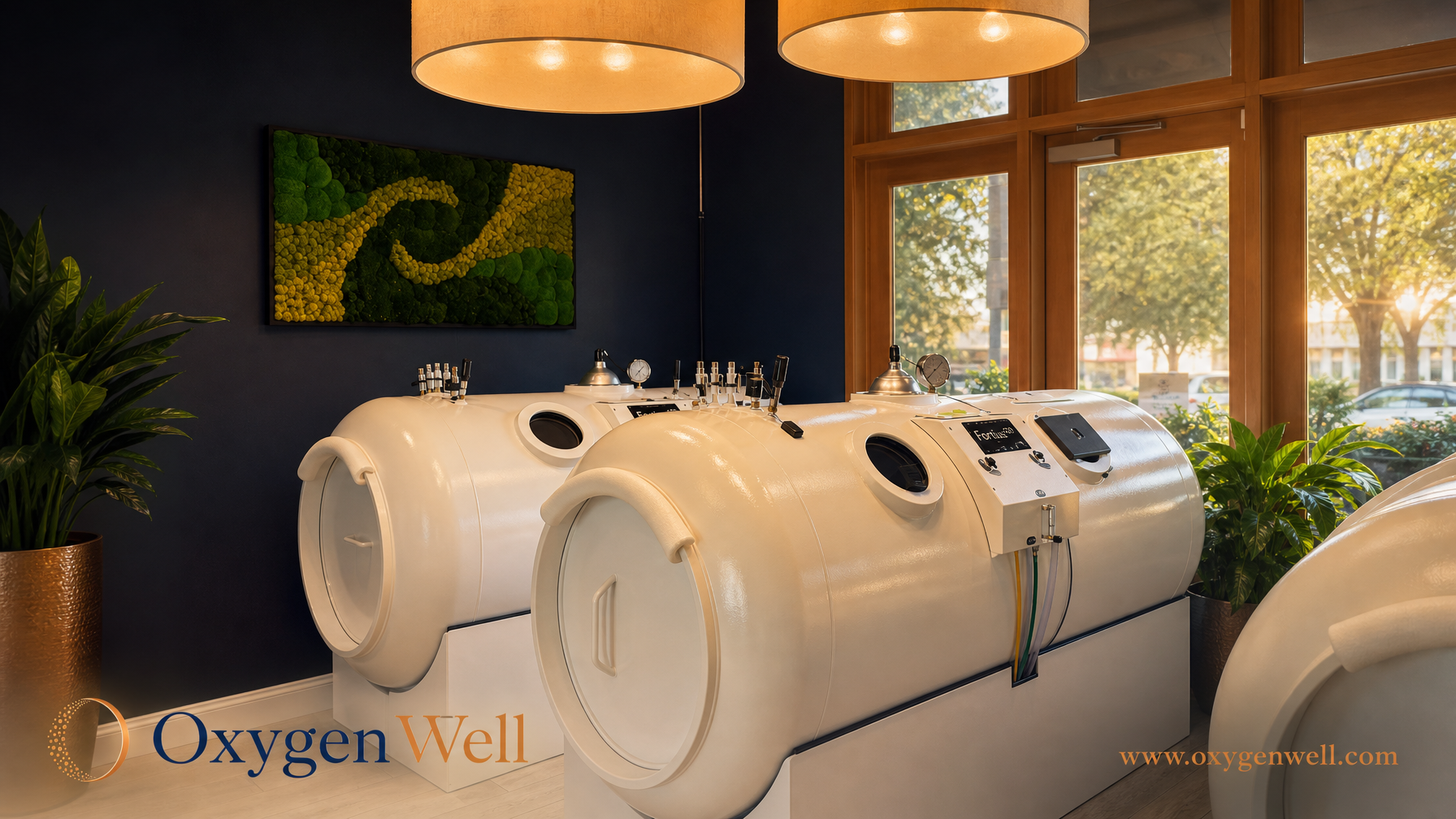
All HBOT sessions at OxygenWell use 100% medical-grade oxygen at up to 2.4 ATA — not the diluted oxygen concentrators found at many wellness-focused facilities. This distinction matters clinically. Our grounded, monoplace Fortius420 chambers and medical-grade systems ensure you receive the dose that research protocols are based on.
HBOT for fertility is an off-label application. Protocols are personalized and developed in coordination with your fertility specialist and/or reproductive endocrinologist.
About Dr. Beth Meneley, DAOM, L.Ac.
Dr. Beth Meneley brings a rare dual perspective to fertility medicine: she is both a Doctor of Acupuncture and Oriental Medicine and a hyperbaric medicine specialist with 25+ years in integrative medicine and 12+ years dedicated to HBOT in Los Angeles — overseeing more than 50,000 supervised sessions.
She founded Tao of Venus Acupuncture Center and The Functional Fertility Method, integrating functional medicine principles and Chinese medicine to support both male and female fertility. As Wellness Director and Co-Owner of OxygenWell, she is uniquely positioned at the intersection of Chinese medicine, functional medicine, and hyperbaric oxygen therapy — a clinical combination that no other HBOT center in Los Angeles can offer.
This depth of background means that OxygenWell is not simply adding HBOT to a fertility conversation. It is building fertility protocols where HBOT, acupuncture, functional medicine, and hormonal optimization work together as a coordinated system.
Ready to Take the Next Step?
Whether you are a patient exploring integrative fertility support or a fertility acupuncturist looking for a clinical partner who speaks your language, we invite you to connect with us.
For patients: Schedule a free discovery call to discuss your fertility history, IVF timeline, and whether HBOT is appropriate for your situation. We will help you understand exactly what a protocol would look like and how it fits alongside your current care.
For acupuncturists: Reach out to discuss a referral partnership and how we can coordinate care for your fertility patients. We believe deeply in the power of integrative collaboration — and we are ready to be the HBOT partner your practice has been looking for.
OxygenWell Hyperbaric & Regenerative Medicine Center
Sherman Oaks | Calabasas, CA
(818) 661-0939
www.oxygenwell.com
Restoring Vitality at the Cellular Level.
