Quick summary
- OxygenWell now accepts personal injury (PI) and medical lien cases for hyperbaric oxygen therapy (HBOT) at our Sherman Oaks and Calabasas centers.
- HBOT can support recovery after trauma when tissue needs more oxygen than damaged blood flow can deliver, including selected crush injuries, acute traumatic ischemia, compromised grafts or flaps, serious soft-tissue infection pathways, and other care-team–directed goals.
- A medical lien lets qualifying patients start care while a claim is open. Payment is typically coordinated through the settlement or case resolution under a written agreement with the patient and counsel.
- Attorneys, case managers, and referring clinicians can call (818) 661-0939 or visit oxygenwell.com/contact to discuss a case.
After a car crash, fall, workplace incident, or other injury, healing often depends on blood flow and oxygen delivery to damaged tissue. Swelling and disrupted vessels can leave cells starved for oxygen just when repair work peaks. Johns Hopkins Medicine describes how hyperbaric oxygen therapy raises the amount of oxygen carried in the blood so injured tissue can receive more of what it needs to repair.
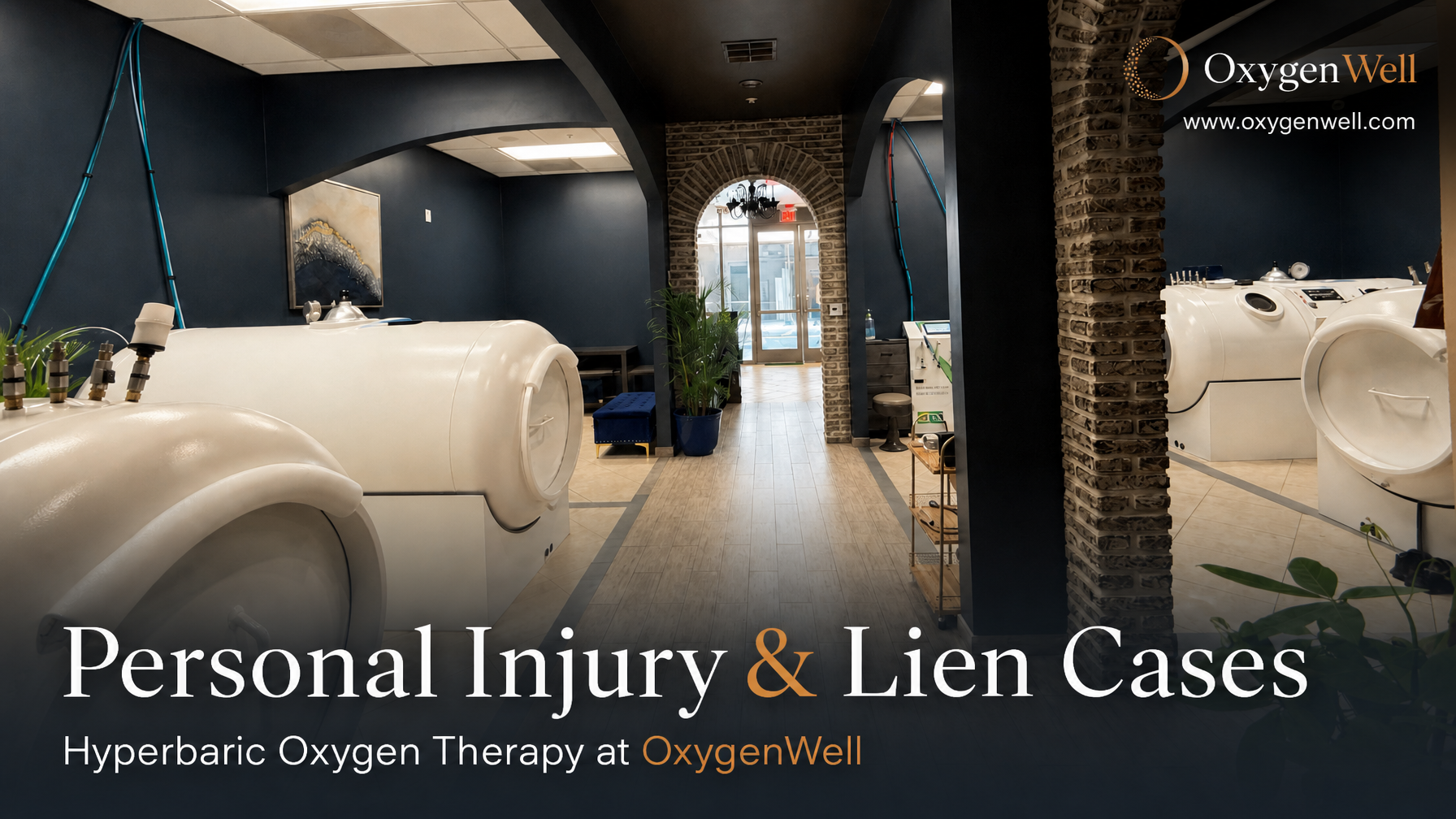
OxygenWell now accepts personal injury and lien cases for hyperbaric medicine. That means injured patients and their legal teams have a clearer path to medical-grade HBOT in Los Angeles without waiting for every insurance hurdle to clear first, when a case qualifies.
What is a medical lien for hyperbaric oxygen therapy?
A medical lien (sometimes called treatment on a lien) is a written agreement. A provider delivers medically appropriate care. In return, the patient and usually their personal injury attorney agree that the provider will be paid from the proceeds of a settlement, judgment, or other case resolution, subject to the lien terms and applicable law.
Liens are common in auto and other PI practices when:
- Med-pay or health insurance is limited, delayed, or disputed
- The patient needs care now, not after a long claims process
- Counsel wants documented, medically grounded treatment in the record
OxygenWell reviews each personal injury and lien referral individually. Not every case qualifies. We look at clinical fit, documentation, attorney involvement when applicable, and whether HBOT is an appropriate part of the recovery plan.
This article is educational and is not legal advice. Lien rights and obligations depend on California law, the written agreement, and the facts of each case. Patients should discuss lien terms with their attorney.
Why personal injury patients are referred for HBOT
Trauma changes local oxygen supply. Fluid leaks into tissue, swelling rises, and vessels may be crushed or torn. That cycle of swelling, low oxygen, and further tissue stress is one reason clinicians use HBOT in selected injury pathways.
According to Johns Hopkins Medicine, HBOT can:
- Bring oxygen-rich plasma to oxygen-starved tissue
- Help reduce swelling while raising oxygen delivery
- Support the body against certain harmful bacteria and improve white-cell function in high-oxygen environments
- Encourage collagen formation and new blood-vessel growth as healing progresses
Adventist HealthCare lists crush injuries and traumas from events such as car accidents, falls, or gunshot wounds among conditions where providers may recommend HBOT, alongside burns, carbon monoxide poisoning, compromised skin grafts and flaps, bone infection, radiation injury, and non-healing wounds.
The Undersea and Hyperbaric Medical Society (UHMS) publishes the widely used list of hyperbaric indications. That list includes crush injury, compartment syndrome, and other acute traumatic ischemias, as well as conditions that sometimes follow complex injury care (for example compromised grafts and flaps, certain serious infections, and selected other approved pathways). You can read more on our clinical page about HBOT for crush injury and acute traumatic ischemia.
HBOT is not a cure-all for every bruise, soft-tissue strain, or sports injury. Major centers are clear that coverage and evidence are strongest for recognized indications. Personal injury referrals work best when a treating physician, surgeon, or wound specialist sees a real oxygen-delivery or tissue-viability problem and wants HBOT as part of a broader plan.
Injury patterns we commonly discuss with PI teams
Every case is different. Conversations with attorneys and clinicians often include:
- Crush injury and acute traumatic ischemia after high-energy impacts, entrapment, or severe extremity trauma
- Compromised surgical flaps or grafts after reconstructive procedures tied to the accident
- Complex wounds that stall despite standard care
- Serious soft-tissue infection risk in the post-traumatic setting, when the surgical and medical team directs adjunct care
- Carbon monoxide exposure in fire- or exhaust-related incidents, when clinically indicated
- Thermal burns in qualifying cases
- Post-concussive and other neurologic symptoms after motor vehicle collisions, discussed carefully. TBI-related use of HBOT is often off-label; we set expectations honestly and coordinate with the treating team rather than overpromise
When a condition sits on the FDA/UHMS-recognized list and payer rules allow, traditional insurance may still apply. Lien and PI pathways are especially useful when timing, liability, or coverage gaps would otherwise delay care.
How HBOT works at OxygenWell
Patients rest in a monoplace hard-shell chamber while breathing 100% medical-grade oxygen through a non-rebreather mask. Pressures can reach up to 2.4 ATA, depending on the protocol. Sessions are run by CHT and EMT-trained technicians, with a PA on site most weekday hours.
We operate two Los Angeles–area locations:
- Sherman Oaks, 15301 Ventura Blvd., Suite P-12, Sherman Oaks, CA 91403 (Sherman Oaks Galleria)
- Calabasas, 23500 Park Sorrento, Suite A2, Calabasas, CA 91302
Both centers are open seven days a week, with evening hours that fit work, therapy, and court schedules. Learn more about our Calabasas hyperbaric center and our approach to insurance and coverage for qualifying conditions.
How the personal injury and lien process works here
- Referral or inquiry. Attorney, case manager, physician, or patient contacts OxygenWell with basic case and injury details.
- Clinical screening. We review records, imaging summaries when available, surgical notes, and current symptoms to see whether HBOT is medically appropriate.
- Lien / PI paperwork. For accepted lien cases, we complete the written lien and related authorizations with the patient and counsel.
- Protocol and schedule. Session frequency and length follow the indication and the referring team’s goals. Acute pathways may need a tighter schedule; reconstructive or wound pathways may run over more visits.
- Documentation. Progress notes and attendance records support both clinical care and the legal file.
- Coordination through resolution. Billing follows the lien or other agreed PI arrangement through settlement or case resolution, per the signed terms.
Patients who already have Medicare, PPO, or med-pay may still use traditional benefits for covered indications. Our team helps sort which path fits: insurance, lien, hybrid, or cash-pay for clearly non-covered goals.
For personal injury attorneys and case managers
We built this pathway so counsel can add hyperbaric medicine without a maze of false starts.
- Single point of contact for scheduling and records requests: (818) 661-0939
- Medical-grade chambers rated to therapeutic pressures used in hospital-based hyperbaric programs (up to 2.4 ATA)
- Clear clinical framing tied to recognized indications when they apply, so treatment notes read as medicine, not spa language
- Two West Valley locations convenient to much of Los Angeles and Ventura County counsel and clients
- Evening and weekend access that reduces missed work and missed sessions
If you want a short intro for your intake team or a one-page referral sheet, ask when you call. We also welcome physician-to-physician handoffs from orthopedics, plastics, trauma, wound care, and primary care.
For injured patients
You do not need to understand every insurance code to take the next step. If you are in a personal injury case and your doctor or attorney thinks oxygen therapy may help, contact us. Bring:
- Attorney name and firm (if you have counsel)
- Date and type of incident
- Key diagnoses and recent procedure dates
- A medication list and any contraindications you already know (for example certain lung or ear issues your doctors have flagged)
We will tell you honestly whether HBOT is a fit, what a typical schedule looks like, and whether a lien, insurance, or another path makes sense.
Safety and expectations
HBOT is generally well tolerated. Ear pressure during compression is the most common annoyance. People with untreated pneumothorax, some acute respiratory infections, or certain other conditions may not be candidates. Your intake visit screens for that.
Results depend on the injury, timing, concurrent surgery or rehab, and overall health. We do not promise case outcomes or settlement values. We focus on appropriate care, clear documentation, and a respectful experience for patients who are already under stress.
Start a personal injury or lien referral
OxygenWell now accepts personal injury and medical lien cases for hyperbaric oxygen therapy in Sherman Oaks and Calabasas.
Call (818) 661-0939
Request a consult: www.oxygenwell.com/contact
Web: www.oxygenwell.com
Open 7 days · Sherman Oaks and Calabasas
Related reading: VA Community Care for Hyperbaric Oxygen Therapy in Los Angeles