TLDR: Chronic refractory osteomyelitis is a persistent bone infection that fails to resolve despite surgery and antibiotics. HBOT is an FDA-recognized, Medicare-covered adjunct that restores oxygen levels in infected bone, amplifies antibiotic effectiveness, and reactivates the immune system's infection-fighting capacity. Clinical evidence shows remission rates of 81–85% when HBOT is added to standard care. A full course involves 40–60 sessions at 2.4 ATA. At OxygenWell, physician-led HBOT for osteomyelitis is available at our Sherman Oaks and Calabasas locations, and Medicare and PPO insurance is accepted for eligible patients.
Table of Contents
- What Is Osteomyelitis?
- Why Does Osteomyelitis Become Chronic and Refractory?
- How Hyperbaric Oxygen Therapy Treats Bone Infections
- Is HBOT FDA-Approved for Osteomyelitis?
- Clinical Evidence: What the Research Shows
- HBOT Treatment Protocol for Osteomyelitis
- Insurance and Medicare Coverage for HBOT
- Who Is a Good Candidate?
- HBOT for Osteomyelitis in Los Angeles
- Frequently Asked Questions
Bone infections are among the most stubborn conditions in medicine. When bacteria invade bone tissue, they create an environment that antibiotics struggle to reach and the immune system cannot fully clear. For thousands of patients each year, that means months — sometimes years — of pain, draining wounds, and the looming risk of amputation.
Hyperbaric oxygen therapy (HBOT) changes that equation. As an FDA-recognized adjunct for chronic refractory osteomyelitis, HBOT restores oxygen to starved bone tissue, amplifies antibiotic activity, and reactivates the body's own infection-fighting mechanisms.
What Is Osteomyelitis?
Osteomyelitis is an infection of bone or bone marrow, usually caused by bacteria — most commonly Staphylococcus aureus. Approximately 50,000 U.S. hospital admissions occur annually due to osteomyelitis, with diabetic patients, IV drug users, and post-surgical patients at highest risk. (StatPearls 2025)
Why Does Osteomyelitis Become Chronic and Refractory?
Chronic refractory osteomyelitis is formally defined as an infection that persists or recurs after at least 6 weeks of appropriate culture-directed antibiotic therapy and surgical debridement. Several factors drive this resistance:
- Tissue hypoxia: Bacteria, biofilms, and dead bone accumulate in avascular pockets where immune cells cannot function at full capacity.
- Biofilm formation: S. aureus forms biofilms on bone and implanted hardware, creating a physical barrier against both antibiotics and immune cells.
- Leukocyte dysfunction: White blood cells require oxygen to generate the reactive oxygen species that kill gram-positive bacteria.
- Impaired antibiotic transport: Aminoglycosides and cephalosporins depend on oxygen-dependent active transport to penetrate bone tissue.
How Hyperbaric Oxygen Therapy Treats Bone Infections
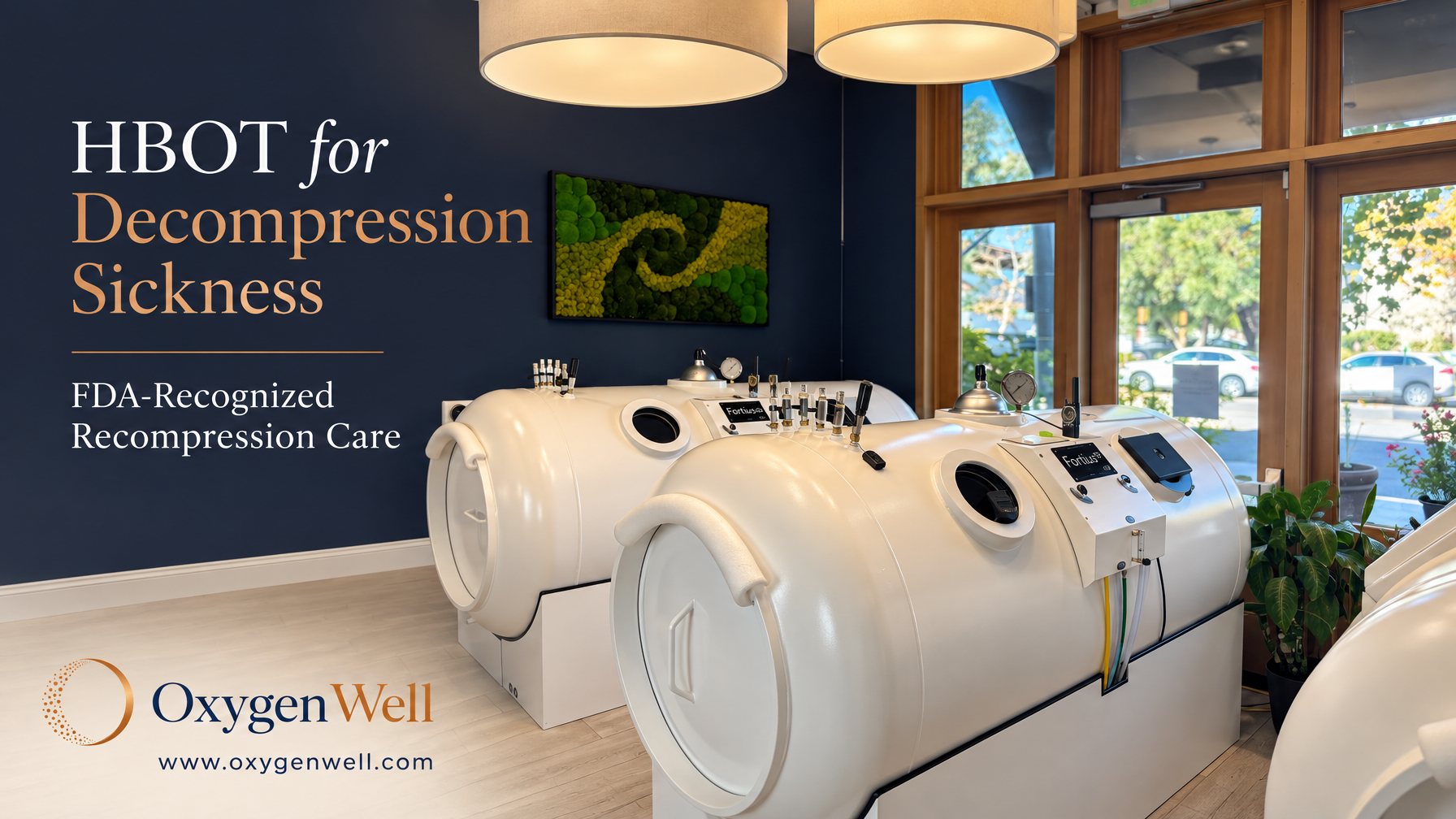
HBOT places patients inside a pressurized monoplace chamber where they breathe 100% medical-grade oxygen at pressures up to 2.4 ATA. For osteomyelitis specifically, HBOT produces four critical therapeutic effects:
1. Restores Oxygen to Infected Bone
HBOT elevates tissue oxygen content to normal or above-normal levels, creating an environment hostile to anaerobic bacteria and permissive for healing.
2. Reactivates Leukocyte Killing
Neutrophils and macrophages require oxygen to carry out oxidative burst. Restoring oxygen to infected bone directly reactivates this immune mechanism, achieving bactericidal effects that antibiotics alone cannot produce.
3. Amplifies Antibiotic Penetration
HBOT improves the transport of aminoglycosides and cephalosporins into infected bone through oxygen-dependent active transport mechanisms, achieving higher antibiotic concentrations at the infection site. (StatPearls 2025)
4. Stimulates Osteogenesis and Angiogenesis
HBOT stimulates bone regeneration by promoting new blood vessel formation and activating osteoblasts — the cells responsible for new bone synthesis.
Is HBOT FDA-Approved for Osteomyelitis?
Yes. Refractory (chronic) osteomyelitis is an FDA-recognized indication for hyperbaric oxygen therapy and appears on the official UHMS approved conditions list. (UHMS) The American Heart Association classifies HBOT as a Class II intervention for chronic refractory osteomyelitis, upgrading to Class I for diabetic foot ulcers with osteomyelitis.
Clinical Evidence: What the Research Shows
- 81–85% remission rates at 2–3 years in patients with chronic refractory osteomyelitis who received HBOT as an adjunct to antibiotics and surgery. (AAFP)
- A 2024 observational study in International Journal of Lower Extremity Wounds found that adding HBOT achieved an 80%+ resolution rate. (PubMed 38073097)
- A 2025 study in Advances in Skin and Wound Care confirmed that patients who completed their full HBOT course showed significantly greater improvement than those who stopped early. (PubMed 39836555)
- A 2023 real-world evidence study found HBOT for chronic osteomyelitis was associated with lower 1-year mortality compared to patients treated without HBOT. (PubMed 36940497)
HBOT Treatment Protocol for Osteomyelitis
ParameterSpecification Pressure2.4 ATA Duration90 minutes per session Air breaks5-minute air breaks every 30 minutes FrequencyOnce daily, 5 days per week Total sessions40–60 sessions Concurrent treatmentCulture-directed antibiotics (IV often required for 6+ weeks)At OxygenWell, every osteomyelitis protocol is directed by Dr. Beth Meneley, DAOM, L.Ac. (25+ years in integrative medicine, 12+ years dedicated to hyperbaric medicine), in coordination with the patient's infectious disease specialist and surgeon. Our chambers operate at full medical-grade pressure up to 2.4 ATA with high-flow medical-grade oxygen.
Insurance and Medicare Coverage for HBOT
Chronic refractory osteomyelitis is a Medicare-covered condition for HBOT under Medicare Part B. Most major PPO insurance plans follow Medicare's clinical criteria. OxygenWell works with a dedicated billing team that handles all pre-authorization for Medicare and PPO patients. (Medicare.gov)
Key coverage requirements typically include: confirmed osteomyelitis diagnosis with appropriate imaging (MRI is the gold standard), documented failure of at least 6 weeks of adequate antibiotic therapy and surgical debridement, referral or co-management with an infectious disease specialist, and treatment at a physician-owned HBOT facility.
California law requires hyperbaric facilities to be physician-owned — a legal standard that many competing centers fail to meet. OxygenWell's physician ownership is both a regulatory compliance requirement and a clinical quality guarantee.
Who Is a Good Candidate?
HBOT for osteomyelitis is most appropriate for patients who:
- Have chronic osteomyelitis persisting beyond 4–6 weeks despite adequate antibiotics and surgical debridement
- Have diabetic foot ulcers with underlying osteomyelitis (Wagner Grade 3 or higher)
- Have osteomyelitis with implanted hardware that cannot be safely removed
- Face high surgical risk that limits aggressive debridement options
- Have osteomyelitis in the spine, sternum, or skull
- Experience recurrent osteomyelitis with repeated wound reopening or sinus tract formation
HBOT for Osteomyelitis in Los Angeles
If you or a patient is managing chronic or refractory osteomyelitis in the Los Angeles area, physician-led HBOT is available at OxygenWell's Sherman Oaks and Calabasas locations. Our facility meets every standard required for Medicare and PPO insurance coverage: grounded monoplace chambers, medical-grade oxygen delivery up to 2.4 ATA, on-site physician oversight, and a dedicated billing team for pre-authorization.
Referring physicians can contact our team directly at (818) 661-0939 or via oxygenwell.com/contact.
Frequently Asked Questions
How long does HBOT treatment for osteomyelitis take?
A complete course typically involves 40–60 sessions, each 90 minutes long, conducted once daily five days per week. Patients can expect 8–12 weeks of treatment alongside antibiotic therapy and wound care.
Can HBOT replace antibiotics for osteomyelitis?
No. HBOT is an adjunct — it works alongside culture-directed antibiotics and surgical debridement, not in place of them.
Is HBOT safe for diabetic patients with osteomyelitis?
Yes. Diabetic patients are among the most common HBOT candidates for osteomyelitis. The therapy is well-tolerated even in patients with significant comorbidities. Blood glucose monitoring before and after sessions is standard practice at OxygenWell.
Does insurance cover HBOT for osteomyelitis?
Medicare Part B covers HBOT for chronic refractory osteomyelitis in qualifying patients. Most PPO plans follow similar clinical criteria. OxygenWell's billing team handles pre-authorization at no additional cost to patients.
Written by the clinical team at OxygenWell Hyperbaric & Regenerative Medicine Center, Sherman Oaks and Calabasas, CA. Call (818) 661-0939.