TLDR: Intracranial abscess (brain abscess, subdural empyema, and epidural empyema) is a UHMS-approved indication for hyperbaric oxygen therapy as an adjunct to surgery and antibiotics. UHMS selection criteria include multiple abscesses, deep or dominant location, immune compromise, poor surgical candidates, and failure of standard care. Typical protocols use 2.0 to 2.5 ATA for 60 to 90 minutes, once or twice daily. Medicare's national coverage list does not include intracranial abscess; many commercial plans that follow UHMS indications do. OxygenWell treats patients in Sherman Oaks and Calabasas with medical-grade oxygen at pressures up to 2.4 ATA.
Table of contents
- What is an intracranial abscess?
- Is HBOT approved for brain abscess?
- How hyperbaric oxygen helps
- Who should be considered for HBOT
- What treatment looks like
- Does insurance cover it?
- Care at OxygenWell in Los Angeles
What is an intracranial abscess?
The Undersea and Hyperbaric Medical Society (UHMS) groups three related infections under intracranial abscess: cerebral abscess, subdural empyema, and epidural empyema. They share similar causes, imaging workups, and treatment problems. [UHMS, Intracranial Abscess]
A brain abscess is a localized pocket of pus inside the cranial cavity. Incidence is about 0.3 to 1.3 per 100,000 people in the general population and higher in high-risk groups such as people with HIV/AIDS. Infection often spreads from nearby sinuses, ears, mastoid air cells, or teeth (up to 60% of cases), travels through the bloodstream (often with multiple abscesses), or follows penetrating head trauma. Streptococcus and Staphylococcus species are the most common bacteria; anaerobes from oral flora are also common. [StatPearls, Hyperbaric Oxygen Therapy for Intracranial Abscess]
Standard care remains surgical aspiration or evacuation plus targeted antibiotics. Outcomes have improved with CT, stereotactic drainage, and better antimicrobials. A systematic review cited in StatPearls reports case fatality falling from about 40% to 10% over six decades, with full recovery rising from about 33% to 70%. Mortality is still real, especially with multiple lesions, deep or dominant locations, immune compromise, or failure of first-line care. [StatPearls]
Is HBOT approved for brain abscess?
Yes, as an adjunct, not as a replacement for neurosurgery and antibiotics. UHMS lists intracranial abscess among approved hyperbaric indications. UCLA Health, which follows UHMS, includes intracranial abscess on its clinical indication list. Mayo Clinic also notes hyperbaric oxygen as a treatment option for pus-filled pockets in the brain called brain abscesses. [UHMS] [UCLA Health Hyperbaric Indications] [Mayo Clinic]
UHMS reviewed earlier case series of intracranial abscess and found average mortality around 20% (1981-1990s literature). In 66 patients treated with adjunctive hyperbaric oxygen and reported to UHMS, there was 1 death (1.5%). That compilation is not a randomized trial. It is the main published signal that prompted UHMS to keep this indication. [UHMS]
StatPearls summarizes a retrospective cohort in which patients who received HBOT had lower morbidity, fewer reoperations, and a higher chance of returning to baseline function than those treated with standard therapy alone. Average reported course in that literature is about 14 sessions when osteomyelitis is absent. [StatPearls]
How hyperbaric oxygen helps
HBOT delivers 100% oxygen at more than 1.4 ATA. At 2.5 ATA, dissolved plasma oxygen can reach about 60 mL/L, enough in theory to support resting tissue metabolism without hemoglobin-bound oxygen, and capillary diffusion distance can roughly triple. [StatPearls]
UHMS and StatPearls describe four mechanisms that matter in intracranial infection:
- High oxygen partial pressure can inhibit anaerobic flora that dominate many abscesses.
- Hyperoxia can reduce perifocal brain swelling.
- Host defense, including neutrophil killing that depends on oxygen, can improve.
- When infection involves skull bone, HBOT can support treatment of concomitant osteomyelitis.
Mayo Clinic describes the broader clinical effects of HBOT as supporting immune activity, helping new vessels and tissue grow, and raising oxygen delivery to damaged tissue. That is why hyperbaric oxygen sits next to antibiotics and surgery rather than instead of them. [Mayo Clinic]
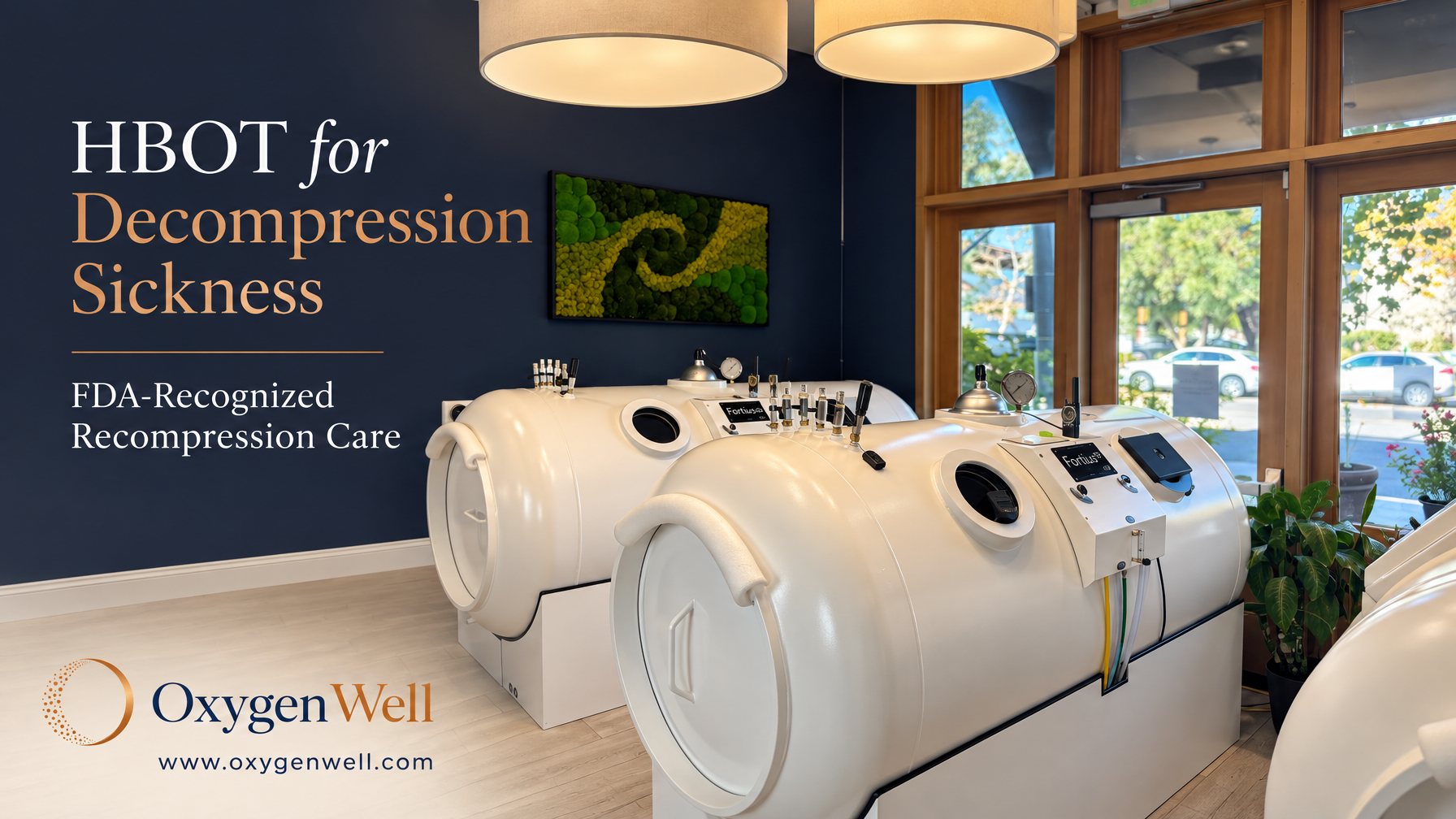
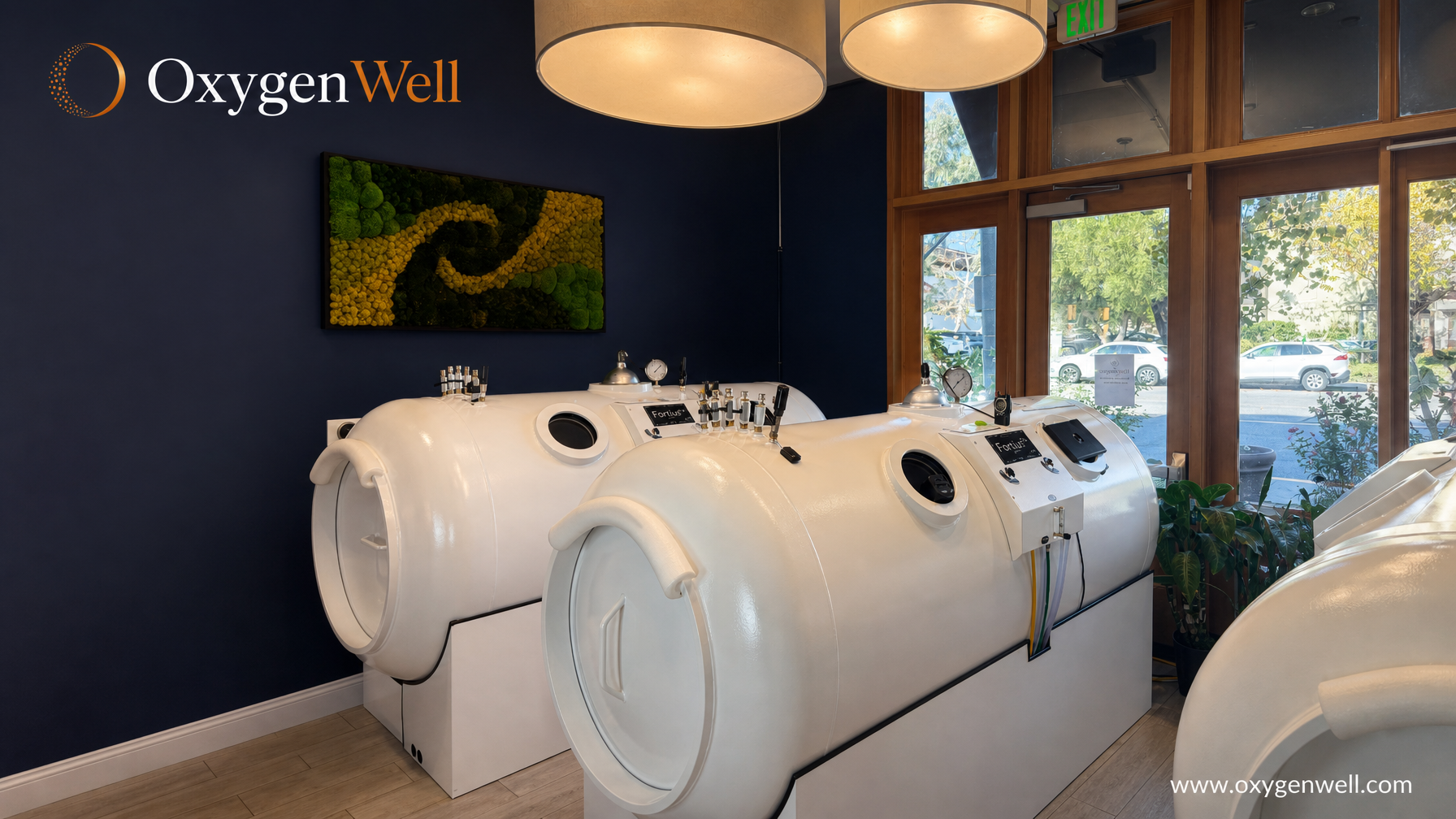
OxygenWell uses grounded monoplace chambers rated to 2.4 ATA with medical-grade oxygen by non-rebreather mask. That pressure range matches UHMS intracranial abscess guidance (2.0 to 2.5 ATA). Many wellness centers stop at 1.3 to 1.5 ATA, which is not the protocol UHMS describes for this indication.
Who should be considered for HBOT
UHMS recommends adjunctive HBOT when any of the following apply:
- Multiple abscesses
- Abscess in a deep or dominant location
- Compromised host
- Surgery is contraindicated or the patient is a poor surgical risk
- No response or further deterioration after standard surgery (for example 1-2 needle aspirates) and antibiotics
[UHMS] [StatPearls]
HBOT does not replace drainage when drainage is needed. It is extra physiologic support for patients who remain high-risk after standard care.
Untreated pneumothorax is an absolute contraindication. Relative issues include untreated seizure disorder, certain lung disease, recent ear or thoracic surgery, and active sinus infection. Each patient needs individual clearance. [StatPearls]
What treatment looks like
UHMS clinical management for intracranial abscess:
- Pressure: 2.0 to 2.5 ATA
- Oxygen time: 60 to 90 minutes per session
- Frequency: once or twice daily; twice daily may be used in the initial phase
- Course length: individualized. In the largest HBO series UHMS cites, the average was 13 sessions without osteomyelitis. StatPearls cites an average near 14. Imaging and neurologic exam, not a fixed package, drive stop dates.
[UHMS] [StatPearls]
At OxygenWell, Certified Hyperbaric Technicians (most EMT-certified) supervise sessions. A physician assistant is on site most weekday hours. We coordinate with the referring neurosurgeon and infectious disease team so antibiotics, imaging, and chamber timing stay aligned. We also treat related on-label infections such as necrotizing soft tissue infection when those indications apply.
Typical session effects match Mayo Clinic counseling: ear pressure during compression, possible fatigue afterward, and rare serious events such as oxygen toxicity seizure or pneumothorax in unsafe settings. Grounded chambers, 100% medical-grade oxygen, and trained staff exist to keep that risk low. [Mayo Clinic]
Does insurance cover it?
Coverage depends on the payer, not only on UHMS.
Medicare National Coverage Determination 20.29 lists specific chamber-based HBO conditions. Intracranial abscess is not on that covered list. Medicare.gov's consumer page matches that NCD list. Do not assume Medicare will pay for HBOT solely for brain abscess. [CMS NCD 20.29] [Medicare.gov]
Many commercial policies follow UHMS more closely. Anthem's CG-MED-73 medical policy (effective July 1, 2026 in the retrieved text) includes intracranial abscess among medically necessary indications aligned with UHMS. Other PPO plans may cover it after prior authorization with neurosurgery notes, cultures, and imaging. [Anthem CG-MED-73]
OxygenWell accepts Medicare and PPO insurance for FDA-approved, on-label conditions that the plan covers. A billing partner runs pre-authorization. For a broader map of what Medicare does cover, see our guide Does Medicare Cover Hyperbaric Oxygen Therapy? and our insurance page.
Care at OxygenWell in Los Angeles
If you or a family member is in the hospital with a brain abscess, the first calls are neurosurgery and infectious disease. If they want adjunctive hyperbaric oxygen, we can receive the referral at Sherman Oaks or Calabasas.
What we bring to this indication:
- Chambers rated to 2.4 ATA with 100% medical-grade oxygen, not a low-pressure wellness concentrator
- Grounded monoplace chambers and CHT/EMT staffing
- Evening and weekend hours when a once- or twice-daily course must fit around hospital discharge and rehab
- Coordination with referring surgeons so HBOT stays adjunctive, not isolated
Read our overview of FDA-approved hyperbaric indications, then call (818) 661-0939 or use our contact form. Physician referrals can go through our referral pathway. We serve Sherman Oaks, Calabasas, and surrounding Los Angeles communities.
Dr. Beth Meneley, DAOM, L.Ac., is Wellness Director and Co-Owner of OxygenWell. This article is educational and does not replace neurosurgical or infectious disease care.