Why Rhinoplasty Recovery Is Uniquely Demanding
Rhinoplasty is one of the most technically complex and emotionally charged cosmetic surgeries a patient can undergo. It is also one of the most popular — Los Angeles consistently ranks among the top cities in the country for rhinoplasty volume, and demand continues to rise.
What surprises many patients is how long the recovery actually takes. Most surgeons are honest about this: the splint comes off at one week, the obvious bruising fades by week two, and patients look "presentable" by week three. But the nose continues to change for a full year — sometimes longer for complex revision cases. Tip swelling, in particular, can persist for 12 months as the delicate cartilage and skin envelope slowly settle.
Here is what is happening biologically during that time:
Weeks 1-2 (Acute Phase): The surgical trauma triggers an immediate inflammatory cascade. Blood vessels in the nose and periorbital area rupture, releasing blood that pools as bruising around the eyes and bridge. Lymphatic channels are disrupted, causing fluid to accumulate — the puffiness that makes the nose look swollen and distorted. Pain, pressure, and difficulty breathing through the nose are common.
Weeks 2-8 (Subacute Phase): The gross bruising resolves, but the nose remains noticeably swollen. Fibroblasts begin producing collagen to repair the surgical sites. New capillaries sprout to restore blood supply. The structure of the nose starts to emerge, though definition is muted by persistent edema, particularly in the tip.
Months 2-12 (Remodeling Phase): Collagen matures and organizes. Scar tissue softens. Residual swelling — most visible in the supratip and nasal tip — gradually dissipates. The final result slowly reveals itself.
Each of these phases has a specific set of cellular needs. And each phase is precisely where HBOT intervenes.
What Is Hyperbaric Oxygen Therapy?
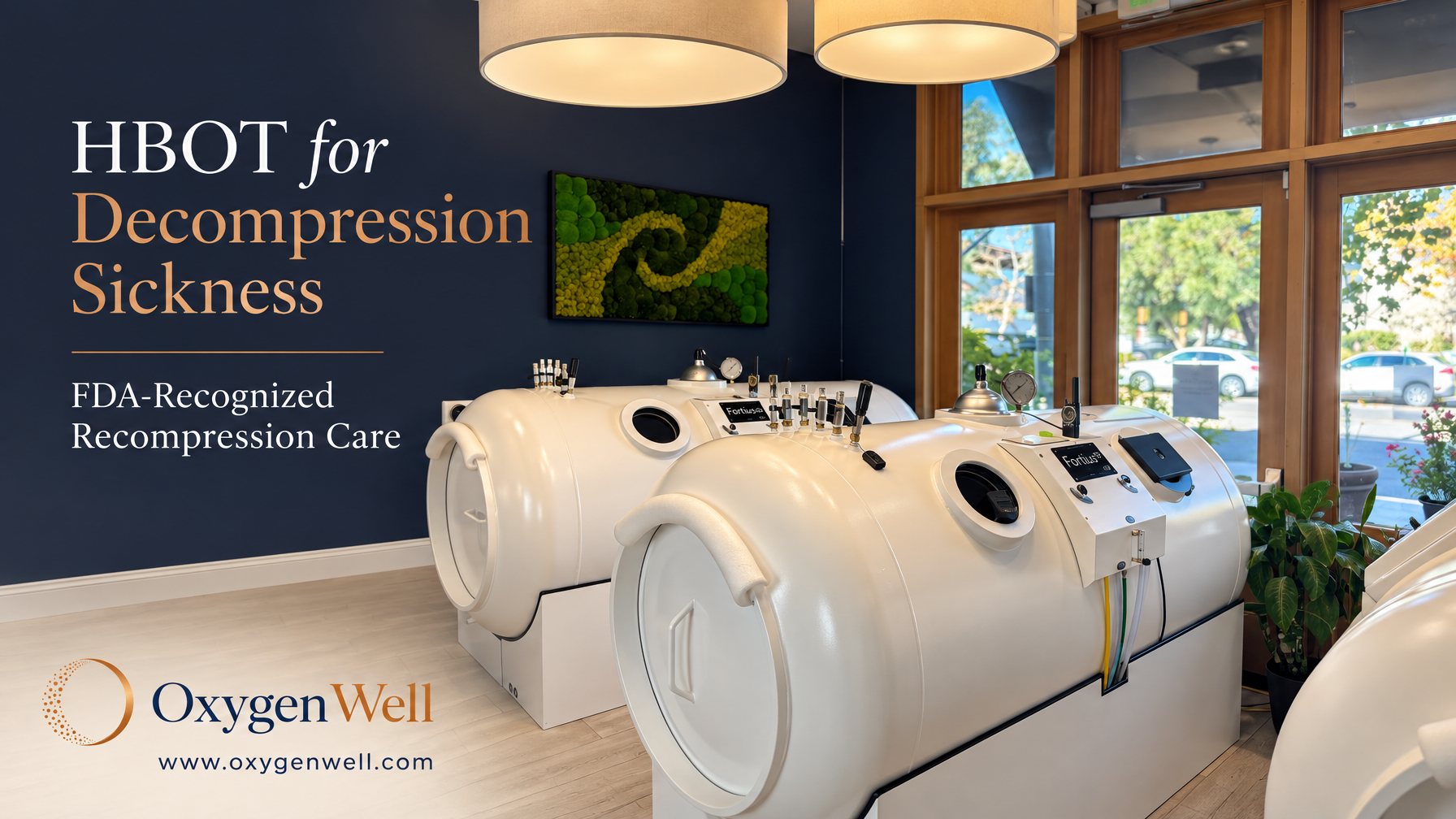
Hyperbaric oxygen therapy involves breathing 100% medical-grade oxygen inside a pressurized chamber at pressures above normal atmospheric levels — typically 1.5 to 2.4 ATA (atmospheres absolute). At OxygenWell, our chambers are rated to 2.4 ATA, which is the full therapeutic range used in peer-reviewed clinical research. We do not use "mild" oxygen concentrators or chambers capped at 1.3 ATA.
At elevated pressure, oxygen dissolves directly into the blood plasma — bypassing red blood cells entirely. This raises tissue oxygen concentrations to 10-15 times above baseline, delivering oxygen to areas of post-surgical swelling, microvascular disruption, and ischemia where circulation is impaired. It is this plasma-dissolved oxygen delivery mechanism that makes HBOT so well-suited to surgical recovery.
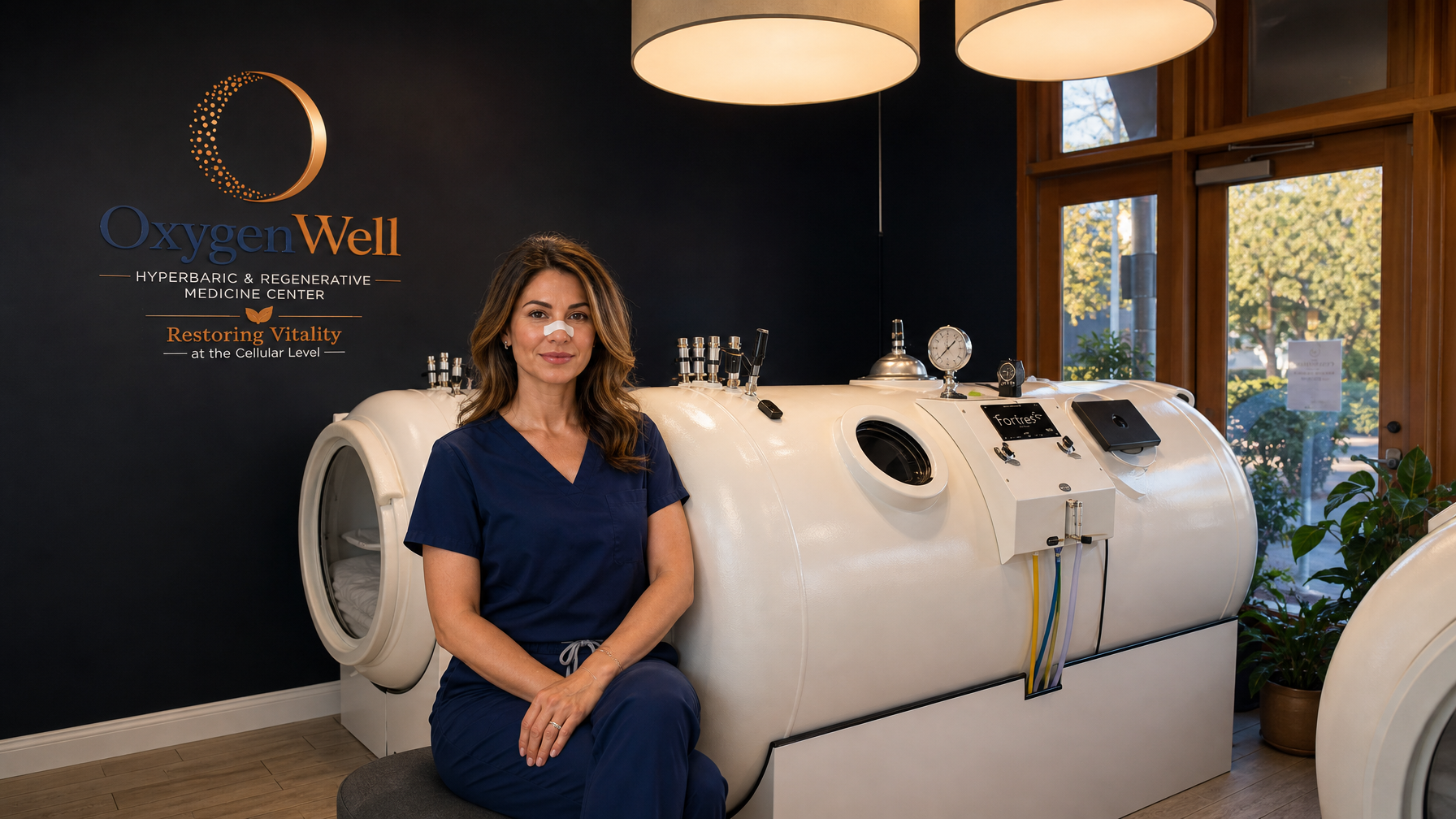
OxygenWell is a physician-owned facility operating under California law, which requires physician oversight of all hyperbaric medicine. Every patient receives a personalized protocol, and sessions are conducted by our Certified Hyperbaric Technicians — most of whom are EMT-certified — with a Physician Assistant on-site most weekday hours.
How HBOT Targets the Biology of Rhinoplasty Healing
Edema Reduction: The First and Most Visible Benefit
Swelling after rhinoplasty forms because surgical trauma disrupts the microvasculature, causing fluid to leak into surrounding tissue. The accumulation of this fluid — edema — compresses local blood vessels further, creating a cycle of hypoxia and continued swelling.
HBOT interrupts this cycle at the source. Oxygen delivered at pressure reduces vascular permeability, meaning fewer fluids leak out of damaged capillaries into tissue spaces. It also reduces the production of inflammatory cytokines that drive the edematous response. Patients and their surgeons typically notice meaningfully less swelling after even 2-3 sessions compared to surgical controls, particularly in the periorbital area where blood pooling is most visible after rhinoplasty.
Bruising Resolution: Oxygenating the Cleanup Process
Bruising forms when red blood cells escape into tissue following vascular injury. The body clears bruising by breaking down hemoglobin — a metabolically demanding process that requires oxygen. In the post-surgical period, when local oxygen tension is already low due to disrupted circulation, this process slows.
HBOT raises the oxygen tension in the periorbital tissue and nasal structures, providing the metabolic fuel needed to accelerate hemoglobin breakdown and reabsorption. Clinical observations consistently report 30-50% faster bruise resolution in patients who complete 3-5 HBOT sessions in the first week after facial surgery. A study specifically examining eyelid surgery — a procedure with comparable periorbital trauma to rhinoplasty — found statistically significant reductions in both edema and ecchymosis with perioperative HBOT compared to sham controls (Restorix Research Institute, ClinicalTrials.gov NCT01605110).
Collagen Synthesis and Tissue Repair
Collagen is the structural scaffold of healing tissue. Fibroblasts — the cells that produce collagen — require adequate oxygen to function. In hypoxic post-surgical wounds, fibroblast activity slows, collagen is deposited irregularly, and scar tissue can form with poor structural quality.
HBOT restores oxygen tension to fibroblasts in the nasal tip and dorsum, driving increased collagen synthesis rates compared to normoxic conditions. Better-organized collagen means cleaner, softer scars and more refined final results — a meaningful benefit for rhinoplasty patients who have invested significantly in their outcome.
Angiogenesis: Rebuilding Circulation in the Healing Nose
New blood vessel formation — angiogenesis — is the most durable long-term benefit of HBOT for surgical recovery. After rhinoplasty, the micro-architecture of nasal blood supply is disrupted and needs to be rebuilt. HBOT stimulates the release of vascular endothelial growth factor (VEGF), a signaling molecule that triggers capillary budding and new vessel growth.
This effect accumulates across sessions. By the 8-10 session mark, patients typically have measurably improved local circulation compared to those who did not complete HBOT — supporting ongoing tissue remodeling and reducing the risk of prolonged tip swelling, a common frustration among rhinoplasty patients in the subacute and remodeling phases.
Infection Risk Reduction
Surgical sites are vulnerable to infection, and rhinoplasty carries specific risks related to the presence of nasal bacteria in proximity to the incision sites. HBOT enhances white blood cell (neutrophil) bactericidal activity — their ability to kill pathogens is oxygen-dependent and dramatically reduced in hypoxic post-surgical tissue. Studies on HBOT and surgical site infections confirm that elevated tissue oxygen tension significantly reduces infection risk in post-operative wounds (Medicina 2023, PMC10145168).
The Research Behind HBOT and Surgical Recovery
HBOT's application in surgical wound healing is well-documented in peer-reviewed literature. A 2026 narrative review in Cureus examining HBOT across surgical specialties confirmed its mechanistic basis for reducing post-operative complications, accelerating wound closure, and supporting tissue salvage in compromised surgical fields (González Flores et al., Cureus 2026, PMC12924891).
A 2021 overview in Medicina outlined HBOT's translational mechanisms relevant to surgical recovery — including anti-inflammatory cytokine modulation, stem cell mobilization (CD34+ cells increase up to 8x baseline), and fibroblast proliferation — all of which benefit the rhinoplasty patient in the acute and subacute healing windows (Medicina 2021, PMC8465921).
For skin flap and graft survival — scenarios that mirror the microvascular demand of rhinoplasty — HBOT has shown up to 2x higher tissue survival rates compared to standard care (Durham WP et al., Plast Reconstr Surg. 2017).
HBOT Protocol for Rhinoplasty Patients
At OxygenWell, we tailor every protocol to the individual patient and their surgeon's preferences. The following represents our general approach for rhinoplasty recovery:
Phase 1: Acute Inflammation (Days 1-7 Post-Surgery)
Pressure: 1.5-2.0 ATA | Duration: 60-90 minutes | Frequency: Daily or every other day | Sessions: 3-5
Goal: Reduce edema and bruising, prevent hypoxic stalling of repair
Phase 2: Subacute Repair (Weeks 2-4)
Pressure: 1.5-2.0 ATA | Duration: 60-90 minutes | Frequency: 2-3x per week | Sessions: 5-10 additional
Goal: Stimulate collagen production, support angiogenesis, resolve residual swelling
Phase 3: Remodeling Support (Optional, Weeks 4-12)
Pressure: 1.3-1.5 ATA | Duration: 60 minutes | Frequency: 1-2x per week
Goal: Accelerate tip refinement and scar remodeling for complex rhinoplasties
Most patients complete between 5 and 15 total sessions. Complex revisions, patients with thin skin, or those who experienced any surgical complications typically benefit from longer courses. We recommend beginning HBOT as early as 24-72 hours after surgery. We encourage patients to coordinate with their rhinoplasty surgeon before their first session.
What to Expect at OxygenWell
OxygenWell serves patients from Sherman Oaks, Calabasas, and throughout the greater Los Angeles area from two convenient locations. We offer extended hours including evenings and weekends — rare among HBOT facilities and particularly convenient for rhinoplasty patients whose schedules may be constrained by post-surgical limitations.
A Certified Hyperbaric Technician will review your surgical history, current medications, and recovery timeline. You recline comfortably inside the chamber wearing a clear non-rebreather oxygen mask. The chamber pressurizes over approximately 10 minutes. Most patients read, nap, or watch something on a tablet during their 60-90 minute session. Many patients notice reduced facial puffiness and lighter bruising immediately after their first few sessions.
What makes OxygenWell different:
- Chambers rated to 2.4 ATA — full therapeutic pressure, not softpack "mild" chambers
- 100% medical-grade oxygen via high-flow system, not a standard oxygen concentrator
- Physician-owned and operated per California law
- Insurance-approved facility for covered conditions
- Safety Director with 12+ years of hyperbaric experience
- PA on-site most weekday hours
- 50,000+ supervised HBOT sessions over 12 years
Who Is a Good Candidate for HBOT After Rhinoplasty?
HBOT for rhinoplasty recovery is appropriate for:
- Primary rhinoplasty patients who want to minimize downtime and bruising, particularly those with social or professional commitments soon after surgery
- Revision rhinoplasty patients, who typically have more compromised vascularity from prior surgery and face a higher risk of prolonged swelling and healing challenges
- Patients with thin skin or high expectations for tip definition — collagen quality and swelling resolution directly affect final aesthetic outcomes
- Patients who experienced any surgical complications, including early signs of skin compromise, hematoma, or poor perfusion
- Patients combining rhinoplasty with other procedures such as facelifts, blepharoplasty, chin augmentation, or septoplasty
If there was any compromise to the surgical flap or tissue perfusion, HBOT may transition from elective recovery support to medically necessary — and in those cases, insurance coverage may apply.
Frequently Asked Questions
How soon after rhinoplasty can I start HBOT?
Most patients begin 24-72 hours after surgery. Starting within the first week captures the most significant anti-inflammatory window.
Does HBOT interfere with surgical healing or implants?
No. HBOT does not interfere with sutures, cartilage grafts, or any structural work performed during rhinoplasty. Confirm with your surgeon if you have any specific concerns.
How many sessions do I need?
For most primary rhinoplasty cases, 5-10 sessions over the first two weeks produces meaningful results. Complex revisions may benefit from 15+ sessions. We personalize every protocol.
Is it covered by insurance?
HBOT for routine cosmetic surgery recovery is not typically covered by insurance. However, if a complication such as compromised flap perfusion or wound healing failure occurs, insurance coverage (including Medicare and PPO) may apply. OxygenWell is an insurance-approved facility and can assist with pre-authorization for covered indications.
Can I combine HBOT with other recovery therapies?
Yes. HBOT pairs well with red light therapy (photobiomodulation), lymphatic massage, and arnica supplementation. Our team will help you build a comprehensive recovery plan that complements your surgeon's protocol.
Start Your Rhinoplasty Recovery at OxygenWell
Rhinoplasty is an investment — in time, in resources, and in yourself. The recovery period is an active biological process, and the choices you make during those weeks directly influence your final result.
At OxygenWell, we help rhinoplasty patients in Los Angeles give their healing every advantage available. From our full-pressure medical-grade chambers to our highly trained care team, every session is designed around one goal: helping you recover faster, heal cleaner, and step into your result with confidence.
To schedule a consultation or book your first session, call us at (818) 661-0939 or visit www.oxygenwell.com. We serve patients from Sherman Oaks, Calabasas, Encino, Studio City, Woodland Hills, Beverly Hills, and throughout the greater Los Angeles area.
Authored by Dr. Beth Meneley, DAOM, L.Ac. — 25+ years in integrative medicine, 12+ years dedicated to hyperbaric medicine in Los Angeles, 50,000+ supervised HBOT sessions.
The information in this article is for educational purposes. It does not constitute medical advice. Please consult your surgeon and our medical team before beginning any post-surgical treatment.