TLDR
Stroke leaves behind a penumbra — a zone of dormant but potentially salvageable brain tissue that survived the initial injury but is not functioning. Research shows that Hyperbaric Oxygen Therapy (HBOT) can reawaken this dormant tissue, improving neurological function in stroke survivors even years after the initial event. At OxygenWell in Sherman Oaks and Calabasas, we offer HBOT as a powerful adjunct for stroke recovery, guided by the most current evidence from peer-reviewed clinical trials.
Table of Contents
- What Happens to the Brain During a Stroke
- The Penumbra: Dormant Brain Tissue That Can Still Heal
- How HBOT Supports Stroke Recovery
- Clinical Evidence from PubMed
- When to Start HBOT After Stroke
- OxygenWell's Stroke Recovery Protocol
- Frequently Asked Questions
What Happens to the Brain During a Stroke
A stroke occurs when blood flow to part of the brain is interrupted — either by a clot (ischemic stroke, ~87% of cases) or a ruptured blood vessel (hemorrhagic stroke). When brain cells lose their oxygen supply, they begin dying within minutes. The core of the affected area undergoes irreversible infarction. Surrounding this dead core, however, is a region called the penumbra — tissue that survived the stroke but was left in a chronic state of dysfunction due to reduced blood flow and persistent oxygen deprivation.
The conventional view in neurology held that neurological deficits after stroke were permanent — that dead brain tissue could not recover. Modern neuroscience has revised this understanding. The brain retains significant neuroplasticity: the capacity to reorganize, form new connections, and restore function — given the right stimulus and sufficient oxygen.
The Penumbra: Dormant Brain Tissue That Can Still Heal
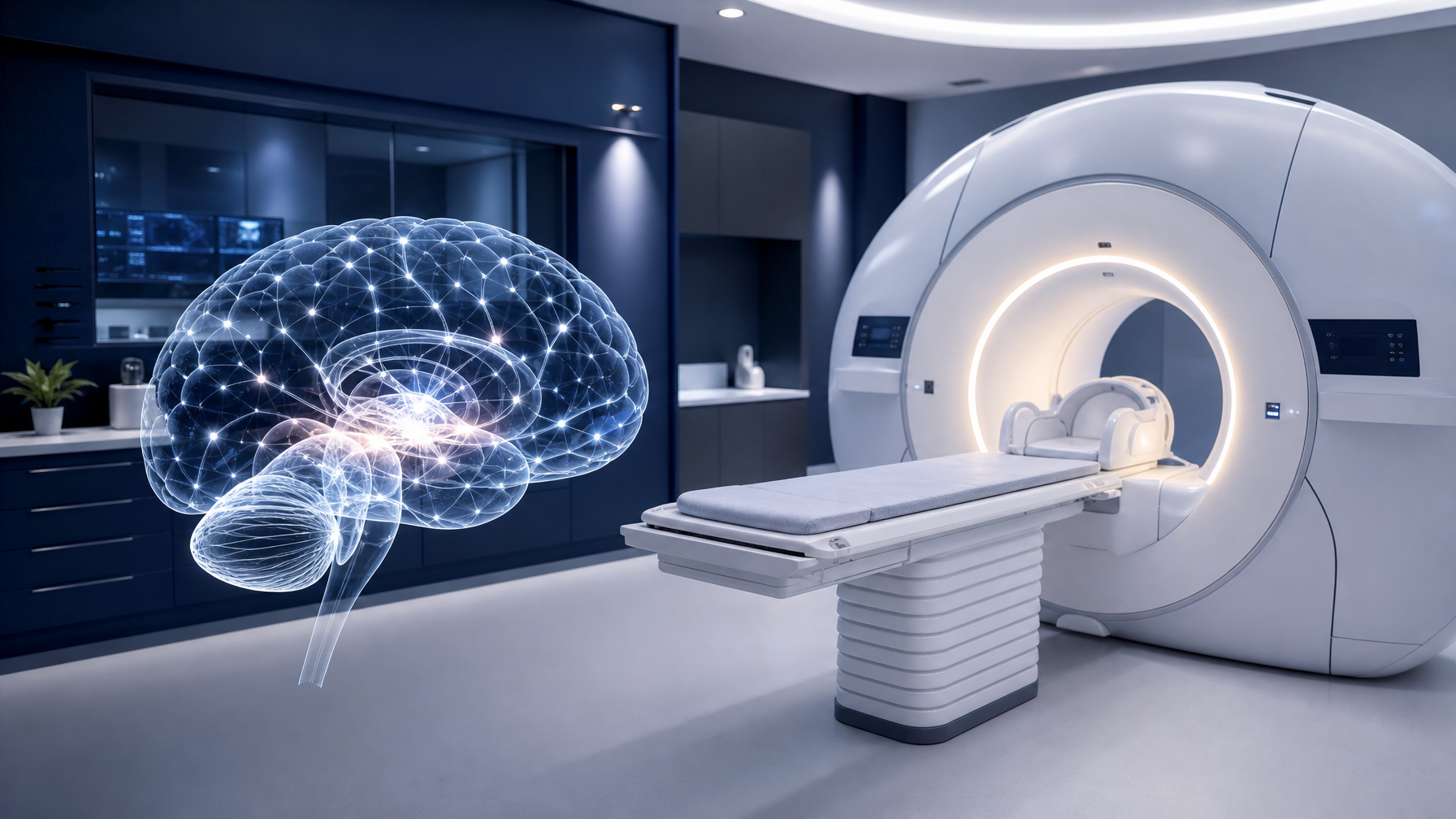
SPECT and BOLD-MRI imaging studies have demonstrated that in many stroke patients — even years after the initial event — there are regions of brain tissue that are metabolically inactive but structurally intact. These cells are not dead; they are dormant, starved of the oxygen and blood flow they need to resume function.
This dormant-but-viable tissue is the primary target of HBOT in stroke recovery. By flooding the brain with oxygen at therapeutic pressure, HBOT can reactivate neurons that have been essentially "offline" since the stroke. [Efrati S & Ben-Jacob E, Expert Rev Neurother. 2014]
How HBOT Supports Stroke Recovery
1. Hyperoxygenation of Ischemic Penumbra
At 2.0–2.4 ATA, HBOT dissolves oxygen directly into plasma, delivering it to brain regions where compromised blood vessels can no longer supply adequate flow. This reaches the penumbral tissue that standard blood-borne oxygen cannot access. A single HBOT session raises cerebral tissue pO2 dramatically above baseline. [Hopf HW et al., Wound Repair Regen. 2004]
2. Neuroplasticity and Synaptogenesis
Repeated HBOT sessions upregulate Brain-Derived Neurotrophic Factor (BDNF) — the primary growth factor responsible for neuroplasticity, synapse formation, and neural repair. Elevated BDNF levels support the brain's ability to rewire around damaged areas, forming new functional pathways. [Shapira R et al., Front Neurol. 2018]
3. Angiogenesis in Peri-Infarct Tissue
HBOT stimulates VEGF and endothelial progenitor cell mobilization, triggering the growth of new blood vessels in the peri-infarct region. This gradually rebuilds the microvascular supply to penumbral tissue, improving long-term perfusion. [Thom SR, J Appl Physiol. 2011]
4. Reduction of Neuroinflammation
Post-stroke neuroinflammation — driven by activated microglia, reactive astrocytes, and pro-inflammatory cytokines — significantly impairs recovery. HBOT down-regulates NF-κB signaling and reduces IL-1β, TNF-α, and IL-6 in the injured brain, creating a more favorable environment for repair. [Mu J et al., Neuroscience. 2013]
5. Mitochondrial Restoration
Stroke causes mitochondrial dysfunction in surviving neurons. HBOT restores mitochondrial membrane potential, increases ATP production, and reduces oxidative stress in post-ischemic brain tissue — providing the cellular energy needed for recovery.
Clinical Evidence from PubMed
Efrati et al. — Neurological Improvement Years After Stroke
A landmark randomized controlled trial by Dr. Shai Efrati and colleagues at Tel Aviv University enrolled chronic stroke patients (6 months to 3 years post-stroke) and randomized them to 40 HBOT sessions at 2.0 ATA or a crossover control. HBOT patients showed significant improvements in neurological function, cognitive performance, and daily activity scores. SPECT imaging confirmed increased metabolic activity in previously dormant brain regions. [Efrati S et al., PLoS ONE. 2013]
Neuroimaging Confirms Penumbra Reactivation
Pre- and post-HBOT SPECT imaging in the Efrati 2013 trial demonstrated quantifiable increases in cerebral blood flow and metabolic activity in peri-infarct brain regions — providing objective evidence that HBOT reactivates dormant tissue, not just subjective symptom improvement. [Efrati S et al., PLoS ONE. 2013]
Hadanny et al. — Cognitive Recovery
A subsequent study by Hadanny et al. demonstrated significant improvements in memory, attention, information processing speed, and executive function in post-stroke patients following a 60-session HBOT protocol — findings consistent with the neuroplasticity and penumbra reactivation mechanisms described above. [Hadanny A et al., Sci Rep. 2020]
When to Start HBOT After Stroke
HBOT can benefit stroke survivors at multiple stages of recovery:
- Subacute (1–6 months post-stroke): The brain is in its most neuroplastic window. HBOT during this phase may significantly accelerate functional recovery alongside physical and occupational therapy.
- Chronic (6 months–years post-stroke): Research by Efrati et al. confirms that meaningful neurological improvement is still achievable years after stroke, as long as viable penumbral tissue remains detectable on imaging.
The key question is whether a patient has residual viable penumbral tissue. SPECT or BOLD-MRI imaging before starting HBOT can help identify candidates most likely to respond. Our team works with your neurologist to evaluate candidacy based on imaging and clinical history.
OxygenWell's Stroke Recovery Protocol
OxygenWell is a physician-owned HBOT center in Sherman Oaks and Calabasas, founded and led by Dr. Beth Meneley, DAOM, L.Ac. With 25+ years in integrative medicine and 12+ years dedicated to hyperbaric medicine, our team tailors every protocol to the patient's specific neurological profile and recovery goals.
- Pressure: 1.5–2.0 ATA (standard stroke protocol)
- Session length: 60–90 minutes
- Frequency: 5 days per week
- Total sessions: 40–60 sessions for neurological recovery
- Oxygen: 100% medical-grade, high-flow delivery
HBOT is most effective for stroke recovery when combined with physical therapy, occupational therapy, speech therapy, and cognitive rehabilitation. Our team coordinates with your existing rehabilitation providers.
Note: HBOT for stroke recovery is an off-label use and is not covered by Medicare or PPO insurance. Self-pay rates and package options are available.
Frequently Asked Questions
Can HBOT help with stroke paralysis?
Clinical evidence shows that HBOT can improve motor function in some stroke patients by reactivating dormant penumbral tissue. Improvements in motor scores, gait, and upper extremity function have been documented in multiple studies. Results vary depending on stroke type, location, severity, and time since injury.
How long after a stroke can HBOT still help?
The Efrati 2013 RCT enrolled patients 6 months to 3 years post-stroke and still demonstrated significant neurological improvement. The key determining factor is whether viable penumbral tissue is present — which can be evaluated by imaging prior to starting treatment.
How many HBOT sessions are needed for stroke recovery?
Most neurological protocols involve 40–60 sessions. Some patients respond meaningfully within 20 sessions; others benefit from longer courses. Our team monitors progress throughout and adjusts the protocol based on clinical response.
Is stroke HBOT covered by insurance?
HBOT for stroke is an off-label use and is not currently covered by Medicare or most PPO plans. Self-pay rates and treatment packages are available at OxygenWell. Contact us at (818) 661-0939 to discuss options.
Schedule a Consultation at OxygenWell
- Sherman Oaks: 15301 Ventura Blvd., Suite P12, Sherman Oaks, CA 91403
- Calabasas: 23500 Park Sorrento, A2, Calabasas, CA 91302
- Phone: (818) 661-0939
- Website: oxygenwell.com
Written by Dr. Beth Meneley, DAOM, L.Ac. — Founder of OxygenWell. 25+ years in integrative and functional medicine. 12+ years dedicated to hyperbaric medicine in Los Angeles. Over 50,000 HBOT sessions administered under her clinical direction.