TLDR
Sudden sensorineural hearing loss (SSNHL) is a medical emergency — often described as a "stroke of the inner ear." Hyperbaric oxygen therapy (HBOT) is an FDA-approved treatment that, when started within days of symptom onset, significantly improves the odds of hearing recovery. At OxygenWell in Sherman Oaks and Calabasas, we treat SSNHL with the urgency it demands: physician-directed protocols, 100% medical-grade oxygen, and chambers rated to 2.4 ATA. If you or someone you know woke up unable to hear in one ear, do not wait. Time is the most critical variable in this condition.
What Is Sudden Sensorineural Hearing Loss?
Sudden sensorineural hearing loss (SSNHL) is defined as a rapid loss of hearing of 30 decibels or more across at least three consecutive audiometric frequencies, occurring within 72 hours. The Hearing Loss Association of America estimates it affects approximately 66,000 U.S. adults each year — roughly 1 in every 5,000 people annually.
Most patients describe waking up one morning with a "dead" ear, or noticing a sudden muffled quality to sounds, sometimes preceded by a loud pop or ring. The hearing loss almost always affects just one ear. Tinnitus (ringing), a sensation of ear fullness, and dizziness or vertigo frequently accompany the hearing loss.
What makes SSNHL so dangerous is how often it gets dismissed. Symptoms can mimic earwax buildup, a sinus infection, or fluid behind the eardrum. By the time the correct diagnosis is made — often after an audiogram confirms the loss — precious treatment hours have slipped away.
SSNHL is a medical emergency. Treat it as one.
What Causes Sudden Hearing Loss in One Ear?
In approximately 85–90% of cases, no identifiable cause is found — the condition is labeled "idiopathic." When a cause is identified, it typically falls into one of three categories:
- Vascular: Reduced blood flow or micro-emboli cutting off the cochlea's oxygen supply (the most widely supported theory)
- Viral: Infection-related inflammation affecting the inner ear nerve (herpes simplex, mumps, and others)
- Autoimmune: Immune system activity attacking inner ear structures
Risk factors include cardiovascular disease, diabetes, smoking, and prior ear conditions. SSNHL also appears with elevated frequency in people who have experienced significant physiologic stress. Regardless of the underlying cause, the common denominator is a cochlea starved of oxygen and blood flow — which is precisely why HBOT addresses the core pathophysiology directly.
Why the Cochlea Is Uniquely Vulnerable to Oxygen Loss
The cochlea is the spiral-shaped organ in your inner ear responsible for converting sound vibrations into neural signals. It is remarkable in its complexity and its fragility.
Unlike most organs, the cochlea receives its entire blood supply from a single terminal artery — the labyrinthine artery — with no collateral circulation. There is no backup pathway. When that artery is compromised — by a spasm, a microclot, inflammatory pressure, or a viral insult — the cochlea's hair cells begin to die within minutes.
The cochlear hair cells are responsible for your hearing. Once they die, they do not regenerate.
The cochlea also has one of the highest metabolic oxygen demands of any tissue in the body. Its hair cells require a continuous, rich oxygen supply to maintain the electrochemical gradients that power hearing. Even a brief drop in perilymph oxygen tension causes immediate functional impairment — and prolonged hypoxia causes permanent cell death.
This is why SSNHL behaves so much like a stroke. The cellular mechanism is ischemia-driven, the damage is time-dependent, and the therapeutic window is measured in hours to days — not weeks.
How HBOT Treats Sudden Hearing Loss
Hyperbaric oxygen therapy places a patient inside a pressurized chamber filled with 100% medical-grade oxygen at 2.0 to 2.4 atmospheres absolute (ATA). Under these conditions, oxygen dissolves directly into the plasma at levels 10 to 15 times higher than what breathing room air can achieve.
For the cochlea, this produces several critical effects:
1. Perilymph oxygenation. The inner ear's fluid (perilymph) is normally difficult to oxygenate because it sits behind the blood-cochlea barrier. HBOT bypasses this by flooding the plasma with dissolved oxygen, which then diffuses across the barrier into the perilymph and directly reaches the hair cells. Studies confirm that perilymph oxygen levels increase significantly under hyperbaric conditions — even in areas of reduced blood flow.
2. Reversal of hypoxic injury. Hair cells that are oxygen-depleted but not yet dead can be rescued when oxygen is rapidly restored. HBOT creates a brief window for cellular recovery before irreversible necrosis sets in.
3. Reduction of cochlear edema and inflammation. HBOT reduces inflammatory swelling in and around the cochlea, taking pressure off the labyrinthine artery and improving local circulation.
4. Support for vascular repair. By stimulating VEGF (vascular endothelial growth factor) and angiogenic signaling, HBOT supports microvascular recovery in the inner ear over the course of a treatment series.
The 2019 American Academy of Otolaryngology–Head and Neck Surgery (AAO-HNS) Clinical Practice Guideline for Sudden Hearing Loss recognizes HBOT as a treatment option for SSNHL, particularly when combined with systemic steroids. The 2016 European Consensus Conference on Hyperbaric Medicine issued an even stronger statement, with a strong recommendation for HBOT combined with medical therapy for patients presenting within two weeks of onset.
The Critical Treatment Window: How Soon Is Soon Enough?
This is the single most important clinical variable in SSNHL outcomes.
Within 72 hours of onset — this is the optimal window. Multiple studies and leading hyperbaric clinicians, including Bayoumy et al. in JAMA Otolaryngology, recommend initiating HBOT within the first 24–48 hours for the best chance of meaningful recovery. At this stage, hair cells that are injured but still viable can potentially be rescued before permanent necrosis sets in.
Within 2 weeks — still highly valuable. The AAO-HNS guideline supports HBOT as initial therapy when started within 2 weeks of onset. Most patients who present to OxygenWell fall into this window after being diagnosed by an ENT or audiologist.
Up to 1 month (salvage therapy) — HBOT retains clinical utility even when steroids have failed or been only partially effective. The AAO-HNS specifically recognizes HBOT as a salvage option when started within one month of SSNHL onset.
Beyond 1 month — outcomes become less predictable. Research consistently shows that effectiveness decreases with increasing delay. This does not mean HBOT is without benefit for late-presenting patients, but early treatment is strongly preferred.
The clinical takeaway: if a patient, family member, colleague, or referring physician calls about sudden hearing loss in one ear, the conversation should happen that same day. Not next week.
What the Research Shows
The evidence base for HBOT in SSNHL has grown substantially over the past decade.
A landmark 2018 systematic review and meta-analysis published in JAMA Otolaryngology–Head and Neck Surgery (Rhee TM et al.) analyzed the outcomes of over 2,000 patients with idiopathic SSNHL. The analysis found that adding HBOT to steroid therapy produced significantly greater absolute hearing gain compared to steroids alone — with the benefit most pronounced in patients with severe to profound hearing loss.
A 2018 study in Audiology & Neurotology (Cho I et al.) conducted a randomized controlled trial comparing steroid-only to steroid-plus-HBOT protocols in patients with severe-to-profound SSNHL and found significantly improved hearing recovery in the HBOT group.
A 2022 study in the American Journal of Otolaryngology (Dova S et al.) examining long-term outcomes confirmed that HBOT improved final hearing outcomes in SSNHL patients, with the strongest results in those who began treatment early.
A comprehensive review published in the European Archives of Otorhinolaryngology (Eryigit B et al., 2018) concluded that HBOT is an effective adjunct treatment for idiopathic SSNHL, improving hearing recovery when added to standard medical care.
Multiple studies also confirm HBOT's value as salvage therapy — for patients who did not respond to initial steroid treatment. While results are more modest in this group, meaningful hearing improvement remains achievable with hyperbaric treatment.
HBOT Protocol for SSNHL at OxygenWell
At OxygenWell, SSNHL is treated as a time-sensitive condition requiring coordinated, protocol-driven care.
Our standard SSNHL protocol includes:
- Pressure: 2.0–2.4 ATA (full-rated medical-grade chambers — not "adjusted" pressure)
- Session duration: 90 minutes
- Frequency: Daily, ideally 5 days per week
- Total sessions: 10–20 sessions, with reassessment at the midpoint
- Concurrent therapy: HBOT is most effective when coordinated with your ENT or treating physician for concurrent corticosteroid therapy (oral, intravenous, or intratympanic as directed)
- Monitoring: Audiometric reassessment to track recovery throughout the treatment course
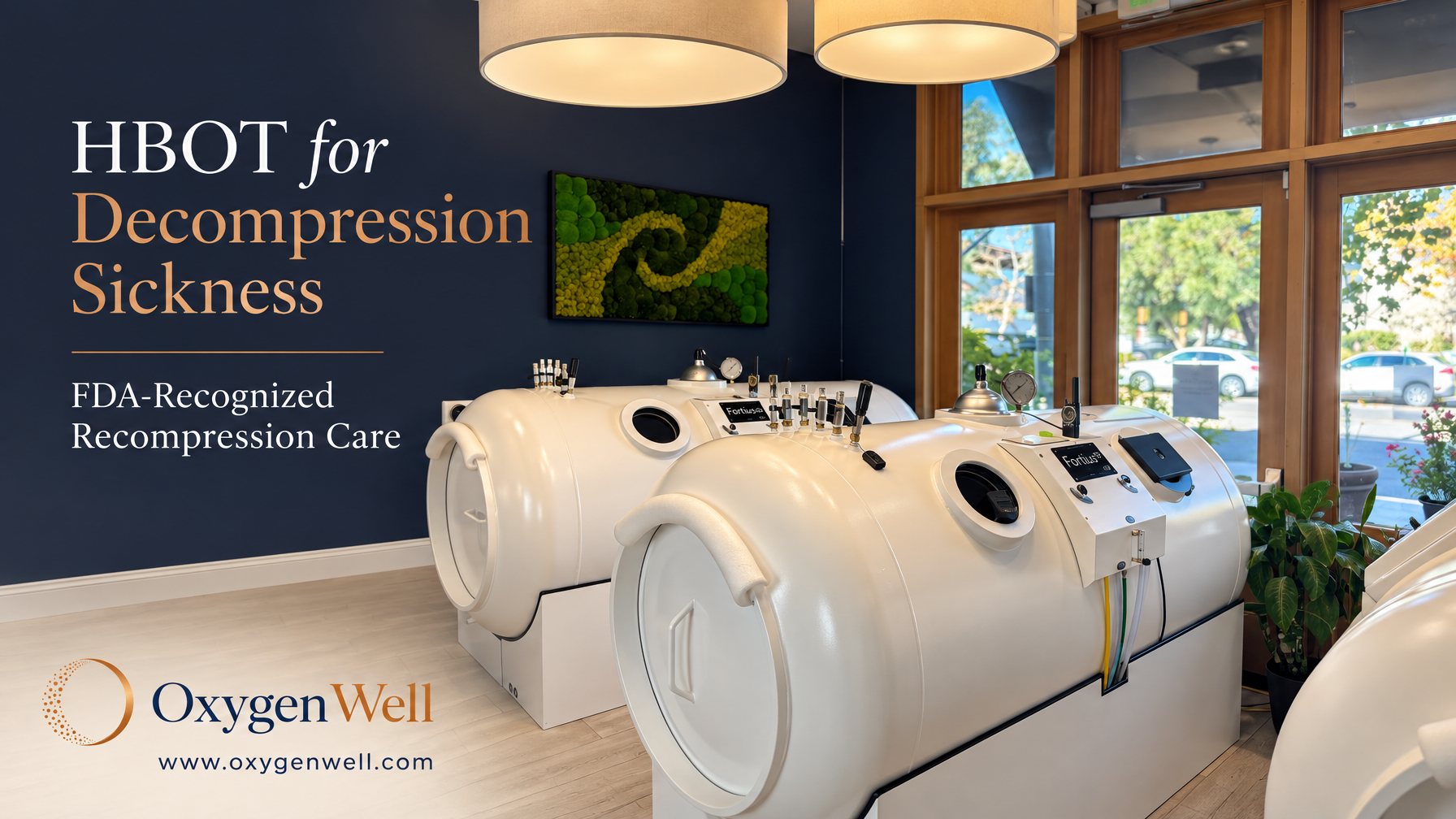
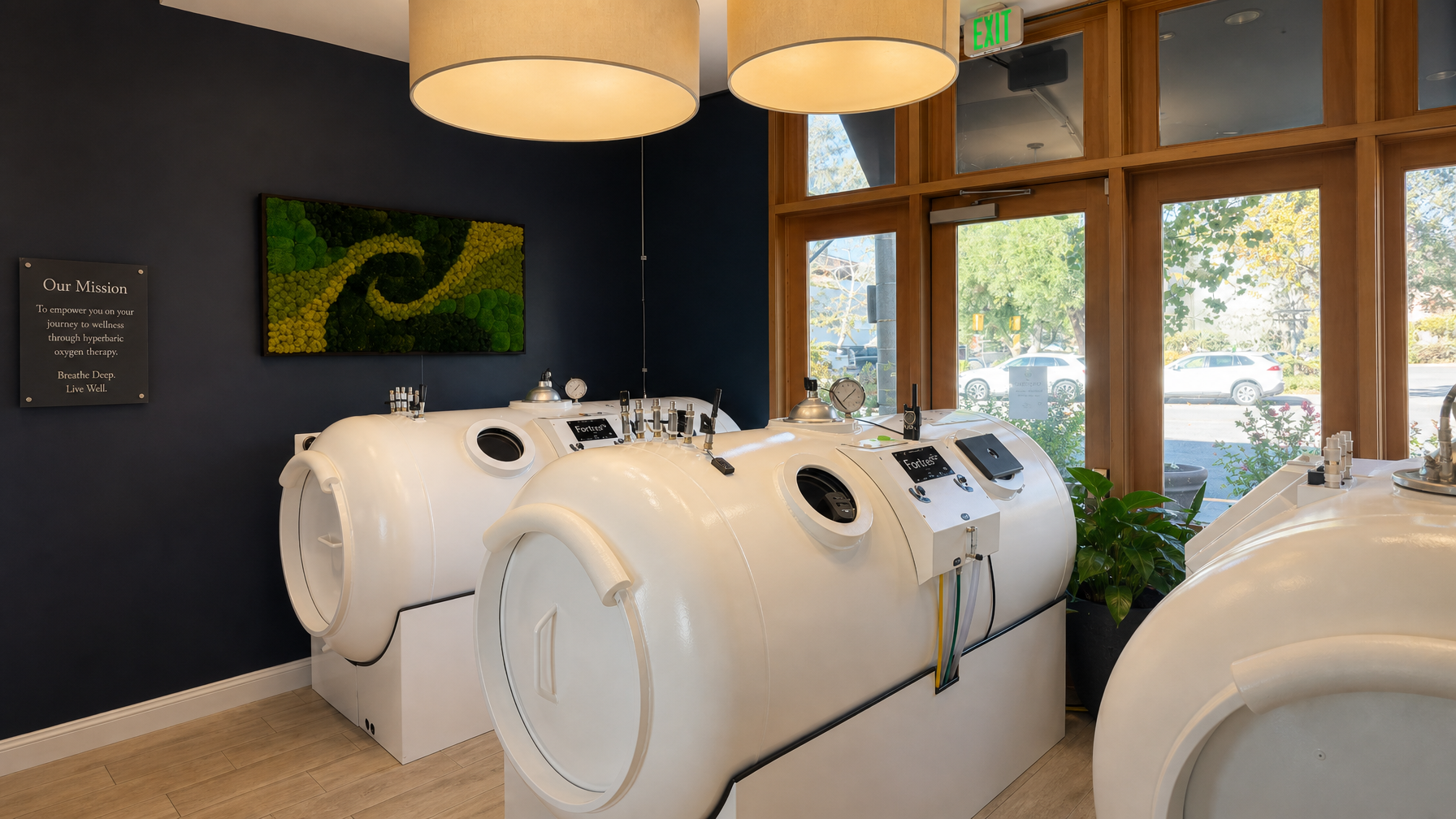
Our chambers are grounded monoplace units operating at the full 2.4 ATA rating — not soft chambers, not low-pressure units, and not oxygen concentrators. The oxygen our patients breathe is 100% medical-grade, delivered through a high-flow supply system. All SSNHL cases at OxygenWell are reviewed by our physician medical directors, and sessions are supervised by Certified Hyperbaric Technicians (CHTs), most of whom are EMT-certified.
Does Insurance Cover HBOT for Sudden Sensorineural Hearing Loss?
Yes — SSNHL is an FDA-approved indication for HBOT, and most major PPO insurance plans cover it when specific clinical criteria are met.
Blue Shield of California explicitly lists "Idiopathic sudden sensorineural hearing loss (SSNHL)" as a covered condition under its hyperbaric oxygen therapy medical policy, when HBOT is used in combination with steroid therapy and initiated within the appropriate treatment window. Anthem and UnitedHealthcare similarly recognize SSNHL as a medically necessary indication under their current 2025–2026 guidelines.
Medicare covers HBOT for FDA-approved conditions at enrolled facilities. OxygenWell is an insurance-approved facility with an in-house billing team that handles all pre-authorizations so you can focus on starting treatment quickly — not navigating paperwork.
Can HBOT Help If Steroids Already Failed?
Yes — and this is one of the most clinically important points for patients and referring physicians to understand.
Standard first-line treatment for SSNHL is corticosteroids (oral or intratympanic). But a meaningful percentage of patients — particularly those with severe-to-profound loss — do not achieve full recovery with steroids alone.
HBOT as salvage therapy addresses this population directly. The AAO-HNS 2019 guideline explicitly recommends offering HBOT as salvage therapy within one month of SSNHL onset for patients who have failed initial steroid treatment.
A 2022 meta-analysis in the European Archives of Otorhinolaryngology comparing intratympanic steroids to HBOT as salvage therapy found similar efficacy between the two approaches — meaning HBOT performs comparably to repeat intratympanic steroid injections as a rescue option. For patients who have already undergone intratympanic procedures, HBOT may offer an additional opportunity for recovery through a different mechanism of action.
If your ENT has already treated you with steroids and your hearing has not fully recovered, it is not too late to discuss HBOT. Call our office to determine whether you still fall within the treatment window.
Why OxygenWell for SSNHL Treatment in Los Angeles
Selecting an HBOT provider for a time-critical condition like SSNHL matters more than most patients realize. Not all hyperbaric chambers, facilities, or providers are equivalent.
Full 2.4 ATA pressure capability. Many HBOT centers operate at 1.3–1.5 ATA, or claim 2.0 ATA while using "adjusted" pressure with oxygen concentrators. OxygenWell chambers are FDA-cleared, fully rated to 2.4 ATA, and deliver true therapeutic pressures with 100% medical-grade oxygen — the clinical standard for SSNHL treatment.
Physician-directed protocols. California law requires hyperbaric facilities to be physician-owned. OxygenWell is founded and directed by Dr. Beth Meneley, DAOM, L.Ac., with 25+ years in integrative medicine and 12+ years dedicated to hyperbaric medicine. Protocols are individualized to each patient's clinical presentation, degree of loss, and treatment timing.
Insurance-approved facility. OxygenWell meets the standards required for insurance coverage of FDA-approved conditions. Our billing team manages all pre-authorizations and insurance coordination.
Extended hours including evenings and weekends. For a time-sensitive condition like SSNHL, the ability to start treatment immediately can be the difference between significant recovery and permanent hearing loss. OxygenWell offers appointment availability beyond standard clinic hours, a rarity among hyperbaric centers.
Two Los Angeles locations. Sherman Oaks and Calabasas — serving patients across the San Fernando Valley, Westside, and greater Los Angeles.
Frequently Asked Questions
Can HBOT restore my hearing completely?
Recovery depends on several factors: the degree of initial hearing loss, how quickly treatment begins, your age, and the underlying cause. Patients with mild-to-moderate loss who begin HBOT within 72 hours have the highest rates of significant recovery. Even patients with severe-to-profound loss and those undergoing salvage therapy can experience meaningful hearing improvement. HBOT does not guarantee complete recovery, but the research consistently shows that it improves outcomes beyond what steroids alone can achieve.
How soon can I start HBOT at OxygenWell after diagnosis?
We prioritize SSNHL as urgent. Call our office at (818) 661-0939 and tell the team you have sudden hearing loss — we will work to schedule you as quickly as possible, often the same day or next day. Bring your audiogram if you have one, or we can help coordinate with your ENT.
Do I need to stop seeing my ENT or audiologist?
No. HBOT at OxygenWell works best as a coordinated adjunct to your ENT's care. We communicate directly with referring physicians and are experienced in coordinating concurrent steroid and hyperbaric treatment protocols.
Is HBOT safe for sudden hearing loss?
Yes. HBOT for SSNHL is well-tolerated by most patients. The most common side effect is mild ear pressure during pressurization, similar to what you feel on an airplane — our technicians will coach you through equalization techniques before your first session. All sessions are supervised by Certified Hyperbaric Technicians in a fully monitored environment.
What if I live outside of Sherman Oaks or Calabasas?
OxygenWell serves patients from across Los Angeles County and the surrounding communities. Many patients travel from Westwood, Brentwood, the Conejo Valley, Simi Valley, and the greater San Fernando Valley. Given the time-sensitive nature of SSNHL, the distance is worth it.
The Bottom Line
Sudden sensorineural hearing loss is an emergency. The cochlea's hair cells cannot wait, and neither should your treatment plan. Hyperbaric oxygen therapy is FDA-approved, insurance-covered, and backed by peer-reviewed evidence showing meaningful improvement in hearing outcomes — especially when combined with steroids and started promptly.
At OxygenWell, we have the clinical expertise, the medical-grade equipment, and the urgency-first approach this condition requires. If you or someone you care about has experienced sudden hearing loss in one ear, call us immediately at (818) 661-0939. Your hearing may depend on what happens in the next 72 hours.
OxygenWell Hyperbaric & Regenerative Medicine Center | Sherman Oaks and Calabasas, California | (818) 661-0939 | www.oxygenwell.com
This article is written for educational purposes and does not constitute medical advice. Always consult a qualified healthcare provider for diagnosis and treatment of any medical condition.
References
- Rhee TM, Hwang D, Lee JS, Park J, Lee JM. Addition of Hyperbaric Oxygen Therapy vs Medical Therapy Alone for Idiopathic Sudden Sensorineural Hearing Loss. JAMA Otolaryngol Head Neck Surg. 2018;144(12):1153-1161.
- Chandrasekhar SS, et al. Clinical Practice Guideline: Sudden Hearing Loss (Update). Otolaryngol Head Neck Surg. 2019;161(1_suppl):S1-S45.
- Cho I, et al. Comparison of Two Different Treatment Protocols in Severe-to-Profound SSNHL. Audiol Neurootol. 2018;23:199-207.
- Eryigit B, et al. The effectiveness of hyperbaric oxygen in patients with idiopathic sudden sensorineural hearing loss. Eur Arch Otorhinolaryngol. 2018;275:2893-2904.
- Dova S, et al. The effectiveness of hyperbaric oxygen therapy on the final outcome of patients with sudden sensorineural hearing loss. Am J Otolaryngol. 2022;43:103564.
- Psillas G et al. Hyperbaric Oxygen Therapy in the Treatment of Sudden Sensorineural Hearing Loss. J Clin Med. 2023;12(4):1515.
- Murphy-Lavoie H, et al. Hyperbaric oxygen therapy for idiopathic sudden sensorineural hearing loss. Undersea Hyperb Med. 2012;39:777-792.
- Mathieu D, Marroni A, Kot J. Tenth European Consensus Conference on Hyperbaric Medicine. Diving Hyperb Med. 2017;47:24-32.