TLDR
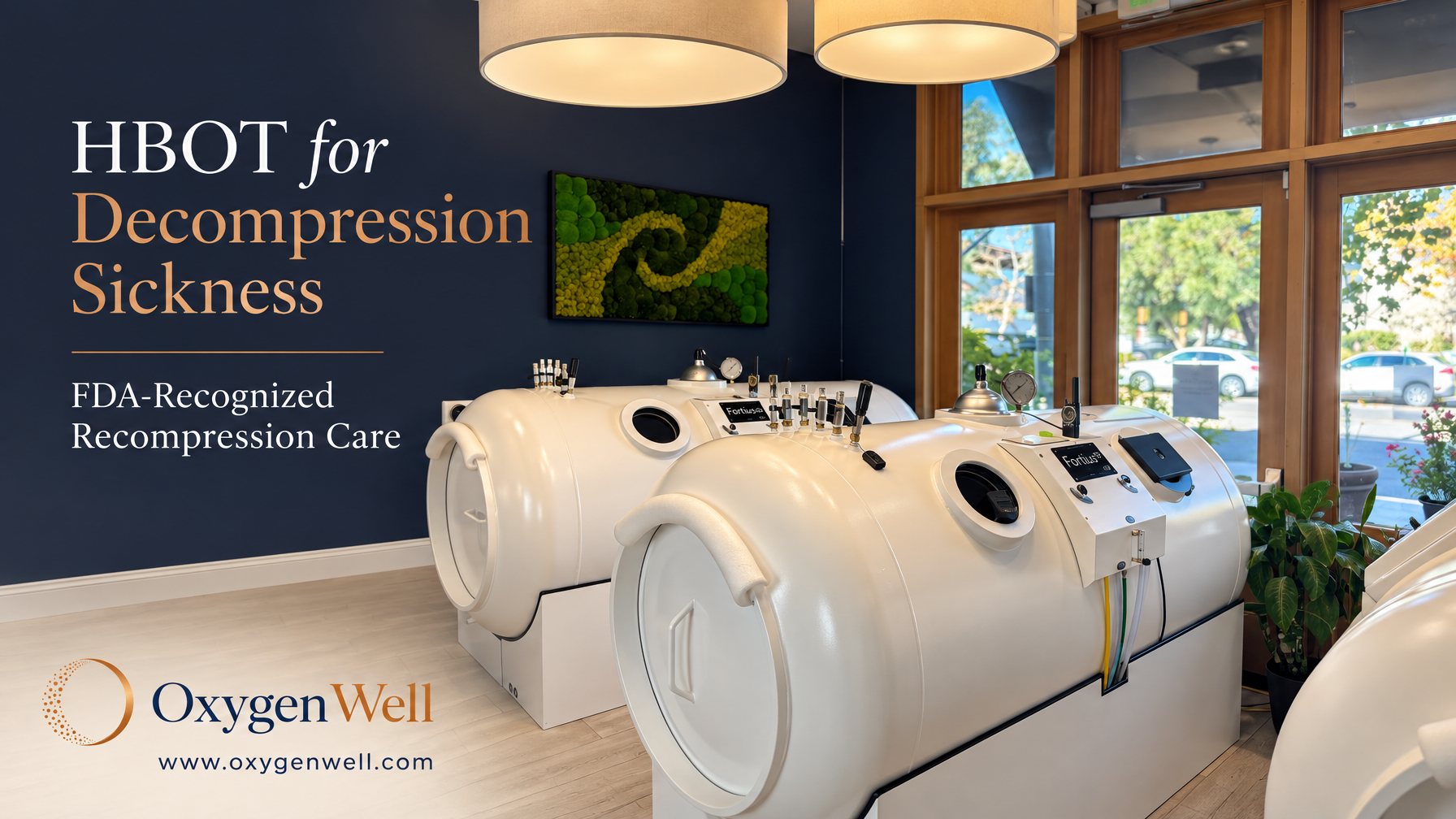
Thermal burns destroy microvascular tissue and create expanding zones of damage that can worsen for up to 72 hours after the initial injury. Hyperbaric oxygen therapy (HBOT), an FDA-cleared adjunct treatment, delivers 100% medical-grade oxygen under pressure to reverse tissue hypoxia, reduce edema, prevent partial-thickness burns from converting to full-thickness injuries, and support skin graft survival. A substantial body of clinical evidence, including peer-reviewed reviews published in PubMed and endorsed by the Undersea and Hyperbaric Medical Society (UHMS), shows that adjunctive HBOT reduces mortality, shortens hospital stays, and decreases the need for surgery in seriously burned patients. At OxygenWell in Sherman Oaks and Calabasas, we offer FDA-approved HBOT at up to 2.4 ATA for burn patients under the clinical oversight of our Safety Director and care team.
What Happens to Tissue During a Thermal Burn?
A thermal burn is not a static wound. It is a complex, dynamic injury that continues to evolve for 48 to 72 hours after the initial trauma. Understanding why burns worsen after the first hour is central to understanding why timing matters so much in adjunctive treatment.
The American Burn Association classifies burns by depth: superficial (epidermis only), partial thickness (second-degree, involving the dermis), full thickness (third-degree, extending through all dermal layers), and deep tissue extension (fourth-degree, reaching muscle and bone). Second- and third-degree burns are the clinical targets for HBOT.
Burns are characterized by three concentric zones of injury, first described by Jackson in 1953:
The zone of stasis is the critical battleground in burn care. It can be saved or lost, depending on whether ischemia is reversed in time. The destruction of microvascular circulation by thrombosis and coagulation deprives these cells of oxygen, creating a cascade of inflammation, edema, and ischemic necrosis. Extensive edema compounds the problem by increasing capillary permeability and reducing intravascular oncotic pressure, flooding interstitial tissue with fluid and further compromising perfusion.
According to StatPearls (Edwards and Cooper, Updated 2023), approximately 2 million Americans sustain burn injuries each year, with roughly 155 per million requiring hospitalization and approximately 6,500 deaths annually. The leading cause of death from burns is infection, driven by loss of the skin's protective barrier and the collapse of both cellular and humoral immunity in the burn zone. [StatPearls. Hyperbaric Treatment of Thermal Burns, 2023]
How Does HBOT Address Burn Physiology?
Hyperbaric oxygen therapy delivers 100% medical-grade oxygen at pressures up to 2.4 ATA (atmospheres absolute). At that pressure, oxygen dissolves directly into plasma, bypassing hemoglobin, and reaches tissue levels that are dramatically higher than what is achievable breathing room air. This supraphysiologic oxygen concentration is precisely what hypoxic burn tissue needs.
HBOT acts on burns through several simultaneous mechanisms:
Protecting the Zone of Stasis
HBOT delivers oxygen to ischemic tissue in the zone of stasis, interrupting the progression from reversible hypoxia to irreversible necrosis. Research shows that hypoxic skin adjacent to second- and third-degree burns can return to normal oxygen levels with oxygen delivery under pressure. Saving the zone of stasis translates directly to less tissue loss and less skin grafting. [StatPearls, 2023]
Reducing Edema
HBOT causes vasoconstriction, which reduces edema without compromising oxygen delivery to tissue. This direct osmotic effect decreases fluid requirements in the acute phase of burn care and helps prevent burn shock, a life-threatening complication of massive fluid shifts. [StatPearls, 2023]
Preventing Partial-to-Full-Thickness Conversion
One of the most clinically significant benefits of HBOT in burn care is its ability to prevent partial-thickness burns from converting into full-thickness injuries. This conversion is driven by ischemia and inflammation. HBOT interrupts this process by restoring oxygenation, preserving microvascular integrity, and deactivating the white cell adhesion that amplifies inflammatory injury. [Cianci P et al., Undersea Hyperb Med, 2013]
Enhancing Immune Defenses
Thermal burns suppress macrophage function, reduce immunoglobulin activity, and compromise chemotaxis. HBOT restores bactericidal activity in white cells at a time when the immune system is most overwhelmed. It also promotes epithelialization and supports the collagen synthesis needed to rebuild the dermal architecture. [StatPearls, 2023]
Improving Skin Graft Success
When burn wounds require skin grafting, HBOT increases the likelihood that grafts and flaps survive. The hyperoxygenated environment supports the early vascular in-growth that new grafts depend on. [StatPearls, 2023, citing Jones and Cooper, "Hyperbaric Therapy for Skin Grafts and Flaps"]
What Does the Clinical Evidence Show?
HBOT for thermal burns carries FDA clearance as an approved indication, and the clinical literature, while acknowledging the challenge of conducting large RCTs in critically ill burn patients, shows a consistently positive pattern of outcomes.
A peer-reviewed review published in Undersea and Hyperbaric Medicine by Cianci et al. (2013) concluded: "A significant and consistently positive body of evidence from animal and human studies of thermal injury supports the use of hyperbaric oxygen as a means of preventing dermal ischemia, reducing edema, modulating the zone of stasis, preventing partial- to full-thickness conversion, preserving cellular metabolism, and promoting healing. The vast majority of clinical reports have shown reduction in mortality, length of hospital stay, number of surgeries, and cost of care." [PubMed PMID 23397872]
A Cochrane systematic review examined two randomized controlled trials and found improvements in healing, decreased mortality, reduced hospital length of stay, and a decreased need for surgery in HBOT-treated burn patients compared to standard care. [Villanueva et al., Cochrane Database Syst Rev, 2004]
A large clinical outcome series reviewed by the UHMS, reported by Niu, showed a statistically significant reduction in mortality (p=0.028) in 266 seriously burned patients who received adjunctive HBOT. [UHMS Clinical Review, Adjunctive HBOT in Thermal Burns]
Cianci et al. (1989), published in the Journal of Burn Care and Rehabilitation, documented that adjunctive HBOT reduces the length of hospitalization in thermal burn patients, a finding with significant implications for both patient quality of life and cost of care. [Cited in StatPearls, 2023]
The weight of evidence supports HBOT as a meaningful adjunct, particularly for serious second- and third-degree burns with significant body surface area involvement, inhalation injury, impaired wound healing, or when skin grafting is planned.
Which Burn Patients Benefit Most from HBOT?
Not every burn warrants HBOT. Superficial burns confined to the epidermis typically heal on their own. According to StatPearls, HBOT is indicated for burns that extend into the dermis and beyond. The following characteristics identify patients most likely to benefit: [StatPearls, 2023]
Timing is critical. HBOT is most effective when initiated as early as possible after the injury, ideally within the first 24 hours, before ischemic necrosis in the zone of stasis becomes irreversible.
What Does the HBOT Protocol Look Like for Burns?
At OxygenWell, HBOT for burn patients follows the evidence-based protocol outlined in peer-reviewed literature and endorsed by the UHMS:
[StatPearls protocol reference, 2023]
Each session is monitored by our Certified Hyperbaric Technicians (CHTs), most of whom are EMT-certified. A Physician Assistant is on-site most weekday hours. Our Safety Director brings more than 12 years of dedicated hyperbaric experience, ensuring that every treatment is delivered with the rigor that serious burn injuries demand.
Fluid management is coordinated with the burn patient's broader medical team before HBOT begins. We work alongside burn surgeons, reconstructive surgeons, and wound care specialists to integrate HBOT into the overall treatment plan.
Can HBOT Reduce Burn Scarring?
Burn scars, particularly hypertrophic scars, are one of the most persistent and debilitating consequences of thermal injury. Deep partial-thickness burns can take up to 9 weeks to heal and often form raised, thickened scar tissue that restricts movement and affects quality of life.
HBOT contributes to reduced scarring through multiple pathways:
For patients in Los Angeles managing persistent burn scarring, HBOT combined with our red light therapy (photobiomodulation) offers a complementary approach to scar remodeling at the cellular level.
Is HBOT for Burns Covered by Insurance?
Yes. Thermal burns are an FDA-approved indication for hyperbaric oxygen therapy, which means HBOT for qualifying burn patients is covered by Medicare and most PPO insurance plans, provided the treatment is delivered at an approved, medically supervised facility.
OxygenWell is an insurance-approved HBOT facility. We accept Medicare and PPO insurance for all FDA-approved indications, including thermal burns. Our team manages all insurance pre-authorizations through our dedicated billing company, so patients and their families can focus on recovery rather than paperwork.
This is a meaningful distinction. Many HBOT centers in Los Angeles operate outside the medical oversight standards required for insurance coverage. OxygenWell meets the full requirements: medically directed, fully equipped at up to 2.4 ATA with 100% medical-grade oxygen delivery through a high-flow system.
Why OxygenWell for Burn Recovery in Los Angeles?
As Wellness Director and Co-Owner of OxygenWell, I established this center to deliver the highest standard of hyperbaric medicine in Los Angeles. Over my 25 years in integrative medicine and 12 years dedicated to hyperbaric medicine, I have seen how the right protocol at the right time changes outcomes for patients facing serious injuries.
Thermal burns are among the most physically and emotionally demanding injuries a person can experience. When tissue is at risk and the window for intervention is narrow, the quality of the hyperbaric facility matters deeply.
Here is what sets OxygenWell apart for burn patients:
If you or a patient sustained a thermal burn and are exploring adjunctive HBOT, we welcome a consultation. Our team works closely with burn surgeons, plastic surgeons, and wound care specialists throughout Los Angeles to coordinate care at every stage of recovery.
Contact OxygenWell at (818) 661-0939 or visit www.oxygenwell.com to schedule a consultation. We serve patients from Sherman Oaks, Calabasas, and the greater Los Angeles area.
Written by Dr. Beth Meneley, DAOM, L.Ac., Wellness Director and Co-Owner of OxygenWell. 25+ years in integrative medicine, 12+ years dedicated to hyperbaric medicine in Los Angeles, and more than 50,000 supervised HBOT sessions.