TLDR
Refractory osteomyelitis, a bone infection that persists or recurs after appropriate surgery and antibiotics, is a UHMS-recognized indication for hyperbaric oxygen therapy. Care may be covered when medically eligible and authorized through VA Community Care. Medicare lists chronic refractory osteomyelitis unresponsive to conventional medical and surgical management among covered chamber indications. OxygenWell in Sherman Oaks and Calabasas accepts authorized VA Community Care referrals. Call (818) 661-0939 to schedule promptly after authorization and medical clearance.
Table of Contents
- What Is Refractory Osteomyelitis?
- Is HBOT a UHMS-Recognized Indication?
- Does the VA Cover HBOT for Osteomyelitis?
- How to Request VA Community Care Authorization for HBOT
- What to Expect at OxygenWell
- Why OxygenWell (Sherman Oaks and Calabasas)
- FAQ
What Is Refractory Osteomyelitis?
Osteomyelitis is infection of bone or bone marrow, usually from bacteria. UHMS defines refractory osteomyelitis as chronic osteomyelitis that persists or recurs after appropriate interventions, or acute osteomyelitis that has not responded to accepted management. (UHMS: Osteomyelitis (Refractory))
Veterans may develop bone infection after combat or training trauma, fracture hardware, diabetic foot wounds, surgical complications, or spinal and sternal procedures. Infected bone is often hypoxic. Neutrophils need tissue oxygen tensions of about 30 to 40 mmHg for oxidative killing. UHMS summarizes animal work (Mader and others) showing that hyperbaric oxygen can raise oxygen tension in infected bone into a range that supports leukocyte killing and can improve transport of certain antibiotics across bacterial cell walls.
HBOT is an adjunct, not a replacement for culture-directed antibiotics and surgical debridement. UHMS states the best results usually come when HBO2 starts soon after thorough debridement and is given with antibiotics.
Is HBOT a UHMS-Recognized Indication for Refractory Osteomyelitis?
Yes. Refractory osteomyelitis is UHMS indication 10. UHMS notes there are no randomized clinical trials of HBO2 for this condition, but the majority of animal data, case series, and non-randomized prospective trials suggest adding HBO2 to surgery and antibiotics is safe and improves infection resolution in previously refractory disease. UHMS frames HBO2 as an AHA Class II recommendation overall, with stronger class language for more severe Cierny-Mader 3B/4B disease and for Wagner grade 3 or 4 diabetic ulcers with osteomyelitis. (UHMS chapter 10)
Typical UHMS parameters: daily treatments of 90 to 120 minutes at 2.0 to 3.0 ATA. About 20 to 40 postoperative sessions are often needed when clinical improvement is seen, with combined antibiotic and HBO2 therapy continued about four to six weeks. If there is no prompt response or infection recurs after that period, UHMS says continuing the same antibiotic and HBO2 plan is unlikely to work; surgery and antibiotics should be reassessed first.
Medicare Part B may cover hyperbaric oxygen in a chamber for chronic refractory osteomyelitis unresponsive to conventional medical and surgical management. That is national Medicare language, not a VA guarantee. (Medicare.gov: Hyperbaric oxygen therapy)
Does the VA Cover HBOT for Osteomyelitis?
HBOT for refractory osteomyelitis may be covered when medically eligible and authorized. OxygenWell does not determine VA eligibility. Your VA team documents that the infection is refractory, that conventional care has been used, and that HBOT is medically appropriate, then issues a Community Care referral if a community clinic is the right setting.
For most non-emergency Community Care, Veterans need prior VA approval before treatment with a community provider. (VA Community Care: prior approval)
Read the general pathway here: VA Community Care for hyperbaric oxygen therapy in Los Angeles.
How to Request VA Community Care Authorization for HBOT
1. See your VA provider and request evaluation. Ask infectious disease, orthopedics, podiatry, or primary care to document refractory osteomyelitis. Bring culture results, imaging (MRI, bone scan, or X-ray), surgical notes, and the antibiotic history.
2. Request a Community Care referral through VA CCN. If the VA cannot provide timely HBOT on site, ask for a Community Care Network referral to an authorized hyperbaric clinic.
3. Schedule at OxygenWell after authorization. Call (818) 661-0939. We match the schedule to the authorized session count and the medical order, and we schedule promptly after authorization and medical clearance.
What to Expect at OxygenWell
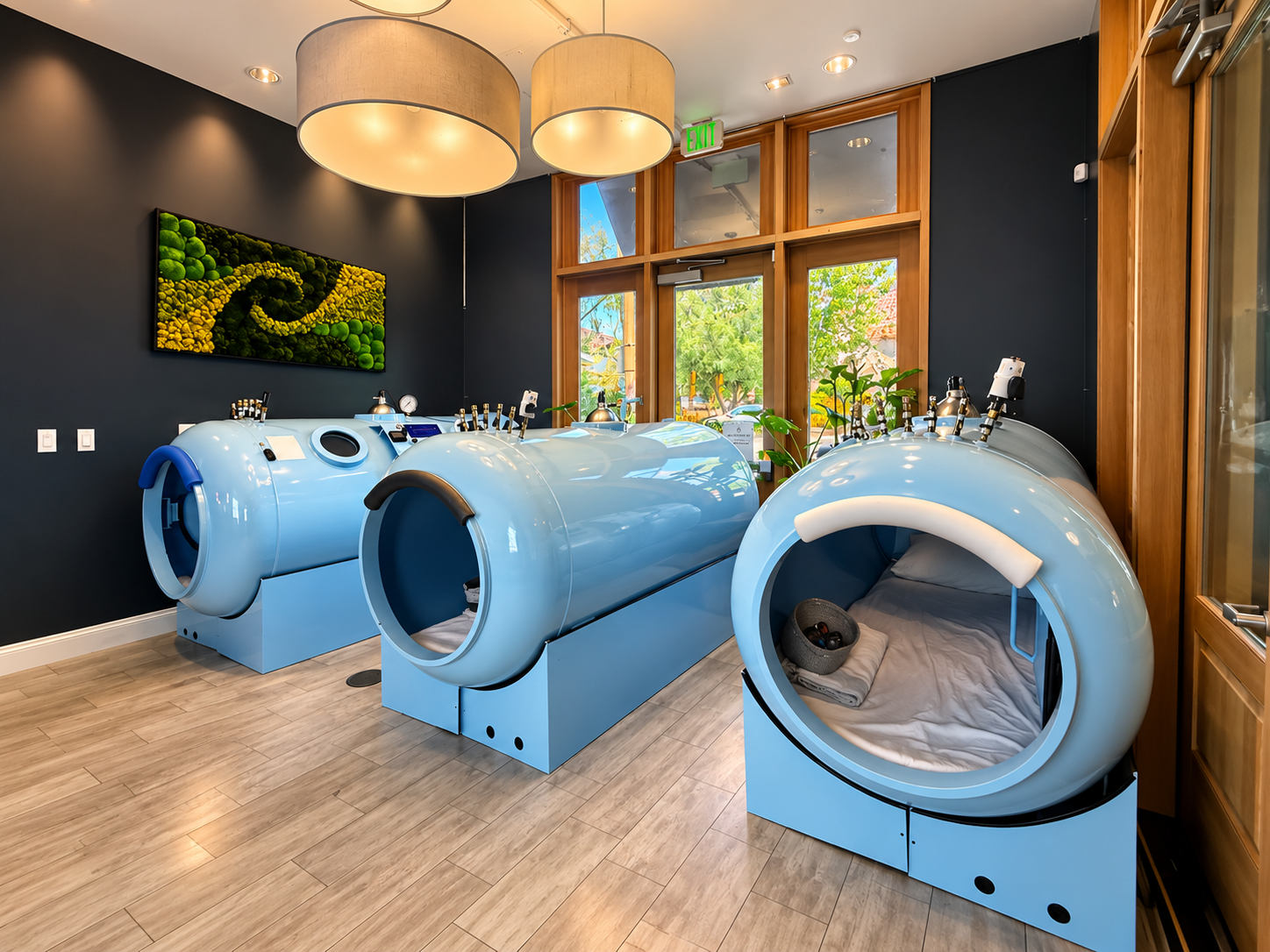
You lie in a Fortius420 hard-shell monoplace chamber and breathe 100% medical-grade oxygen via non-rebreather mask at pressures up to 2.4 ATA as ordered. Sessions are typically about 90 minutes. CHTs (most EMT-certified) monitor treatment. A PA is on site most weekday hours.
Osteomyelitis courses often run 20 to 40 sessions when that is what UHMS-style protocols and the VA authorization support. We coordinate notes back to referring VA clinicians if the authorization needs an extension or if the infection is not responding.
Sherman Oaks and Calabasas are open seven days, with evening appointments.
Why OxygenWell (Sherman Oaks and Calabasas)
Dr. Beth Meneley, DAOM, L.Ac., has 25+ years in integrative medicine and 12+ years dedicated to hyperbaric medicine in Los Angeles. The team has supervised 50,000+ HBOT sessions. We accept VA Community Care with a valid referral and authorization, review the approved scope before the first dive, and keep the documentation Community Care claims require.
Sherman Oaks: 15301 Ventura Blvd., Suite P-12, CA 91403
Calabasas: 23500 Park Sorrento, Suite A2, CA 91302
Phone: (818) 661-0939
Website: www.oxygenwell.com
FAQ
Does refractory osteomyelitis qualify for VA Community Care HBOT?
It is a UHMS-recognized indication. Coverage may apply when medically eligible and authorized. The infection generally needs to be unresponsive to conventional medical and surgical management, consistent with how Medicare describes the indication.
Do I still need surgery and antibiotics?
Yes in most cases. UHMS positions HBO2 as an adjunct to debridement and culture-directed antibiotics, not a stand-alone cure.
How many sessions will I need?
UHMS often cites 20 to 40 postoperative sessions and four to six weeks of combined therapy when the patient is improving. Your VA authorization sets the number we can deliver.
What if HBOT is not helping?
UHMS advises against simply continuing the same HBO2 and antibiotic plan if there is no prompt response or if infection recurs. Surgery and antibiotics should be reassessed, then HBO2 can be restarted if still indicated.
Can I start before the VA authorizes treatment?
Community Care generally requires prior approval. Call us to discuss records, then schedule promptly after authorization and medical clearance.
OxygenWell does not determine VA eligibility or guarantee authorization. Coverage, session count, and approved services are determined by the VA.
Call (818) 661-0939 or visit www.oxygenwell.com to coordinate care at Sherman Oaks or Calabasas after authorization.