


Cellular
Interval Training™
About Cellular Interval Training
At OxygenWell, all care begins with evidence-based hyperbaric oxygen therapy (HBOT) delivered according to established medical standards when indicated. For patients seeking a more integrative and personalized experience, we offer Cellular Interval Training™ — an optional, customized approach informed by our guiding philosophy, The Rhythm of Regeneration™. Cellular Interval Training™ is designed to support the body’s natural ability to adapt, repair, and recover by working with the physiological oxygen cycles already inherent to hyperbaric therapy. This approach is always used in addition to, not in place of, standard medical care.
The Physiological Basis of Cellular Interval Training™
Cellular Interval Training™ is grounded in how cells respond to controlled cycles of increased oxygen availability (hyperoxia) followed by periods of return to normal oxygen levels (normoxia).
Rather than constant stimulation, the body responds most effectively to rhythmic exposure followed by recovery— a principle seen throughout human physiology.
During hyperbaric oxygen therapy:
- Oxygen delivery to tissues istemporarily increased beyond normal physiological levels
- Oxygen then returns to baselineduring recovery phases
These hyperoxia–normoxia cyclesinfluence cellular signaling, vascular response, and adaptive repairmechanisms.
Cellular Interval Training™ applies thisunderstanding thoughtfully by respecting timing, recovery, and balance,rather than intensity.
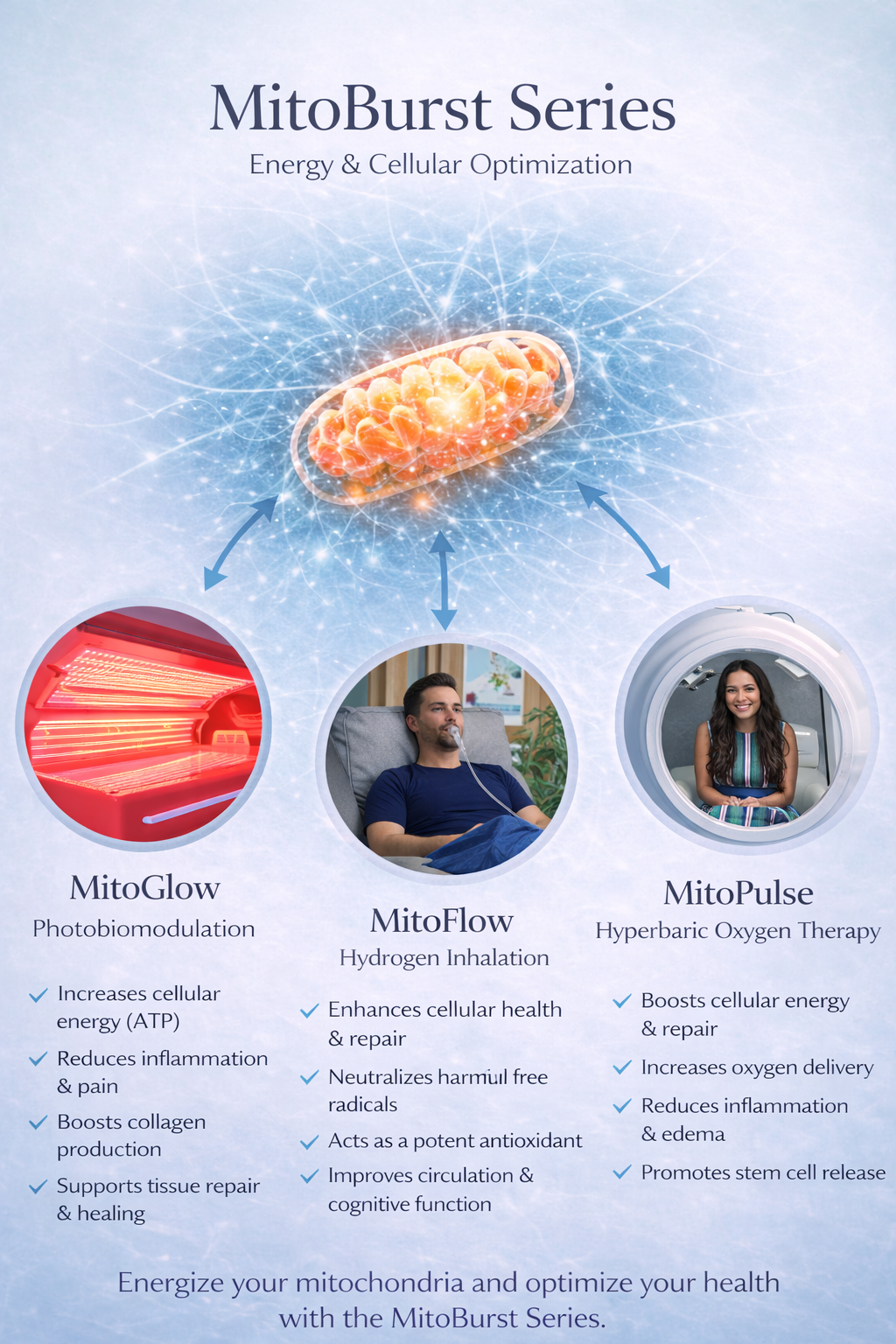
How Cellular IntervalTraining™ Works
Hyperoxia(Oxygen-Rich Phase)

Normoxia (Recovery Phase)

RhythmOver Time
How We Support Hyperoxia–Normoxia Cycles
At OxygenWell, Cellular IntervalTraining™ builds upon standard hyperbaric practices and may be supportedthrough:

Structured Air Breaks During Hyperbaric Oxygen Therapy
During hyperbaric treatment, planned air breaks may be incorporated to alternate between oxygen-rich phases and return-to-baseline breathing.
Air breaks are a clinically acceptedcomponent of hyperbaric medicine and may be used to:
- Support physiological balance
- Allow recovery between oxygen exposures
- Respect individual tolerance and safety
Air break use is determined based onmedical appropriateness and clinical judgment.
Supportive Therapies Used Around Oxygen cycles
When clinically appropriate, supportive therapies may be used before or after hyperbaric sessions to complement the recovery phase.

Photobiomodulation (Red & Infrared Light Therapy)
Uses specific wavelengths of light tosupport circulation, relaxation, and cellular energy balance, helping create asupportive environment during recovery.
Hydrogen Inhalation
Molecular hydrogen has been studied forits selective antioxidant properties and potential role in supporting oxidativebalance during periods of cellular stress and recovery.
These therapies are supportive, not stimulatory, and are never intended to replace medical hyperbaric care.
Integrated, not Aggressive
Cellular Interval Training™ does not introduce new stressors.
It works with:
- The timing already present in hyperbaric oxygen therapy.
- Structured oxygen exposure followed by recovery.
- Supportive modalities used conservatively and intentionally.

Who May Consider Cellular Interval Training™
This approach may be of interest to patients who:
Are already receiving hyperbaric oxygen therapy
Seek a more personalized, integrative experience
Value physiology-based, thoughtfulcare
Want support for recovery, resilience, or cellular adaptation
Next Steps
If you are interested in learning whether Cellular Interval Training™ may be appropriate for you, our team is happy to discuss options during a consultation.
Request a consultationMedical Discalimer
Cellular Interval Training™ is an optional, adjunctive approach and does not replace standard medical treatment. Hyperbaric Oxygen Therapy and all supporting modalities are provided under clinical supervision. Participation and outcomes vary by individual. Oxygen Well does not guarantee results.