TLDR: Acute compartment syndrome is a surgical emergency. When swelling or bleeding raises pressure inside a muscle compartment, blood flow fails and muscle and nerve can die. The American Academy of Orthopaedic Surgeons states there is no effective nonsurgical treatment for the acute form; the operation is a fasciotomy that opens the fascia so pressure can fall. Hyperbaric oxygen therapy (HBOT) is a UHMS-approved adjunct for crush injury, compartment syndrome, and other acute traumatic ischemias. It does not replace emergency surgery. After fasciotomy, or in selected threatened compartments under surgical care, HBOT can raise tissue oxygen, reduce edema, and support marginally viable muscle. Medicare covers related crush and acute traumatic ischemia indications when standard care is in place and limb or function is at risk. OxygenWell treats referred patients in Sherman Oaks and Calabasas with medical-grade oxygen, chambers rated to 2.4 ATA, and Certified Hyperbaric Technicians.
On this page
- What is compartment syndrome?
- How does acute compartment syndrome differ from the exertional type?
- Why do surgeons add hyperbaric oxygen after fasciotomy?
- What does the evidence say?
- Does insurance cover HBOT for compartment syndrome?
- What should patients in Los Angeles expect?
- When should a surgeon or hospital refer?
What is compartment syndrome?
A compartment is a group of muscles, nerves, and vessels wrapped in fascia. Fascia does not stretch easily. If bleeding or swelling fills that space, pressure rises, capillaries collapse, and oxygen delivery stops. The American Academy of Orthopaedic Surgeons (AAOS) describes this as a painful condition that can starve nerve and muscle of blood. The lower leg has four major compartments. The anterior compartment is the most common site, though the thigh, arm, hand, foot, and buttock can be involved.
Classic warning signs of the acute form include pain out of proportion to the injury, worse pain when the muscle is stretched, tightness, and tingling or burning. Numbness and paralysis arrive late and often mean lasting injury. AAOS is clear: go to an emergency room if acute compartment syndrome is a concern. This is not a wait-and-see problem.
Common triggers include fracture, a badly bruised muscle, crush injury, a tight cast or bandage, and reperfusion after a blocked vessel is opened. Rhabdomyolysis after extreme exertion can also raise pressure inside a single muscle, as in a published shoulder case treated with fasciotomy plus HBOT (Hoy et al., Case Reports in Orthopedics, 2018).
How does acute compartment syndrome differ from the exertional type?
Patients and search results often mix two different diagnoses.
Acute compartment syndrome follows trauma or ischemia. AAOS calls it a medical emergency. Without prompt fasciotomy, muscle can die and disability can be permanent. There is no reliable pill or rest protocol that replaces surgery.
Chronic exertional compartment syndrome is an exercise-related tightness, most often in young runners. Pain starts after a predictable distance or intensity and eases within about 15 minutes of stopping, according to Mayo Clinic. It is usually not a limb-threatening emergency. Treatment starts with activity change; some athletes later choose an elective fasciotomy.
HBOT in this article refers to the acute traumatic pathway: crush, reperfusion, threatened muscle after injury, and recovery after emergency fasciotomy. That is the UHMS indication. Elective sports-medicine exertional pain is a different conversation and is not the same insurance category.
Why do surgeons add hyperbaric oxygen after fasciotomy?
Fasciotomy opens the box. It does not instantly restore every capillary or reverse edema already in the muscle. UHMS lists crush injury, compartment syndrome, and other acute traumatic ischemias among approved uses of hyperbaric oxygen (UHMS HBO indications). UCLA Health follows the same UHMS list for its hyperbaric program in Los Angeles.
In a chamber, the patient breathes 100% oxygen at increased atmospheric pressure. Dissolved oxygen in plasma rises far above what room air can deliver, so hypoxic muscle can still receive oxygen even when red-cell flow is limited. Clinical reviews of HBOT after fasciotomy also describe vasoconstriction that can lower edema while oxygen delivery stays high, support for fibroblasts and angiogenesis, and a role when the line between living and dead tissue is still unclear (Hoy et al., 2018, citing Strauss in the UHMS indications text).
UHMS guidance summarized in that case report supports adjunctive HBOT after fasciotomy when edema or ischemia continues, when viable versus nonviable tissue is hard to map, when neuropathy remains, or when ischemia time was long. Typical cadence in that discussion is one to two treatments a day for up to 7-10 days, then stop as swelling and wounds settle. Some teams consider HBOT before fasciotomy only when a surgeon is already managing the case and surgery is not being delayed. HBOT never substitutes for a needed emergency fasciotomy.
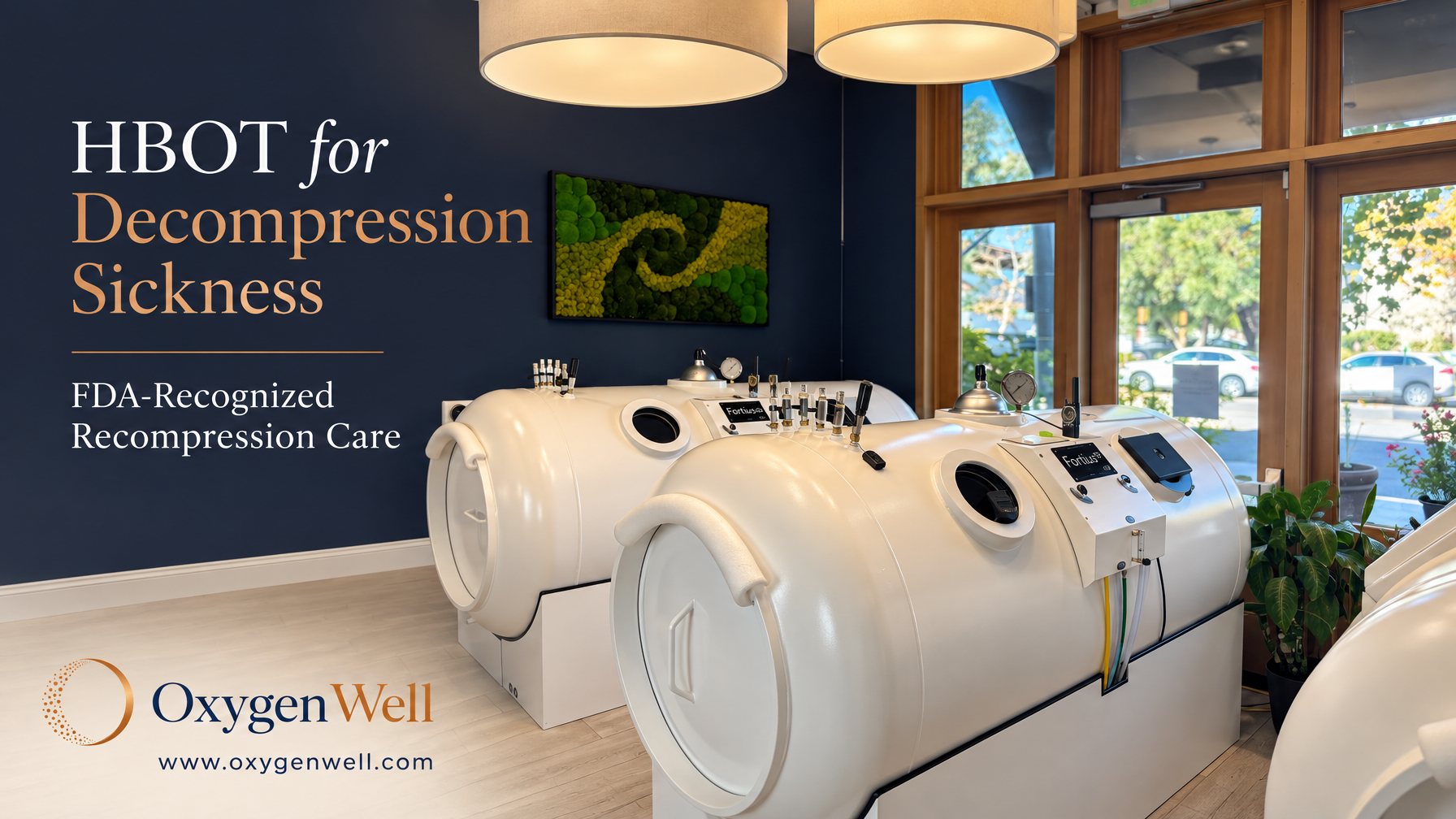
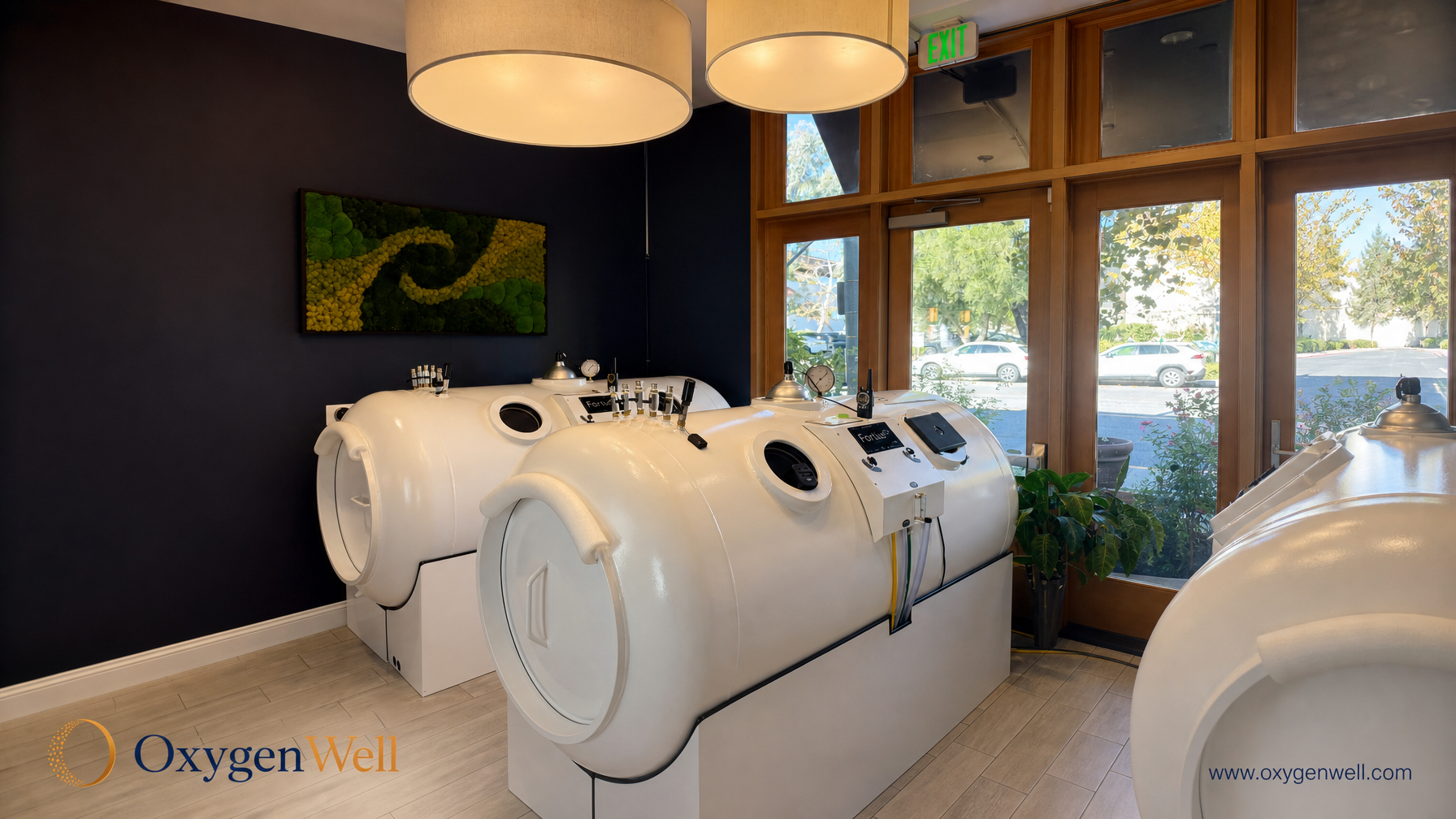
At OxygenWell, sessions use 100% medical-grade oxygen by non-rebreather mask in grounded monoplace chambers rated to 2.4 ATA. Certified Hyperbaric Technicians, most of them EMT-trained, run the dive. A physician assistant is on site most weekday hours. That combination matters when you are protecting a limb after trauma, not sitting in a mild wellness pod.
Related reading: HBOT for crush injuries and acute traumatic ischemia and our guide to FDA-recognized HBOT indications.
What does the evidence say?
The mechanistic case is strong. High-quality randomized human trials in acute compartment syndrome are limited because the condition is an emergency and fasciotomy cannot be withheld. What we do have is UHMS committee endorsement, animal and clinical work by Strauss on crush and skeletal-muscle compartment syndromes (Strauss, Undersea Hyperb Med., 2012 abstract), and case series after fasciotomy.
Hoy and colleagues described a musician with isolated supraspinatus rhabdomyolysis and compartment syndrome. Peak creatine kinase was 17,223 U/L. After emergency fasciotomy he received seven HBOT sessions over five days, three of them in the first 24 hours. At one month he had a full painless range of motion; MRI at six months showed near-complete resolution of the muscle injury (Case Reports in Orthopedics, 2018).
That is one patient, not a trial. It does show the practical sequence most referral centers use: diagnose fast, decompress if indicated, then use HBOT to salvage remaining muscle and quiet residual edema. If your orthopedic or trauma team is already planning fasciotomy, ask them the same day about a hyperbaric consult rather than waiting until the wound is weeks old.
Does insurance cover HBOT for compartment syndrome?
Coverage follows diagnosis, timing, and documentation, not a marketing phrase.
The CMS National Coverage Determination for hyperbaric oxygen (NCD 20.29) includes acute traumatic peripheral ischemia and crush injuries and suturing of severed limbs as adjuncts when standard care is in place and loss of function, limb, or life is threatened. Medicare.gov lists the same categories for Part B chamber therapy. Commercial PPO policies often track UHMS indications, including compartment syndrome as part of that acute traumatic-ischemia family. Pre-authorization still depends on operative notes, timing, and photos or wound descriptions.
OxygenWell accepts Medicare and PPO for qualifying on-label care. A billing partner handles pre-authorization so the surgical team can stay focused on the limb. If the case is a personal-injury or medical-lien referral, we also work that pathway. Call (818) 661-0939 or use the insurance page if you need a benefits check.
What should patients in Los Angeles expect?
After hospital discharge, most patients arrive with an open or recently closed fasciotomy, drains, or a skin graft planned. We coordinate with the operating surgeon on timing so HBOT does not compete with the OR. You lie in a hard-shell monoplace chamber, wear a clear non-rebreather mask, and rest for a supervised session. Many people read or rest. Evening and weekend hours help if you are still on a post-trauma schedule.
Sherman Oaks and Calabasas both run the same chamber platform and safety standards. Families coming from the Valley, Westside, or Conejo often choose the closer site once the acute hospital stay is over.
When should a surgeon or hospital refer?
Refer the same day when:
- Fasciotomy is done or imminent and residual muscle looks ischemic or poorly demarcated
- Crush or reperfusion injury threatens a limb even if compartment pressures are being watched
- A graft or flap over a fasciotomy bed is tenuous
- Neuropathy persists after decompression and the team wants adjunctive oxygenation
Do not delay the OR for a hyperbaric slot. Send the patient to the emergency department first if acute compartment syndrome is even possible.
Physicians can use our referral guide or the referral form on the site. For patients, the next step is simple: have your surgeon call OxygenWell at (818) 661-0939 so we can align protocol, insurance, and location.
Conclusion
Acute compartment syndrome is a race against pressure. Fasciotomy saves the limb. Hyperbaric oxygen, used as UHMS intends, then gives remaining muscle a higher oxygen supply while edema recedes. That is an on-label, insurance-relevant adjunct, not a wellness extra. If you or your patient is recovering after trauma or fasciotomy in Los Angeles, OxygenWell can start coordinated HBOT in Sherman Oaks or Calabasas.