What Patients Should Know Before Choosing a Hyperbaric Oxygen Therapy Center in Los Angeles
As hyperbaric oxygen therapy becomes more widely available, patients throughout Los Angeles are encountering very different types of treatments described as "hyperbaric."
There is an important distinction.
Not every hyperbaric experience delivers the same pressure, oxygen concentration, equipment, medical oversight, or safety protocols.
The chamber matters. The oxygen matters. The pressure matters. The medical team matters. And experience matters.
At OxygenWell Hyperbaric & Regenerative Medicine Center, with locations in Calabasas and Sherman Oaks, we have spent more than 12 years in hyperbaric medicine. We believe patients should understand exactly what they are receiving before choosing where to have hyperbaric oxygen therapy.
Here are some of the most important questions to ask.
1. What Kind of Hyperbaric Chamber Is Being Used?
Not every chamber that creates increased atmospheric pressure is the same as a medical hyperbaric chamber.
The FDA regulates hyperbaric chambers as Class II medical devices under federal regulation 21 CFR 868.5470.
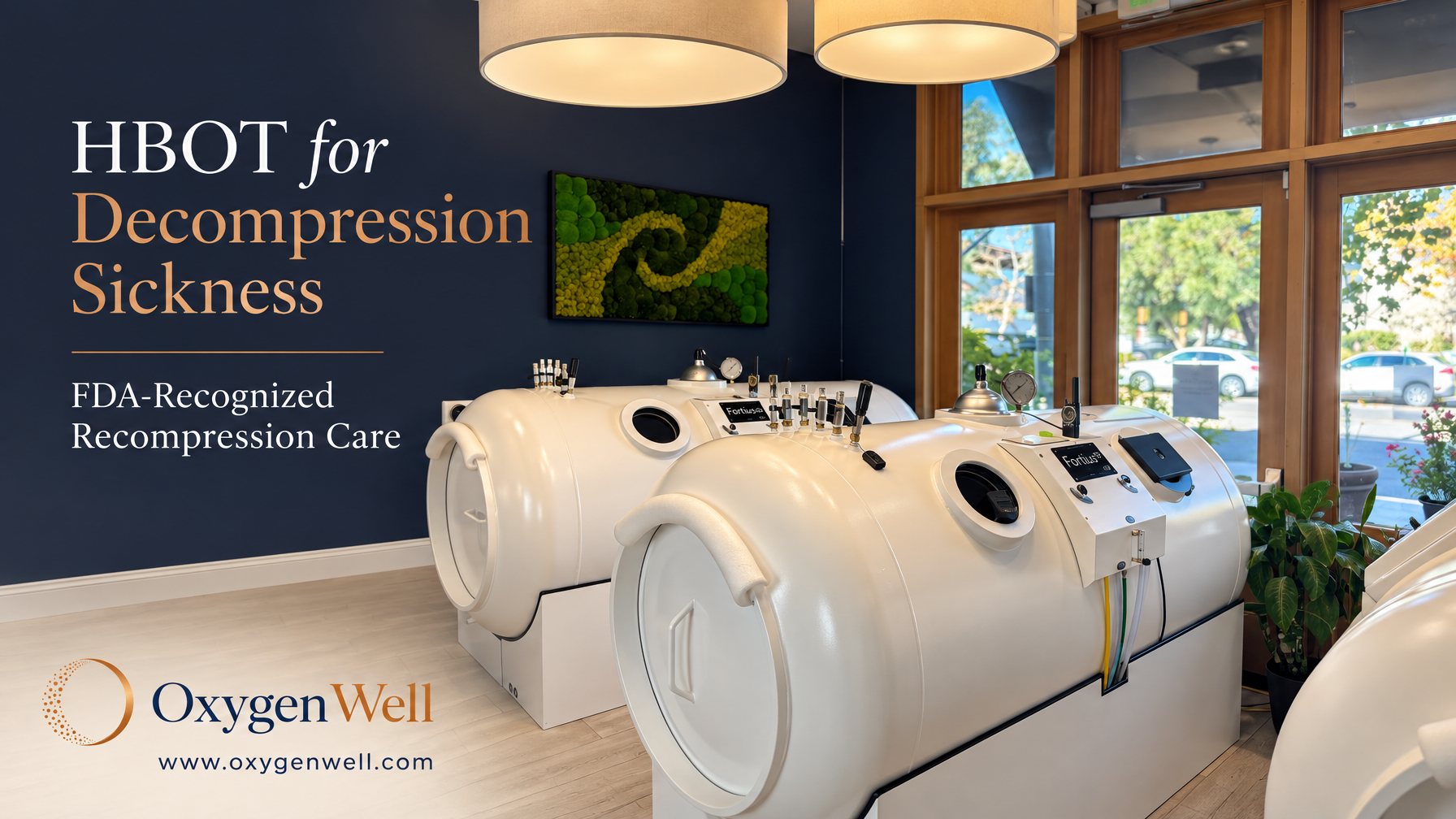
At OxygenWell, we use Fortius medical hyperbaric chambers designed for medical hyperbaric treatment. Our chambers are built as pressure vessels for human occupancy in accordance with ASME PVHO-1 standards.
ASME PVHO-1 addresses the design, fabrication, inspection, testing, marking, and other requirements for pressure vessels that contain people under pressure, including hyperbaric chambers and medical hyperbaric facilities.
When comparing hyperbaric centers, ask: Is your chamber an FDA-cleared medical hyperbaric device?
2. Pressure Is Only Part of the Equation
Patients often compare hyperbaric treatments by asking: "What ATA do you use?"
That is an important question, but it does not tell you everything about the oxygen exposure you are receiving.
The physiological oxygen exposure during HBOT depends on both:
Oxygen concentration + atmospheric pressure
The Undersea and Hyperbaric Medical Society (UHMS) defines hyperbaric oxygen therapy as treatment involving the inhalation of near-100% medical-grade oxygen within a pressure vessel at increased atmospheric pressure.
At OxygenWell, our medical hyperbaric system allows protocols utilizing 100% medical oxygen at therapeutic hyperbaric pressures.
Increasing atmospheric pressure while breathing a high concentration of oxygen substantially increases the partial pressure of oxygen delivered to tissues throughout the body.
In other words: it is not simply about being under pressure. It is about the oxygen you are breathing while you are there.
3. Oxygen Concentrators and 100% Medical Oxygen Are Not Necessarily Equivalent
This is an area where patients can easily become confused.
Some lower-pressure hyperbaric or wellness systems incorporate oxygen concentrators to provide oxygen-enriched gas. That does not mean the patient is receiving the same oxygen concentration and partial pressure of oxygen as someone breathing near-100% medical oxygen at a therapeutic hyperbaric pressure.
Rather than labeling one treatment as good or bad, we encourage patients to ask two straightforward questions:
- What pressure will I be treated at?
- What oxygen concentration will I actually breathe at that pressure?
Those answers give you considerably more information about the treatment you are receiving.
4. Medical Oversight Matters
Hyperbaric therapy is not simply a matter of choosing a pressure and turning on a chamber.
A patient's medical history, diagnosis, medications, previous surgeries, cardiovascular and pulmonary considerations, ability to equalize ear pressure, and other health factors may affect whether HBOT is appropriate and how treatment should be approached.
At OxygenWell, our clinical structure includes:
- Two Medical Directors
- Functional Medicine Doctor
- Physician Assistants
- EMTs
- Certified Hyperbaric Technicians
Our Functional Medicine Doctor can also help guide personalized programs when a patient's goals or medical history warrant a broader clinical approach.
The protocol should fit the patient, not the other way around.
5. Who Is Operating Your Hyperbaric Chamber?
Training matters.
Our sessions are supported by EMTs and Certified Hyperbaric Technicians who understand that their responsibility extends beyond operating equipment.
Patients may require attention to:
- Ear and sinus pressure and ability to equalize
- Blood pressure and blood glucose
- Medications and medical history
- Treatment tolerance
The FDA recommends that facilities ensure appropriate staff training and that patients are properly monitored and supervised throughout HBOT treatment. That is an important distinction when choosing where to receive care.
6. Not Every Patient Should Be Pressurized at the Same Speed
For many new patients, the biggest concern is not oxygen concentration or ATA. It is their ears.
As chamber pressure increases, patients need to equalize the pressure in their middle ears and sinuses. Some people do this easily. Others need more time.
At OxygenWell, our technicians communicate with patients throughout compression and can adjust the rate of pressurization within appropriate treatment and equipment parameters based on each patient's comfort and ability to equalize.
We do not rush patients simply to reach treatment pressure.
After 12 years in hyperbaric medicine, we have learned that patient comfort and communication are an important part of providing a good hyperbaric experience.
Good hyperbaric care is not just about reaching pressure. It is about taking care of the person inside the chamber.
7. Hyperbaric Safety Isn't Optional
Hyperbaric environments require specialized safety procedures.
In 2025, the FDA issued a safety communication reminding HBOT facilities about fire prevention, proper staff training, patient monitoring, equipment maintenance, appropriate clothing, and restrictions on potentially prohibited electrical or static-producing items.
At OxygenWell, our hyperbaric procedures address:
- Patient screening
- Appropriate clothing and restricted products and materials
- Electronic device restrictions
- Equipment safety
- Fire-safety precautions
- Patient monitoring throughout treatment
The rules may sometimes seem unusually strict to a first-time patient. There is a reason for them. Safety is part of hyperbaric medicine.
8. Experience Matters
Technology is important, but a chamber itself cannot exercise clinical judgment.
After 12 years in hyperbaric medicine, our team understands that patients do not always fit neatly into a predetermined protocol. Experience helps us recognize when a patient may need:
- A slower compression
- Additional screening
- A protocol adjustment
- Medical evaluation
- A treatment postponed
- Or a different approach entirely
That experience is one of the most important things we bring to every treatment.
9. What About Insurance Coverage for HBOT?
Hyperbaric oxygen therapy may be covered by Medicare and commercial insurance for certain qualifying medical conditions when applicable coverage and medical-necessity criteria are satisfied.
OxygenWell works with insurance for qualifying HBOT indications, subject to the patient's individual coverage, authorization requirements, and medical necessity.
Insurance-based hyperbaric care involves much more than placing someone in a chamber. Appropriate diagnoses, documentation, medical oversight, and treatment protocols all matter.
For patients seeking HBOT for conditions that do not qualify for insurance coverage, self-pay treatment may also be available when appropriate.
OxygenWell also works with VA Community Care patients and accepts personal injury and medical lien cases for qualifying patients.
10. Questions to Ask Before Choosing a Hyperbaric Center
Before choosing where to receive hyperbaric oxygen therapy in Los Angeles, ask:
- Is your hyperbaric chamber an FDA-cleared medical device?
- Is the chamber constructed to recognized pressure-vessel standards such as ASME PVHO-1?
- What pressure will I receive?
- What oxygen concentration will I actually breathe at that pressure?
- Who determines my treatment protocol?
- Is there medical oversight?
- Who operates the chamber, and what hyperbaric training or certification do they have?
- Can my compression rate be adjusted if I have difficulty equalizing my ears?
- What hyperbaric safety procedures does the facility follow?
- How much experience does the facility have providing hyperbaric treatments?
You do not need to be an expert in hyperbaric medicine. You simply need to know the right questions to ask.
Medical Hyperbaric Oxygen Therapy at OxygenWell
For more than 12 years, OxygenWell has focused on delivering hyperbaric therapy in a medically supported, patient-centered environment.
Our approach brings together medical oversight, experienced clinical staff, medical hyperbaric equipment, therapeutic oxygen protocols, individualized care, and established safety practices.
Most importantly, we take the time to care for the individual patient.
Because hyperbaric medicine is not simply about a chamber. It is about the person inside it.
OxygenWell Hyperbaric & Regenerative Medicine Center
Calabasas
23500 Park Sorrento, Suite A2
Calabasas, CA 91302
Sherman Oaks
15301 Ventura Blvd., Suite P-12
Sherman Oaks, CA 91403
Call (818) 661-0939 to speak with our team about hyperbaric oxygen therapy in Los Angeles.