TL;DR
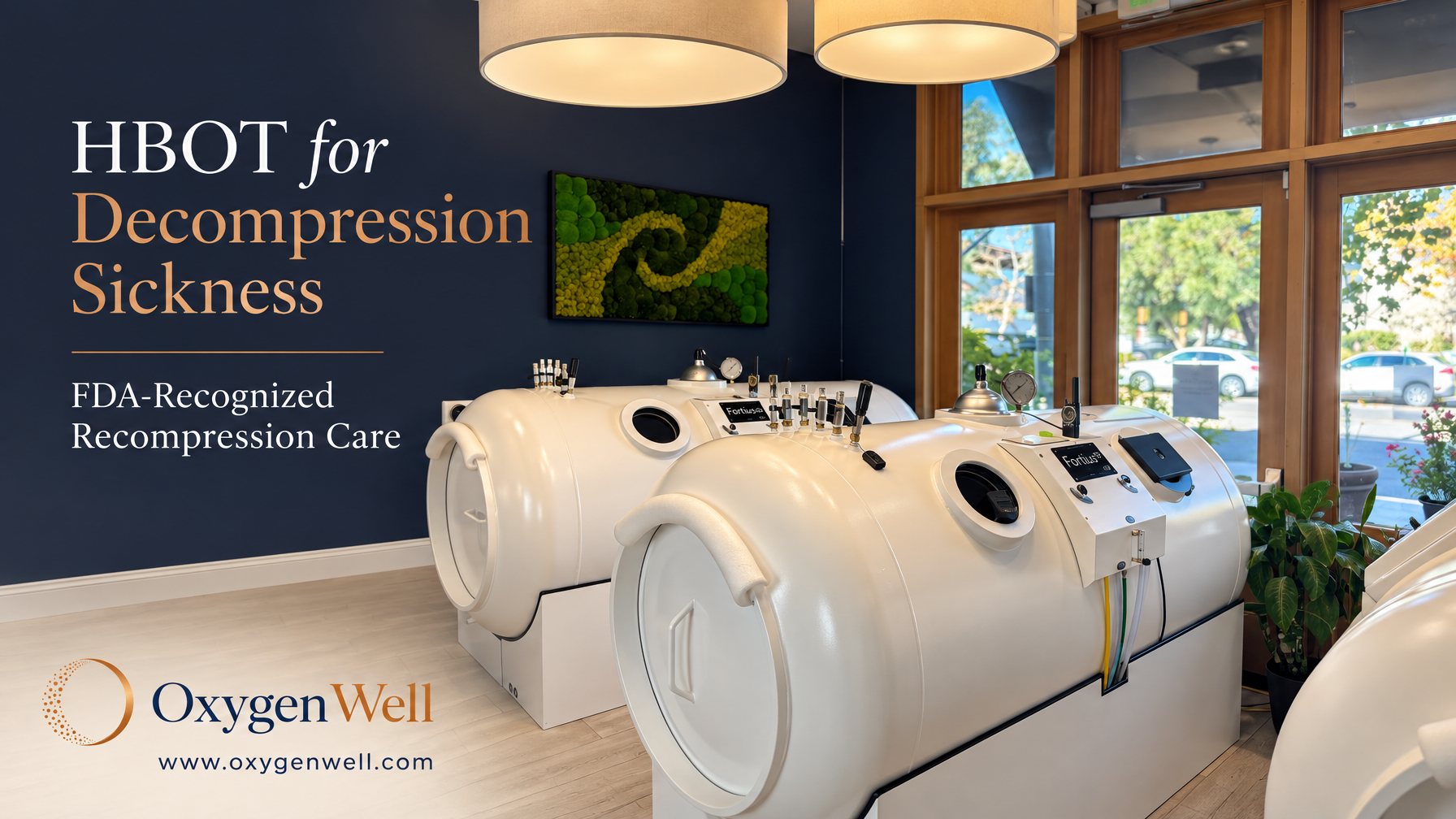
Gas gangrene (clostridial myonecrosis) is a rapidly progressive infection of muscle, most often driven by Clostridium perfringens and its alpha toxin. It can advance inches per hour and becomes life-threatening without immediate care. Standard care is a three-part plan: urgent surgery, intravenous antibiotics, and hyperbaric oxygen therapy (HBOT). HBOT raises tissue oxygen high enough to stop new alpha-toxin production, slow bacterial growth, and help the surgical team see a clear line between living and dead tissue. Gas gangrene is an FDA-cleared indication for HBOT and is listed among the conditions Medicare Part B may cover when therapy is delivered in a chamber. At OxygenWell in Sherman Oaks and Calabasas, patients receive medical-grade oxygen in monoplace chambers rated up to 2.4 ATA, with personalized protocols and coordinated referral support for surgical and hospital teams across Los Angeles.
Primary keyword: hyperbaric oxygen therapy for gas gangrene
Table of contents
- What is gas gangrene?
- Why is gas gangrene so dangerous?
- How does HBOT work for gas gangrene?
- What is the standard treatment protocol?
- When should HBOT start?
- Does insurance cover HBOT for gas gangrene?
- Gas gangrene vs. necrotizing fasciitis
- What to expect at OxygenWell in Los Angeles
- For referring physicians
- Key takeaways
- Sources
What is gas gangrene?
Gas gangrene, also called clostridial myositis and myonecrosis, is an acute infection of muscle caused by toxin-producing clostridial bacteria. The Undersea and Hyperbaric Medical Society (UHMS) describes it as a rapidly progressive, invasive infection marked by profound toxemia, extensive edema, massive tissue death, and variable gas production. [UHMS]
Most cases involve Clostridium perfringens type A, alone or with other clostridial species. These organisms thrive when two conditions line up: clostridial spores in the wound, and a zone of low oxygen and low oxidation-reduction potential from crushed muscle, disrupted blood flow, or heavy contamination. [UHMS] [StatPearls / NCBI]
Cleveland Clinic notes that gas gangrene is uncommon in modern civilian practice (far less than one case per 100,000 people per year in the U.S.), yet it remains a true emergency because toxins can destroy tissue and drive systemic shock within hours. [Cleveland Clinic]
Typical settings include:
- Deep traumatic wounds, open fractures, and crush injuries (including high-energy motor vehicle trauma)
- Contaminated surgical fields, especially bowel and biliary surgery
- Injection-related soft-tissue injury
- Less often, spontaneous clostridial infection in patients with underlying illness
Post-traumatic disease accounts for a large share of U.S. cases. [StatPearls / NCBI]
Why is gas gangrene so dangerous?
The core threat is toxin, not pus. C. perfringens produces multiple extracellular toxins. Alpha toxin (a lecithinase) is essential to the classic syndrome. It damages cell membranes, harms capillaries, aggregates platelets and leukocytes into occlusive plugs, and helps create the ischemic, anaerobic zone the bacteria need. Theta toxin (perfringolysin O) adds vascular and immune injury. Together they fuel rapid local necrosis and systemic toxicity, including cardiotoxicity and shock. [StatPearls / NCBI] [UHMS]
Clinical clues often start before the wound looks catastrophic:
- Severe pain out of proportion to the exam
- Rapid swelling and tense, shiny skin that turns bronze, purple, or black
- Hemorrhagic bullae and thin, sweet-smelling serosanguinous drainage
- Crepitus or feather-like gas between muscle fibers on imaging
- Fever, tachycardia, then shock and multiorgan failure if untreated
UHMS notes the infection can advance at a rate of about 6 inches per hour, and that delay in recognition or treatment may be fatal. [UHMS] StatPearls reports mortality near 25% in recent series, with rates approaching far higher figures when care is delayed. [StatPearls / NCBI]
Diagnosis is primarily clinical, supported by Gram-positive rods in wound fluid with a striking scarcity of neutrophils. Waiting for culture results before acting costs tissue and, sometimes, life. [StatPearls / NCBI]
How does HBOT work for gas gangrene?
Hyperbaric oxygen therapy places the whole body in a pressurized chamber while the patient breathes high concentrations of oxygen. For gas gangrene, the goal is not “more oxygen” in the abstract. The goal is a tissue oxygen tension high enough to interrupt toxin production and stabilize the patient so surgery can be precise rather than purely destructive.
Key mechanisms supported in the clinical literature:
- Stop alpha-toxin production. Classic work summarized by UHMS shows that an oxygen tension around 250 mmHg is needed to stop alpha-toxin production. Free-circulating or tissue-bound toxin already present is not neutralized by oxygen alone, but host factors clear it once new production stops. [UHMS]
- Bacteriostasis of clostridia. C. perfringens is not a strict anaerobe, yet its growth is restricted as oxygen tension rises; HBOT is bacteriostatic in vivo and in vitro even when it does not sterilize every organism. [UHMS] [StatPearls / NCBI]
- Host-defense support. High oxygen tensions support free-radical attack on anaerobes and improve neutrophil oxidative burst function in infected tissue. [StatPearls / NCBI]
- Clearer surgical demarcation. Once toxin drive slows, dead tissue declares itself more cleanly. Surgeons can open and drain early, then debride between hyperbaric sessions with less premature amputation. [UHMS]
UHMS states the preferred treatment for clostridial myositis and myonecrosis, or spreading clostridial cellulitis with systemic toxicity, is the combination of HBOT, surgery, and antibiotics. [UHMS]
For patients and families, that means HBOT is an adjunct that can make emergency care safer and more tissue-sparing. It does not replace the operating room or antibiotics.
Related reading on our site: Hyperbaric Oxygen Therapy for Necrotizing Fasciitis and our overview of FDA-approved HBOT indications.
What is the standard treatment protocol?
Modern care is simultaneous, not sequential in a slow chain. The three pillars:
1. Surgery
Urgent wound opening and drainage come first when the patient is unstable. UHMS emphasizes that lengthy, extensive initial resections can often wait once HBOT is available quickly. Early work focuses on decompression of compartments and removal of obviously dead tissue; definitive debridement proceeds between hyperbaric sessions as demarcation clarifies. [UHMS]
2. Antibiotics
Intravenous antibiotics start immediately. Animal and clinical guidance commonly favor regimens that include a penicillin plus an agent such as clindamycin for toxin suppression, tailored to culture data and mixed infection. Exact choices belong to the treating infectious disease and surgical teams. [StatPearls / NCBI]
3. Hyperbaric oxygen
StatPearls summarizes a widely cited emergency schedule: oxygen at 3 ATA for about 90 minutes, three times in the first 24 hours, then twice daily for the next 2 to 5 days, adjusted to clinical response. Surgical debridement continues between sessions. [StatPearls / NCBI] UHMS notes that a minimum of three to four hyperbaric treatments is needed to interrupt toxin production and stabilize the process, and that tissue PO2 targets in the literature have required treatment near 3.0 atm abs in classic measurement studies. [UHMS]
Outcomes improve when the full triad is used early. UHMS reviews of large retrospective series report lower mortality and fewer amputations when HBOT starts promptly with conservative initial surgery, compared with delayed hyperbaric care after aggressive primary amputation. In compiled historical series totaling hundreds of cases, infection-related mortality near 12% and post-hyperbaric amputation rates near 18% (versus roughly half of limbs after primary-surgery-first strategies in older comparisons) are cited as evidence for the combined approach. [UHMS] StatPearls also notes studies showing about a 50% relative mortality reduction when HBOT is added to surgery and antibiotics. [StatPearls / NCBI]
A Cochrane-style evidence review still frames gas gangrene care as early diagnosis plus comprehensive treatment that may include immediate debridement, antibiotics, and hyperbaric oxygen, underscoring that HBOT sits inside a full emergency pathway rather than as a stand-alone cure. [PMC / Interventions for treating gas gangrene]
When should HBOT start?
As soon as gas gangrene is strongly suspected. UHMS is explicit: start hyperbaric oxygen on the clinical picture and Gram stain, not after a leisurely laboratory workup. The acute problem is the advancing phlegmon of infected but still viable tissue that keeps making alpha toxin. Stopping that production early is life-saving and limb-saving. [UHMS]
Practical timing points for patients, families, and referring teams:
- Pain out of proportion after trauma, surgery, or injection is a red flag even when the wound still looks modest.
- Transfer planning should include hyperbaric capability in parallel with surgical and ICU care.
- Heimbach’s series, cited by UHMS, reported roughly 5% mortality among patients who began HBOT within the first 24 hours, reinforcing the value of early access. [UHMS]
- If a patient is too unstable for transport, stabilize first. HBOT never replaces airway, pressors, source control, or antibiotics.
OxygenWell works with hospitals, wound centers, and surgical practices across Los Angeles when patients need chamber access as part of a coordinated plan. Call (818) 661-0939 for urgent clinical coordination.
Does insurance cover HBOT for gas gangrene?
Often yes, when medical necessity is documented and care is delivered in an approved chamber setting.
Medicare Part B lists gas gangrene among the conditions for which hyperbaric oxygen therapy may be covered when you receive therapy in a chamber (including a one-person unit). Beneficiaries typically pay 20% of the Medicare-approved amount after the Part B deductible. [Medicare.gov]
Many PPO plans follow similar medical policies for UHMS-accepted indications, though prior authorization rules vary. Gas gangrene is also among the conditions treated at insurance-capable facilities that meet FDA chamber standards and documentation requirements.
OxygenWell accepts Medicare and PPO insurance for qualifying FDA-cleared indications and maintains a billing partner experienced with hyperbaric pre-authorization. Start with our insurance guide or request a benefits check through contact.
For a broader map of covered uses, see Does Medicare Cover Hyperbaric Oxygen Therapy?
Gas gangrene vs. necrotizing fasciitis
Families and clinicians often hear both terms in the same breathless conversation. They overlap clinically and both can kill quickly, yet they are not identical:
- Gas gangrene (clostridial myonecrosis) primarily destroys muscle and is classically linked to clostridial alpha toxin and gas in muscle planes.
- Necrotizing fasciitis primarily tracks along fascia and subcutaneous tissue and is more often associated with group A Streptococcus, Staphylococcus aureus, or mixed flora.
Cleveland Clinic highlights this tissue-layer distinction while noting shared urgency. [Cleveland Clinic] HBOT also appears in care pathways for broader necrotizing soft-tissue infections; our dedicated article on that topic is here: HBOT for necrotizing fasciitis.
Either diagnosis deserves immediate surgical evaluation. Do not wait for perfect labels before escalating care.
What to expect at OxygenWell in Los Angeles
OxygenWell is a hyperbaric and regenerative medicine center serving Sherman Oaks, Calabasas, and the greater Los Angeles area. For serious infections and post-acute recovery needs, patients and referring teams choose us for practical clinical reasons:
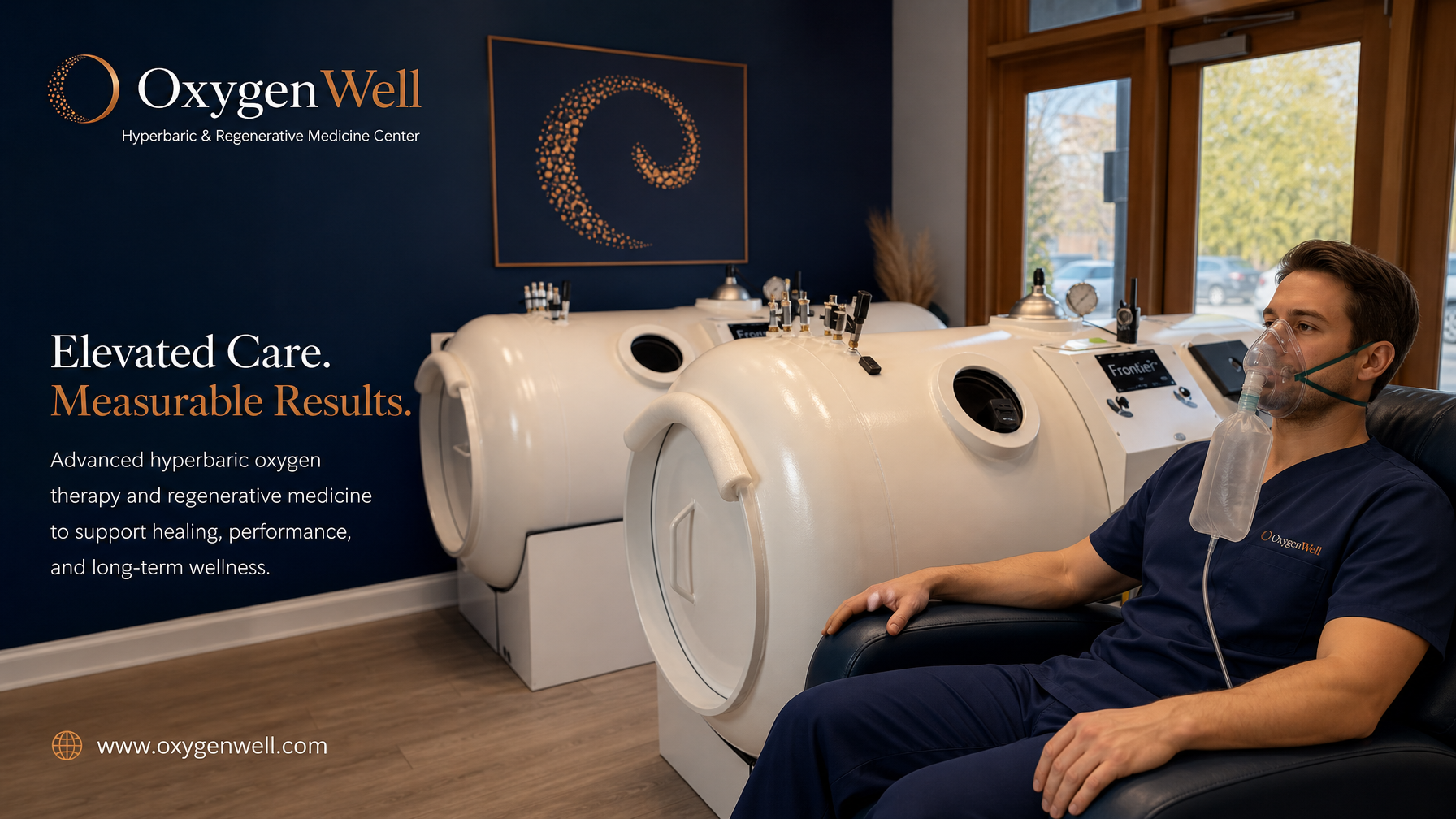
- Medical-grade oxygen delivery via non-rebreather mask in monoplace chambers, not consumer soft-sided bags or low-flow concentrator setups
- Chambers rated up to 2.4 ATA with grounded hard-shell construction and rigorous safety protocols
- Experienced safety leadership and Certified Hyperbaric Technicians, many with EMT backgrounds, plus PA coverage most weekday hours
- Insurance-capable workflows for FDA-cleared indications, including gas gangrene when ordered as part of appropriate medical care
- Two locations and extended hours, including evenings and weekends, which matters when multi-day hyperbaric courses must fit around hospital discharges and surgical follow-ups
- Integrative medical leadership from Dr. Beth Meneley, DAOM, L.Ac., with 25+ years in integrative medicine and 12+ years focused on hyperbaric medicine in Los Angeles, and more than 50,000 supervised HBOT sessions across the center’s experience
Brand promise in practice: advanced technology, medical leadership, unmatched safety standards, and personalized protocols, all focused on the best results for you.
Locations:
Learn more about the therapy itself in our patient guide: What Is Hyperbaric Oxygen Therapy?
For referring physicians
When you suspect clostridial myonecrosis or spreading clostridial cellulitis with toxicity:
- Resuscitate and obtain urgent surgical source control.
- Start broad intravenous antibiotics per your sepsis and NSTIs protocols.
- Call early for hyperbaric coordination rather than waiting for cultures.
- Share Gram stain findings, imaging, operative notes, and hemodynamic status so chamber timing can align with OR slots.
UHMS guidance supports combined care and notes that initial surgery can sometimes remain limited to wound opening and fasciotomy when HBOT is available quickly, with staged debridement thereafter. [UHMS]
Referral resources: Refer a patient for HBOT in Los Angeles or call (818) 661-0939.
Key takeaways
- Gas gangrene is a toxin-driven muscle infection that can progress by the hour.
- HBOT is part of the preferred triad with surgery and antibiotics for clostridial myonecrosis.
- Raising tissue oxygen stops new alpha-toxin production, slows clostridial growth, and improves surgical demarcation.
- Early chamber access is associated with lower mortality and fewer amputations in major clinical series.
- Medicare lists gas gangrene among conditions that may qualify for Part B hyperbaric coverage in a chamber.
- OxygenWell provides medical-grade, insurance-capable HBOT in Sherman Oaks and Calabasas for Los Angeles patients and referring teams.
If you or your care team need hyperbaric support for a suspected or confirmed clostridial soft-tissue infection, contact OxygenWell at (818) 661-0939 or visit www.oxygenwell.com.
This article is educational and does not replace emergency evaluation. Gas gangrene symptoms require immediate hospital care.
Author: Dr. Beth Meneley, DAOM, L.Ac., Wellness Director and Co-Owner, OxygenWell
Sources
- Undersea and Hyperbaric Medical Society. Clostridial Myositis and Myonecrosis (Gas Gangrene). https://uhms.org/3-clostridial-myositis-and-myonecrosis-gas-gangrene.html
- Sison-Martinez J, Hendriksen S, Cooper JS. Hyperbaric Treatment of Clostridial Myositis and Myonecrosis. StatPearls. NCBI Bookshelf. https://www.ncbi.nlm.nih.gov/books/NBK500002/
- Cleveland Clinic. Gas Gangrene. https://my.clevelandclinic.org/health/diseases/24739-gas-gangrene
- Medicare.gov. Hyperbaric oxygen therapy coverage. https://www.medicare.gov/coverage/hyperbaric-oxygen-therapy
- Yang Z, et al. Interventions for treating gas gangrene. Cochrane-related review summary via PMC. https://pmc.ncbi.nlm.nih.gov/articles/PMC8652263/
- Johns Hopkins Medicine. Hyperbaric Oxygen Therapy (indication list including gas gangrene). https://www.hopkinsmedicine.org/health/treatment-tests-and-therapies/hyperbaric-oxygen-therapy